
How To Choose The Right Hex Bolts For Your Project
Feb 05, 2026
As one of the most basic and critical core components in the industrial fastener system, hex bolts play an irreplaceable connecting role in mechanical manufacturing, structural installation, equipment assembly and engineering construction. For purchasers, selecting the right hex bolts is not just about matching specifications, but a systematic decision that comprehensively considers material performance, strength grade, surface treatment, application environment, precision tolerance, fatigue life and supply chain reliability. Wrong selection may lead to equipment failures, rework, production shutdowns and even safety accidents, while significantly increasing the overall project procurement and maintenance costs.
Starting from practical engineering applications, this guide will comprehensively explain how purchasers can accurately select the most suitable hex bolts for their projects by combining core dimensions such as material selection, standard specifications and dimensional parameters, helping to avoid selection risks, control costs and ensure project safety.
I. Bolt Material: The Core Determining Mechanical Performance and Durability
Bolt material is the foundation of selection, directly determining its mechanical strength, corrosion resistance, wear resistance and service life. It must be strictly matched with the project's application environment and load requirements. The specific classification and applicable scenarios are as follows:
- Carbon Steel: Low cost, moderate mechanical performance, convenient processing, suitable for mass procurement. It is mainly used in low-load scenarios such as non-core force-bearing structural brackets, light machinery and auxiliary fixing components.
- Alloy Steel: Performance is optimized by adding alloying elements. It has the advantages of high strength, high fatigue resistance and strong impact resistance, and is suitable for heavy-load, high-frequency vibration scenarios such as construction machinery, automobile manufacturing, heavy equipment and core force-bearing structures.
- Stainless Steel: Excellent corrosion resistance, up-to-standard hygiene performance, no need for complex surface protection. It is suitable for humid, corrosive or high-hygiene requirement scenarios such as food machinery, chemical equipment, marine facilities and chemical pipelines.
- Heat-Resistant Steel/Special Alloy: Outstanding high-temperature strength and resistance to extreme chemical corrosion. It is specially designed for furnace components, high-temperature equipment and special working conditions (such as high temperature, strong corrosion and high pressure), and is suitable for special industrial scenarios.
Note: Although stainless steel bolts have excellent corrosion resistance, their mechanical strength is usually lower than that of alloy steel bolts. If used in high-strength force-bearing structures, alloy steel bolts or high-strength stainless steel bolts subjected to professional heat treatment should be preferred to ensure bearing safety.
II. Strength Grade: The Key Indicator of Bearing Capacity and Safety Margin
Bolt strength grade is the core indicator measuring its bearing capacity, tensile strength and safety margin, directly determining whether the bolt can adapt to the project's load requirements. Different materials correspond to different strength grades. The specific classification and selection principles are as follows:
Common Strength Grade Classification
- Common grades for alloy steel: Grade 4.8 (ordinary strength), Grade 8.8 (medium strength), Grade 10.9 (high strength), Grade 12.9 (ultra-high strength);
- Stainless steel grades: A2-70 (conventional corrosion resistance strength), A4-80 (high corrosion resistance and high strength);
- American standard grades: Grade 2 (ordinary strength), Grade 5 (medium strength), Grade 8 (high strength).
Core Selection Principles
- For high-load, dynamic force-bearing or high-frequency vibration environments, Grade 10.9 or 12.9 alloy steel bolts are preferred to ensure fatigue resistance and anti-slip performance;
- For general building structures and ordinary mechanical assembly, Grade 8.8 alloy steel bolts are sufficient, balancing cost and safety;
- For high-corrosion, medium-low load scenarios, Grade A4-80 stainless steel bolts are preferred to achieve dual adaptation of corrosion resistance and strength.
Important Reminder: Before installing high-strength bolts (Grade 8.8 and above), professional torque calculation must be performed to accurately control the tightening force to meet design requirements, avoiding fatigue damage due to insufficient tightening or slip and bolt fracture due to excessive tightening.
III. Dimensional Parameters: The Foundation of Assembly Adaptation
The dimensional parameters (diameter, length, thread pitch) of hex bolts directly determine whether they can adapt to assembly requirements. They must be accurately selected based on the thickness of the connected parts, hole diameter and force-bearing conditions. The specific requirements are as follows:
Diameter (Common Specifications: M6, M8, M10, M12 and above)
Diameter is positively correlated with bearing capacity-the larger the diameter, the stronger the bearing capacity. The applicable scenarios are as follows:
- M6: Mainly used for low-load, small-size assembly such as electronic equipment, light instruments and small brackets;
- M8, M10: Most widely used, suitable for ordinary mechanical structures, equipment brackets and medium-sized component fixing;
- M12 and above: Used for high-load, high-strength connection scenarios such as large equipment, building steel structures and heavy machinery.
Length
- Core principle for length selection: The effective engagement length between the bolt thread and the nut must be at least 1–1.5 times the bolt diameter to ensure a firm connection and avoid loosening due to insufficient engagement.
- Example: For an M10 bolt, the effective thread contact length with the nut must reach at least 10–15 mm to meet the basic bearing requirements.
Thread Pitch (Coarse Thread/Fine Thread)
Thread pitch selection must consider anti-loosening needs, assembly efficiency and bearing requirements. The differences and applicable scenarios between the two are as follows:
- Coarse Thread (Standard Thread Pitch): Strong versatility, fast assembly speed, threads are not easy to slip or damage, suitable for most conventional assembly scenarios;
- Fine Thread: High thread density, excellent anti-loosening performance and stronger bearing capacity, but threads are relatively fragile and easy to wear, suitable for high-frequency vibration scenarios requiring precise anti-loosening.
IV. Surface Treatment: The Key Affecting Corrosion Resistance and Tightening Effect
Bolt surface treatment not only improves corrosion resistance and wear resistance, but also changes the bolt surface friction coefficient, thereby affecting the control of tightening torque. It must be selected according to the application environment (indoor/outdoor, corrosion degree). The specific classification is as follows:
- Black Oxide: Low cost, only achieves basic indoor rust prevention, poor moisture resistance, suitable for light-load scenarios with dry and non-corrosive indoor environments;
- Electrogalvanizing: Economical anti-corrosion treatment, medium anti-corrosion effect, mature technology, suitable for conventional protection of general machinery and indoor equipment;
- Hot-Dip Galvanizing: Uniform coating thickness, strong adhesion, excellent corrosion resistance, suitable for long-term exposed scenarios such as outdoor building structures and open-air equipment in humid and rainy environments;
- Dacromet: Has both excellent corrosion resistance and wear resistance, no hydrogen embrittlement risk, suitable for scenarios with high protection requirements such as auto parts, chemical equipment and outdoor precision machinery.
Note: Different surface treatments will result in different bolt surface friction coefficients. When installing after procurement, the tightening torque must be adjusted according to the type of surface treatment to ensure the tightening effect meets the standard and avoid connection loosening due to friction coefficient deviation.
V. Anti-Loosening Characteristics: Core Consideration for Vibration Scenarios
If the project application scenario has high-frequency vibration or dynamic force, bolts are prone to loosening, and targeted anti-loosening solutions must be selected. Common anti-loosening methods and applicable scenarios are as follows:
- Fine Thread: Its own anti-loosening performance is better than coarse thread, suitable for mild to moderate vibration scenarios;
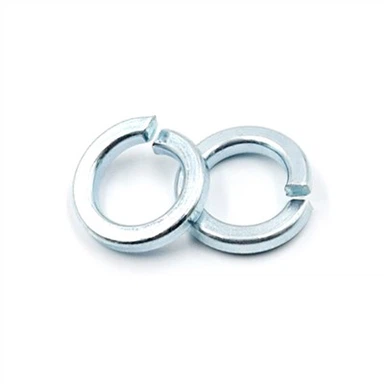
- Spring Washer: Simple structure, low cost, suitable for mild vibration scenarios mainly with static force;
- Nylon Lock Nut: Stable anti-loosening effect, reusable, suitable for moderate vibration scenarios requiring frequent disassembly;
- Double Nut Locking: High anti-loosening reliability, suitable for fixing core force-bearing components in high-intensity vibration scenarios;
- Thread Locking Adhesive: Achieves anti-loosening through chemical bonding, excellent anti-loosening effect, suitable for long-term fixed scenarios that do not require disassembly.
VI. Supplier Selection: The Key to Ensuring Procurement Quality and Project Progress
For purchasers, high-quality suppliers can not only provide qualified products, but also offer professional technical support to help optimize selection and control costs. When selecting bolt suppliers, the following 4 points should be focused on:
- Qualification and Strength: Prioritize professional hex bolt manufacturers with customized production capabilities, which can provide customized solutions according to special project needs (non-standard sizes, special materials);
- Standard Certification: Understand whether the supplier's products comply with international/domestic standards (ISO, DIN, ASTM, etc.) and have relevant industry certifications to ensure product quality meets the standard;
- Supply Chain Capability: Ensure the supplier can guarantee stable delivery time, consistent quality of bulk products, and has a complete quality tracking system to trace product batches;
- Technical Support: Can provide professional selection advice and technical parameter evaluation, assist in solving technical problems during installation, and help optimize procurement plans and reduce costs.
The core value of high-quality suppliers lies in not only delivering qualified products on time, but also fully assisting purchasers in avoiding selection risks, optimizing cost structures and ensuring the smooth implementation of projects.
Conclusion
Although hex bolts are small in size, they are key components bearing project safety and cost-effectiveness. When selecting bolts, purchasers must abandon the one-sided thinking of "only looking at specifications and only comparing prices", and comprehensively consider material performance, strength grade, dimensional parameters, surface treatment, anti-loosening needs and supplier reliability to achieve precise matching between selection and project requirements.
Whether your project involves mechanical equipment assembly, building structure fixing or special working condition engineering, as long as you select the right bolt material, match the corresponding strength grade, select the appropriate surface treatment and anti-loosening scheme, and choose a reliable supplier, you can maximize the safety, stability and economy of the project.
If you need stable, customizable and high-standard hex bolt supply, please contact Jiangsu Jinrui. With our professional technical team, we will provide you with one-on-one selection advice, technical parameter evaluation and bulk supply solutions, simplifying the procurement process, optimizing costs and making your project implementation more efficient and secure.