
Hex Bolt Vs Carriage Bolt: Main Differences
Feb 06, 2026
In the fields of modern industrial production, machinery manufacturing and construction engineering, fasteners are not only the core basic components of structural connection, but also directly determine the safety, durability and construction efficiency of equipment operation. For engineers, procurement managers and project managers, accurately selecting the appropriate bolt type is a key link to ensure the long-term stable operation of the project and avoid potential safety hazards.
Among various types of fasteners, hex bolts and carriage bolts are the two most widely used products. Although both belong to the category of bolts, there are significant differences in design structure, bearing capacity, installation method, material selection and application scenarios. Improper selection can easily lead to loose connections, premature bolt damage, and thus affect the safety, stability and construction efficiency of the entire project.
This article will conduct a comprehensive comparative analysis of hex bolts and carriage bolts from multiple dimensions, clearly disassemble the core differences between them, and help purchasers and engineers quickly judge the suitable products and accurately match project requirements.
I. Detailed Explanation of Structural Differences
Hex Bolts
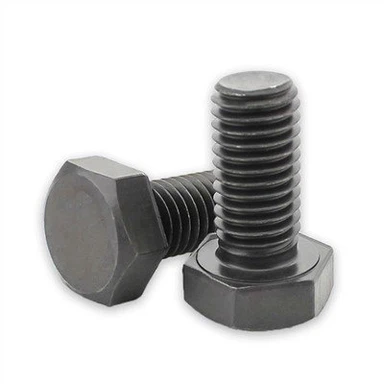
Hex bolts adopt a hexagonal head design at the core, which can provide a stable torque application point, adapt to high-torque operations, and are specially designed for heavy-load connection scenarios. The thread form can be flexibly selected as full thread or partial thread, and the strength grades cover multiple specifications such as 4.6, 8.8, 10.9 and 12.9, which strictly comply with international industrial standards such as ISO, DIN and ASTM; the head size, thread diameter and bolt shank length are fully specified, which can accurately adapt to the connection requirements of different industrial structures.
Carriage Bolts
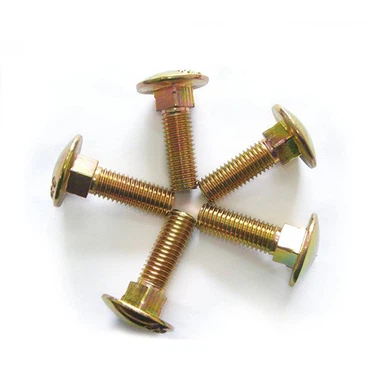
Carriage bolts adopt a round head smooth design, matched with an integrated square neck structure below. The core advantage is that the square neck can be embedded into the connected parts to achieve automatic anti-rotation function without additional fixing measures. It is mainly used for fixing wood or light metal parts, and the installation process is convenient and efficient, usually without the assistance of complex tools, and assembly can be completed quickly.
Summary of Structural Differences
Hex bolts are designed with "high torque adaptation and heavy load compatibility" as the core, and their structure focuses more on bearing performance; carriage bolts are designed with "convenient assembly and worry-free anti-rotation" as the core, and their structure focuses more on installation efficiency. The design positioning of the two directly determines the differences in subsequent application scenarios.

II. Comparison of Materials and Surface Treatments
Hex Bolts
The material selection of hex bolts focuses on adapting to heavy loads and complex environments, mainly selecting materials such as stainless steel (304/316), carbon steel and alloy steel; there are various surface treatment processes, including hot-dip galvanizing, electrogalvanizing, black oxide, chrome plating, etc. Different surface treatments can specifically improve the corrosion resistance and wear resistance of bolts. The combination of materials and surface treatments directly determines the weather resistance, strength and service life of bolts.
Carriage Bolts
The material selection of carriage bolts is guided by "lightweight and convenience", mostly using carbon steel or stainless steel materials without complex alloy ratio; surface treatment is mainly galvanizing and chrome plating, focusing on basic weather resistance to meet the anti-corrosion needs of light-load scenarios, while taking into account the use characteristics of rapid assembly.
Summary of Materials and Surface Treatments
If used in outdoor, humid or corrosive environments, it is recommended to prefer stainless steel (304/316) materials or hot-dip galvanizing treatment for hex bolts to ensure long-term use stability; carriage bolts are mostly used in dry, light-load projects, and ordinary carbon steel galvanizing or stainless steel materials can meet the needs, taking into account cost and practicality.

III. Comparison of Bearing Capacity and Core Performance
Hex Bolts
Hex bolts are specially designed for high-load scenarios, suitable for core force-bearing parts such as high-load machinery, building steel structures and automobile chassis. They have the advantages of high torque bearing capacity and large tensile strength, can stably bear complex loads such as vibration and impact, and can still maintain connection stability in long-term heavy-load and high-frequency vibration environments, not easy to loose or damage.
Carriage Bolts
The bearing capacity of carriage bolts is limited, which is mainly suitable for low to medium load scenarios. It is mainly used for connecting wood or light metal structures, and cannot bear high-strength torque, vibration and impact loads. Long-term heavy load is prone to problems such as loose connection and bolt shank deformation.
Comparison Table of Core Performance Parameters
|
Performance Parameters |
Hex Bolts |
Carriage Bolts |
|
Maximum Torque |
High |
Medium-Low |
|
Tensile Strength |
520–1040 MPa |
400–500 MPa |
|
Bearing Capacity |
High |
Medium-Low |
|
Installation Convenience |
Medium |
High |
|
Vibration Resistance |
High |
Low |
Summary of Bearing Capacity and Performance
In vibration, impact or heavy-load environments, hex bolts have more advantages in safety and stability, and are the first choice for core force-bearing parts in industry; carriage bolts are more suitable for light-load projects that do not require high bearing capacity and pursue rapid batch assembly, giving priority to ensuring installation efficiency.
IV. Comparison of Application Scenarios
Hex Bolts
- Industrial Machinery: Machine tool bases, automation production line brackets, heavy equipment connectors, suitable for high-load and high-frequency vibration working conditions;
- Building Steel Structures: Bridges, steel frames, plant load-bearing structures, which need to bear large loads to ensure long-term structural stability;
- Automobile Manufacturing: Core parts such as chassis and engine brackets, which can bear vibration and impact during driving to ensure driving safety.
Carriage Bolts
- Wooden Structures: Outdoor platforms, wooden plank roads, wooden house frames, the square neck anti-rotation design is suitable for wood connection, and installation is convenient;
- Furniture Assembly: Civilian furniture such as tables, chairs, bed frames and lockers, with light-load requirements and pursuing clean appearance and efficient assembly;
- Light Brackets: Light sheds, light industry auxiliary support structures, which do not need to bear large loads, giving priority to ensuring installation convenience.
V. Comparison of Installation Methods
Hex Bolts
A wrench or socket tool is required during installation, and the tightening torque must be strictly controlled according to design requirements to ensure connection tightness; for vibration and impact scenarios, elastic washers, lock nuts or thread lockers should be used to enhance the anti-loosening effect. During installation, attention should be paid to the installation sequence and uniform force to avoid local stress concentration of bolts, which may lead to bolt shank deformation or fracture.
Carriage Bolts
Relying on the square neck anti-rotation structure, the installation process is fast and efficient. No complex tools are needed in light-load environments, and assembly can be completed manually; if used in medium-load scenarios, gaskets or nuts can be added for auxiliary fixing to improve connection stability. Its core installation advantage is that no additional anti-rotation measures are needed, which can greatly improve assembly efficiency.
VI. Comparison of Cost and Service Life
Hex Bolts: The unit price is relatively high, but their material strength is high and corrosion resistance is strong, which is suitable for complex industrial scenarios such as high load and high vibration. They have a long service life and do not need frequent maintenance and replacement, so the cost performance of long-term projects is more prominent;
Carriage Bolts: The unit price is low, the material and process are relatively simple, which is suitable for low-load, short-term projects or light assembly scenarios. The service life is relatively limited, and regular inspection, maintenance or replacement is required for long-term use to avoid connection failure.
VII. Summary Table of Core Characteristics of Hex Bolts and Carriage Bolts
|
Characteristics |
Hex Bolt |
Carriage Bolt |
|
Head Shape |
Hexagonal, providing stable force application point |
Round head + square neck, smooth appearance, self-contained anti-rotation |
|
Torque Bearing |
High |
Medium |
|
Thread Grade |
4.6, 8.8, 10.9, 12.9 |
Standard thread, suitable for light load |
|
Material |
Stainless Steel (304/316), Carbon Steel, Alloy Steel |
Carbon Steel, Stainless Steel |
|
Surface Treatment |
Galvanizing (Hot-dip/Electrogalvanizing), Black Oxide, Chrome Plating |
Galvanizing, Chrome Plating |
|
Installation Tools |
Wrench, Socket, Torque Control Required |
Simple Tools or Manual Operation, No Complex Operation |
|
Application Scenarios |
Industrial Machinery, Building Steel Structures, Automobile Manufacturing |
Wooden Structures, Furniture Assembly, Light Brackets |
|
Bearing Capacity |
High |
Low to Medium |
|
Cost |
Relatively High |
Relatively Low |
VIII. Core Selection Suggestions
If the project involves high-load, high-frequency vibration and impact working conditions, or is applied to core force-bearing scenarios such as industrial machinery, building steel structures and automobile manufacturing, hex bolts should be preferred to ensure safe and stable connection;
If the project is mainly focused on rapid assembly and light-load connection, and is applied to wooden structures, furniture assembly or light brackets, pursuing convenience and cost control, carriage bolts can be selected;
During procurement and selection, it is necessary to comprehensively consider the load requirements, installation conditions, service environment (such as whether there is corrosion, vibration) and cost budget of the project, avoid over-selection or under-selection, and ensure that the bolts are accurately matched with the project requirements.
Conclusion
The safe and efficient operation of engineering projects starts with the selection of appropriate fasteners. Whether it is hex bolts suitable for high-load and strong-vibration scenarios, or carriage bolts focusing on convenient assembly and light-load adaptation, the professional team of Jinrui can provide you with one-stop solutions, including customized production, bulk procurement support, accurate selection guidance and technical services.
Cooperating with Jinrui, you will get:
- High-quality bolt products, strictly complying with international standards such as ISO, DIN and ASTM, with controllable quality and stable performance;
- Diversified material and surface treatment options, accurately adapting to different service environments such as outdoor, corrosion and heavy load;
- Exclusive discounts for bulk procurement and flexible delivery time, accurately matching the project progress and ensuring efficient construction;
- Full support from a professional engineer team, providing one-on-one selection suggestions, installation guidance and after-sales guarantee.
Contact us now, let Jinrui become your reliable partner for industrial fastener procurement, and build a solid safety foundation for your project with high-quality bolts to help the long-term stable operation of the project!