

Company Profile
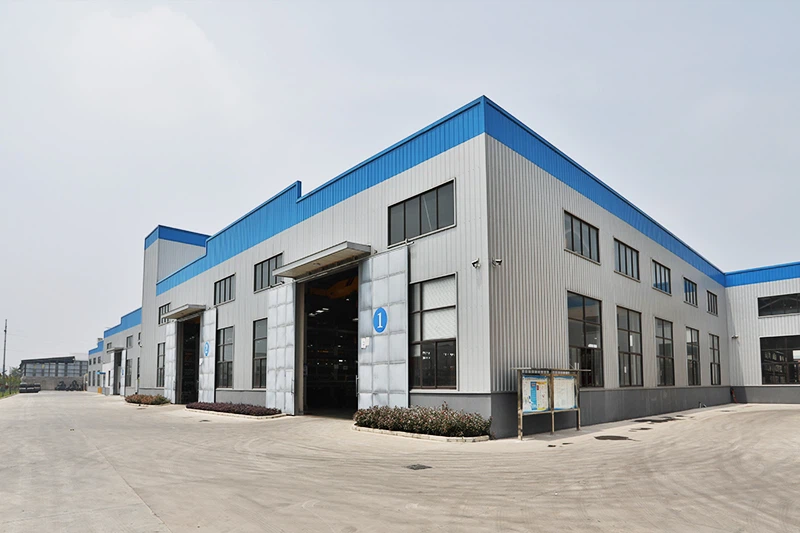
Jiangsu Jinrui Metal Products Co., Ltd. was established in 2018 and is located in Haian High-tech Zone, Jiangsu. The factory covers an area of 30,000 square meters, with a total investment of over 100 million yuan, an annual output of 20,000 tons, and business contacts in more than 40 countries around the world and region. Its parent company, Shanghai Jinrui Standard Parts Co., Ltd., was established in 2001 and is located in Baoshan District, Shanghai. After more than 20 years of unremitting efforts, it has developed into a new layout with Jiangsu Haian as its production base and Shanghai Baoshan and Henan Nanyang as its sales centers.
Why choose us?
Quality products
The company has passed ISO9001:2008 quality system certification and ISO/TS16949 automotive quality management system certification. Our state of the art production unit ensures durable product with excellent finishing.Multiple tests and checks are done at every stage of production process to ensure the chemical, mechanical and dimensional accuracy of each and every fastener.
Fast delivery
We leverage the synergies of efficient processes, advanced technologies and state-of-the-art manufacturing units capable of functioning at high capacities to deliver your customized products ahead of stipulated time-lines. Employing the assistance of trusted logistical partners only helps us ensure that your industrial hardware needs are met on time, always.
Customer support
Backed by our team of experienced professional with a strong service intent, open communication channels and a customer- oriented approach we provide customized solutions to our clients at the earliest. Making customer satisfaction our utmost priority and an attitude to resolve our strongest tool only helps us further strengthen our associations and establish our reliability time and again.
Quality packaging
At Jiangsu Jinrui Metal, we understand that a high-quality deliverable is possible only when excellence is upheld at every stage of the process. We have a well-equipped Packaging Unit, where we pack our products in a manner which keeps the products highly safe. Thus the main importance is given to the safe delivery of the product so that the final product dispatched to the client is the same as the one as received by him.
-
![Cylindrical Pin]() Add to Inquiry
Add to Inquiry

What is Pins?
A pins is a type of fastener that is used to secure two or more components together. It is a straight, cylindrical rod with a uniform diameter and length, typically made of metal or plastic. Pins are commonly used in mechanical applications such as machinery, engines, and automotive components, as well as in furniture and cabinet-making. They are inserted into pre-drilled holes in the components to be joined and can be secured with screws, rivets, or other fasteners. Pins come in a variety of sizes, materials, and finishes to match the specific requirements of different applications.
Benefits of Pins
Durability: They are resistant to wear and tear and can last much longer than other types of pins.
Simplicity: They are straightforward to install and use. They can be installed in various applications, including homes, offices, and padlocks.
Versatility: Pins are versatile in their design. They can be used in a range of locks, including mortise locks, padlocks, and rim locks.
Cost-Effective: They are a cost-effective solution because of their durability, meaning they need to be replaced less often.
Reduced Maintenance: Pins are maintenance-free and need little to no lubrication.
Improved Control: They provide improved key control, making it less probable to create spare copies of keys.
High Load Capacity: They can handle high loads, which makes them an excellent solution for mechanical applications.
Resistance to Corrosion: They are made of materials that have a high level of resistance to corrosion and rust. This feature makes them an ideal choice for even harsh environments.
Types of Cylindrical Pin
Spring Pins
These pins have a coiled design and are used for securing and holding assemblies together. They are flexible and can absorb shock and vibration.
Dowel Pins
These are solid cylindrical pins used to locate and align two parts of a machine or equipment. They are commonly used in manufacturing and construction industries.
Taper Pins
These pins are tapered in shape, meaning their diameter reduces towards one end. They are commonly used for precise alignment and secure fit in various applications.
Service team
These are the simplest and most common type of cylindrical pins that are used for fastening, alignment, and support. They are straight and have a constant diameter throughout their length.
Knurled Pins
These pins have a textured surface that provides a better grip and prevents slipping and rotation. They are commonly used in hand tools and equipment.
Grooved Pins
These pins have spiral grooves cut into their surface, which provides a locking effect when inserted into a hole. They are commonly used in high-stress applications.
Slotted Pins
These pins have a slot cut down their length, which allows for easy insertion and removal. They are commonly used for quick and easy assembly and disassembly of machine parts.
Roll Pins
These pins are made of metal and have a tight coil that expands or contracts to fit into a hole. They are used to secure two components together and withstand heavy loads and shock.

Material pins conforming to the standard shall be manufactured from steel of grade C30 of IS: 5517-1972 Steels for hardening and tempering or any other suitable steel with a minimum tensile strength of 500 N/mm².
Application of Cylindrical Pin
Pins are used to align mechanical components during assembly. They are generally used to align two or more parts of a machine or mechanism, such as gears, pulleys, and other components.
Pins are used to retain components and prevent them from moving during operation. They are commonly used to secure bearings, gears, and other components in place.
Pins are used to transmit shear and tension loads between mechanical components. They are commonly used in drive trains, where the pins transmit torque between shafts.
Pins are used in fixtures and jigs to ensure repeatability of machining and assembly operations. They are often used in manufacturing processes such as drilling holes, milling, and turning.
Pins are often used in repairing machines, engines, and other mechanical parts. They are commonly used to replace worn and damaged pins, allowing the machine to function properly.
Pin manufacturing involves the use of machines and tools to cut, shape and polish metal pins to their final form. After the manufacturing process, pins are typically cleaned and processed before being packaged for sale. After this stage, the produced pin parts meet the user.

Components of Pins
A pin is a mechanical fastener that is used to connect two or more parts together. It is a straight, cylindrical rod that is usually made of steel or other strong materials. The following are the components of a pin:
Head: The head is the top part of the pin that makes contact with the surface of the material it is fastened to. The head may be flat, round, or hexagonal, depending on the application.
Shank: The shank is the long, straight part of the pin that connects the two parts together.
Diameter: The diameter of the pin varies depending on the size of the hole through which it is inserted.
Taper: Some pins have a tapered end that makes insertion easier and helps to keep the pin in place.
Chamfer: The chamfer is a beveled edge on the top and/or bottom of the pin that helps the pin to fit into the hole more easily.
Groove: Some pins have a groove along the shank that allows them to be held in place with a retaining ring or other fastener.
Finish: The pin may have a polished or plated finish to resist corrosion and wear.
The cylindrical pin is a simple but effective fastener that plays an important role in many mechanical applications.
How to Maintain Pins?
Regular cleaning
The first step to maintaining pins is to clean them regularly. Remove any dirt, debris, or rust that may have accumulated on the surface of the pins. Use a soft brush or cloth to clean the pins. Avoid using harsh chemicals or abrasive cleaners that can damage the surface of the pins.
01
Lubrication
Lubrication is also essential for maintaining cylindrical pins. Apply a thin layer of oil or grease to the pins regularly to ensure smooth operation and prevent corrosion. Use a lubricant that is appropriate for the material of the pins.
02
Inspection
Regularly inspect the pins for any signs of wear or damage. Check for any cracks, bends, or deformation of the pins. Replace any pins that are damaged or worn out immediately to prevent any accidents or failures.
03
Proper storage
Proper storage of pins is also crucial for maintaining their quality. Store the pins in a dry, cool place to prevent any rust or corrosion. Make sure that the pins are protected from any impacts or damage.
04
Proper use
Lastly, using the pins properly is crucial for maintaining their lifespan. Avoid using excessive force or applying pressure to the pins beyond their capacity. Always use the pins for their intended purpose and in the recommended manner.
05
How Pin Work
Pins are commonly used in machinery and other industrial applications to align and connect different components together. They are also known as dowel pins and can be made from a variety of materials such as aluminum, steel, or brass.
The basic idea behind a pin is that it fits snugly into a hole or slot on two separate components. These pins are typically designed with a chamfered edge on one side to aid in insertion and removal.
When two components are connected with pins, they are held in position by the pins. This allows for precise alignment between the components, which is essential in many industrial applications. The pins also help to distribute tension and stress across both components, providing additional strength and stability.
There are several different types of pins available, each with its unique features and benefits. The most common types include
Solid pins - These pins are made from one solid piece of material and are used for basic connection and alignment purposes.
Tapered pins - These pins are wider at one end than the other, allowing them to fit more securely into holes with a taper. This provides a stronger connection and reduces the risk of the pin slipping out of place.
Split pins - Also known as cotter pins, these pins are designed to be bent once they have been inserted into a hole or slot. This creates a secure and permanent connection between the components.
Pins are an essential part of many industrial applications. They provide a reliable and precise method of connecting and aligning components together, which is essential for maintaining the overall integrity and strength of machinery and other equipment.
Certificate

Jiangsu Jinrui Metal Products Co., Ltd. was established in 2018 and is located in Haian High-tech Zone, Jiangsu. The factory covers an area of 30,000 square meters, with a total investment of over 100 million yuan, an annual output of 20,000 tons, and business contacts in more than 40 countries around the world and region. Jiangsu Jinrui has advanced multifunctional cold heading equipment, thread machine, nut machine and large hot heading equipment.



FAQ
Q: Are there different types of pins?
Q: How are pins used in engineering?
Q: What are pins instead of screws?
Q: Is a pin a fastener?
Q: What are pins in construction?
Q: What is a metal pin?
Q: What is a mechanical pin?
Q: What are steel pins used for?
Q: What is the difference between a pin and a bolt shear?
Q: Why do shear pins break?
Q: What is the difference between a groove pin and a dowel pin?
Q: What is the difference between spring pin and dowel pin?
Q: What is the purpose of cylinder head dowel pins?
Q: Are dowel pins stronger than screws?
Q: Are dowel pins strong?
Q: How important are dowel pins?
Q: What material are pins made of?
Q: What is the best pin material?
Q: What type of metal is pin?
Q: What material is used for steel pins?
We're professional pins manufacturers and suppliers in China, specialized in providing high quality custom service. We warmly welcome you to wholesale high-grade pins at competitive price from our factory.
Carbon Steel Galvanized Round Pins, Titanium Round Pin DIN7, Nickel Plated Cotter Pin