

Company Profile
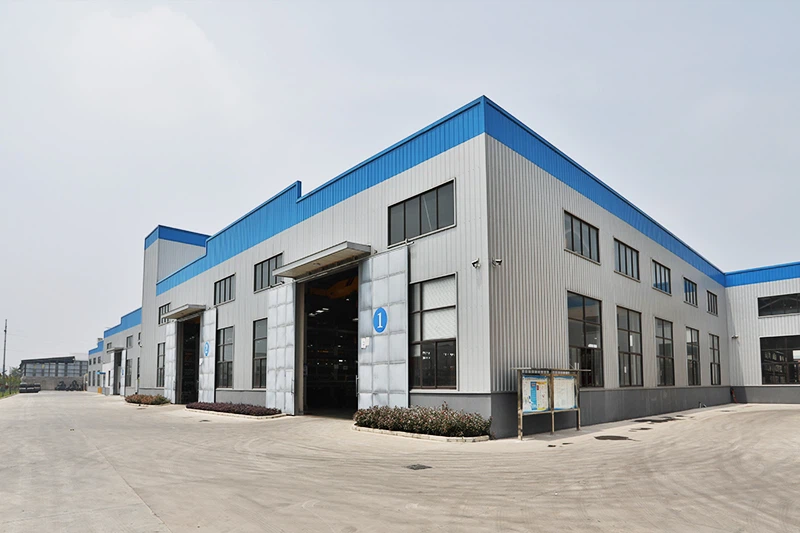
Jiangsu Jinrui Metal Products Co., Ltd. was established in 2018 and is located in Haian High-tech Zone, Jiangsu. The factory covers an area of 30,000 square meters, with a total investment of over 100 million yuan, an annual output of 20,000 tons, and business contacts in more than 40 countries around the world and region. Its parent company, Shanghai Jinrui Standard Parts Co., Ltd., was established in 2001 and is located in Baoshan District, Shanghai. After more than 20 years of unremitting efforts, it has developed into a new layout with Jiangsu Haian as its production base and Shanghai Baoshan and Henan Nanyang as its sales centers.
Why choose us?
Quality products
The company has passed ISO9001:2008 quality system certification and ISO/TS16949 automotive quality management system certification. Our state of the art production unit ensures durable product with excellent finishing.Multiple tests and checks are done at every stage of production process to ensure the chemical, mechanical and dimensional accuracy of each and every fastener.
Fast delivery
We leverage the synergies of efficient processes, advanced technologies and state-of-the-art manufacturing units capable of functioning at high capacities to deliver your customized products ahead of stipulated time-lines. Employing the assistance of trusted logistical partners only helps us ensure that your industrial hardware needs are met on time, always.
Customer support
Backed by our team of experienced professional with a strong service intent, open communication channels and a customer- oriented approach we provide customized solutions to our clients at the earliest. Making customer satisfaction our utmost priority and an attitude to resolve our strongest tool only helps us further strengthen our associations and establish our reliability time and again.
Quality packaging
At Jiangsu Jinrui Metal, we understand that a high-quality deliverable is possible only when excellence is upheld at every stage of the process. We have a well-equipped Packaging Unit, where we pack our products in a manner which keeps the products highly safe. Thus the main importance is given to the safe delivery of the product so that the final product dispatched to the client is the same as the one as received by him.
-
![Flat Washer]() Add to Inquiry
Add to Inquiry -
![Spring Washer]() Add to Inquiry
Add to Inquiry


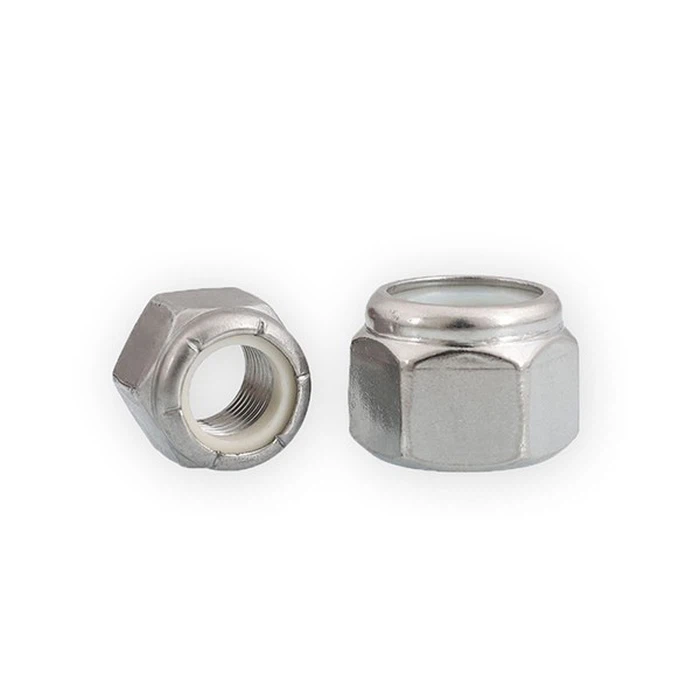
A washer is a thin, flat, circular or oval-shaped object that is used to distribute the load of a threaded fastener such as a bolt or screw. It is placed between the fastener and the material being fastened to prevent damage or distortion to the material or fastener. Washers are typically made of metal or plastic and come in various sizes and thicknesses. They are commonly used in a variety of applications, including plumbing, automotive repair, and construction.
Benefits of Washer
The primary benefit of using a washer is to spread the load of the fastener evenly over a larger surface area, preventing damage and material deformation. When a nut or bolt is tightened, force is concentrated in a small area, but a flat washer enhances the force distribution, reducing the likelihood of damage.
Washers serve as a barrier between two dissimilar metals or materials that may corrode if directly in contact. This means that if your fastener is made of steel and the structure it is attached to is aluminum or copper, a washer can prevent galvanic corrosion, which happens when dissimilar metals come into contact.
Washers are easy to install and can be added to a wide range of applications while improving its reliability and functionality. Some washers need specific installation requirements, but a flat washer can be installed with almost any type of fastener.
Washers can improve the stability of a fastener, reducing wear and tear on the material and securing the fastener in its location. This is particularly important in applications that undergo repeated stress or vibration, where a washer can resist the impact of pressure and movement.
Washers are easy to manufacture, and they require less material compared to other washers, reducing the cost for production. They are also readily available and can be purchased in bulk quantities, decreasing the purchase cost for buyers.
Torque Washer
The principal uses for these washers are in the woodworking industry. When a nut is tightened, the outside prongs of the washers feature square holes that prevent the accompanying bolt from spinning.
Flat washer
Flat washers have a hole in the center and are flat or disc-shaped. They are ideal for small head screws because they spread the weight across a wider surface.
Fender washer
Fender washers are bigger and have a tiny hole in the center. They can spread out the load across a broader region. These washers are primarily used in sheet metal manufacturing, automotive fenders, and plumbing industries.
Finishing or countersunk washer
Countersunk washers in this category often create a flush finish upon securing with a flat-head countersunk screw. This ability to catch countersunk fasteners is due to its sunken top.
Shoulder washer
Shoulder washer fasteners in this category come in various materials, including PTFE, fiberglass, metal, phenolic, and nylon. These shoulder-like shaped washers often serve as insulators for screws and wires.
C-washer
A C-washer resembles a flat washer, but the primary difference is the hole cut from its center to form a C-shape. One primary advantage of this type of washer is that it is possible to adjust, remove or modify it without removing the fastener.
Spring washers
For machinery that vibrates vigorously while operating, spring washers are ideal. They move with vibrations, thus preventing them from being loose or unfastened because of their axial flexibility, consequently increasing the joint’s flexibility. There are different types of spring washers.
Belleville or conical washer
These washers, often called conical spring washers, are employed to maintain tension during the assembly’s thermal expansion and contraction. They can support large weights while deflecting only slightly.
Dome spring washer
A dome washer is renowned for having a large load capacity with minimal deflection. They also absorb excessive vibrations and flatten the surface.
Wave spring washer
Wave spring washers are curved in two directions and are typically employed as cushions or spacers. They can support a moderate amount of weight and guard against excessive wear on the surface.
Finger spring washer
Made using carbon steel, finger spring steel washers comprise three curved flanges. They help lessen vibration, skidding wear, additional wear, dampening, and noise on rotating parts.
Crescent spring washer
The crescent spring washer, also called curved spring washer, has a somewhat curved appearance that gives them a lighter pressure while maintaining flexibility. They have an extensive deflection range and can withstand extremely light loads.
Material of Washer
Washers can be fabricated from a variety of materials including, but not limited to: Steel – Carbon steel, spring steel, A2 (304) stainless steel, and A4 (316/316L) stainless steel. Non-ferrous metal – Copper, brass, aluminium, titanium, iron, bronze, and zinc. Alloy – Silicon bronze, Inconel, Monel, and Hastelloy.


Application of Washer
Washers are used to distribute the load of a threaded fastener, such as a bolt or nut. Before a screw or bolt is driven into a surface, a washer may be placed in order to prevent looseness and provide protection. This also prevents the bolt head and nut from damaging the surfaces of the two fastened parts.
Process of Washer
Metal Stamping
The stamping process carried out on a power press, produces washers. During stamping or power pressing, a die determines the washer form.
Washer Dies
A washer die is a customised form used to manufacture washers. A single metal sheet is used for multiple washers since washers are small items.
Gauge of Metals
A washer's thickness is determined by its gauge, which also determines its spacing. As early as the industrial revolution, there wasn't a single method for determining viscosity, so gauges were used to measure it.
A washer is a thin, circular-shaped washer typically used to distribute load, improve stability, or decrease friction between two surfaces. Washers can be found in a variety of sizes and materials and can be used in a wide range of applications.
The components of a flat washer can vary based on its design and intended use. However, there are some common components that are typically found in flat washers. These include:
Outer Diameter (OD): This is the outermost edge of the washer and is usually larger than the inner diameter. The OD determines the size of the washer and is used to distribute the load over a larger area.
Inner Diameter (ID): This is the innermost part of the washer and is usually smaller than the outer diameter. The ID determines the size of the hole that the washer can accommodate.
Thickness: This is the distance between the top and bottom surfaces of the washer. The thickness varies based on the application and the amount of force that the washer is expected to withstand.
Material: Washers can be made from a variety of materials, including steel, stainless steel, rubber, plastic, and brass. The material chosen depends on the application and the properties required, such as strength, durability, and resistance to corrosion.
Surface finish: The surface finish of the washer can be plain (uncoated), coated, or plated. Coating or plating is often done to improve the washer's corrosion resistance or to add color.
The components of a washer work together to create a simple yet effective tool that is used to improve the performance and longevity of machines and structures.
How to Maintain Washer?
Store them properly
Flat washers should be stored in a dry, clean and well-ventilated area. Avoid storing them in humid, damp or dusty environments, as this can damage the material.
Use The Correct Size
Ensure that the flat washer used is the correct size and dimensions for the task at hand. Using an undersized or oversized washer can compromise the performance of the washer or cause damage to your equipment.
Keep them clean
After use, wipe the flat washers with a clean, dry cloth to remove any dirt or debris. This will prevent buildup and corrosion on the metal surface of the washer.
Inspect for damage
Regularly inspect the flat washers for signs of damage, such as rust, cracks or warping. If any damage is found, either repair or replace the washer immediately to prevent potential leaks or equipment failure.
Use the right material
Use the right flat washer material for your application. Different materials have different properties and will perform differently in different environments. For instance, copper flat washers are ideal for use in highly corrosive environments.
Washers are small, thin, and generally circular pieces of hardware designed to distribute or redirect the load of a fastening screw or bolt. They are usually made of metal or plastic and are placed on the shaft of a bolt or screw to act as a spacer between the bolt head or nut and the surface being fastened.
The primary function of a washer is to distribute the load, reducing the likelihood of damage or deformation to the surface being fastened. By spreading the load across a wider area, a washer can reduce stress points and help to prevent surfaces from cracking or bending under tension. They can also be used to ensure a more even torque or clamping force across the fastening assembly.
Washers can also act as a sealing or insulating element. When paired with a rubber or silicone gasket or washer, a washer can help to prevent fluids or gases from leaking through the fastener assembly. They can also be used to provide electrical insulation in certain applications.
Washers are used in a wide range of industries and applications, from machinery and construction to automotive and aerospace. They are available in a variety of sizes and materials, including stainless steel, brass, nylon, and more.
Washers are a simple but essential component of many fastener assemblies. By distributing loads and preventing damage, they help to ensure the longevity and structural integrity of the components they are used to fasten.
Certificate

Jiangsu Jinrui Metal Products Co., Ltd. was established in 2018 and is located in Haian High-tech Zone, Jiangsu. The factory covers an area of 30,000 square meters, with a total investment of over 100 million yuan, an annual output of 20,000 tons, and business contacts in more than 40 countries around the world and region. Jiangsu Jinrui has advanced multifunctional cold heading equipment, thread machine, nut machine and large hot heading equipment.



FAQ
Q: What is the process of washers?
Q: What is the purpose of washers?
Q: What are the three main types of washers?
Q: What are the advantages of washers?
Q: What are the advantages of washers in engineering?
Q: How do washers prevent loosening?
Q: Why are metal washers used?
Q: Why are washers important in bolts?
Q: Are washers necessary?
Q: What are the grades of washer materials?
Q: Do all bolts need washers?
Q: Do washers affect torque?
Q: What is washer in construction?
Q: Where do you place washers?
Q: What is the hardness of a washer?
Q: How are washers sized?
Q: What is the difference between a nut and a washer?
Q: Why spring washer is used?
Q: Do bolts need lock washers?
Q: What is a bolt with a washer attached called?
We're professional washer manufacturers and suppliers in China, specialized in providing high quality custom service. We warmly welcome you to wholesale high-grade washer at competitive price from our factory.
Flat Washer, Spring Washer, Washer