

Company Profile
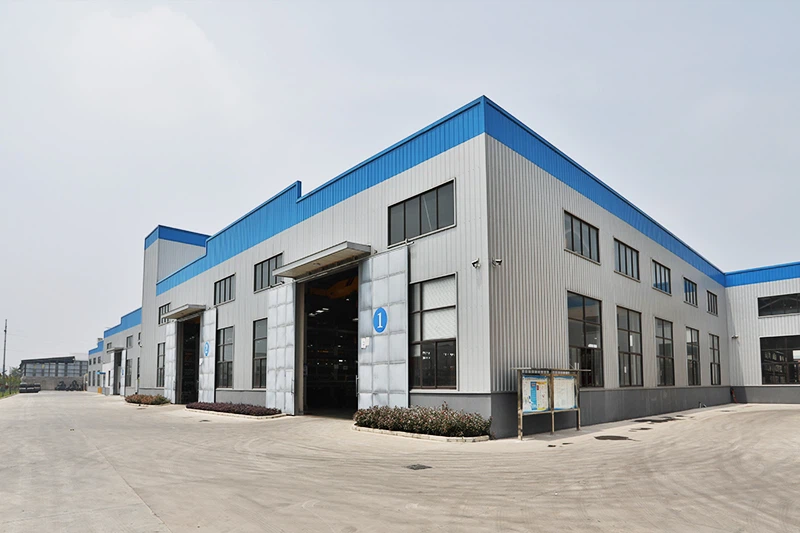
Jiangsu Jinrui Metal Products Co., Ltd. was established in 2018 and is located in Haian High-tech Zone, Jiangsu. The factory covers an area of 30,000 square meters, with a total investment of over 100 million yuan, an annual output of 20,000 tons, and business contacts in more than 40 countries around the world and region. Its parent company, Shanghai Jinrui Standard Parts Co., Ltd., was established in 2001 and is located in Baoshan District, Shanghai. After more than 20 years of unremitting efforts, it has developed into a new layout with Jiangsu Haian as its production base and Shanghai Baoshan and Henan Nanyang as its sales centers.
Why choose us?
Quality products
The company has passed ISO9001:2008 quality system certification and ISO/TS16949 automotive quality management system certification. Our state of the art production unit ensures durable product with excellent finishing.Multiple tests and checks are done at every stage of production process to ensure the chemical, mechanical and dimensional accuracy of each and every fastener.
Fast delivery
We leverage the synergies of efficient processes, advanced technologies and state-of-the-art manufacturing units capable of functioning at high capacities to deliver your customized products ahead of stipulated time-lines. Employing the assistance of trusted logistical partners only helps us ensure that your industrial hardware needs are met on time, always.
Customer support
Backed by our team of experienced professional with a strong service intent, open communication channels and a customer- oriented approach we provide customized solutions to our clients at the earliest. Making customer satisfaction our utmost priority and an attitude to resolve our strongest tool only helps us further strengthen our associations and establish our reliability time and again.
Quality packaging
At Jiangsu Jinrui Metal, we understand that a high-quality deliverable is possible only when excellence is upheld at every stage of the process. We have a well-equipped Packaging Unit, where we pack our products in a manner which keeps the products highly safe. Thus the main importance is given to the safe delivery of the product so that the final product dispatched to the client is the same as the one as received by him.
-
![Full Threaded Stud]() Add to Inquiry
Add to Inquiry -
![Double End Stud]() Add to Inquiry
Add to Inquiry


A studs is a type of fastener that has threads on both ends, allowing it to be screwed into a material or component on one end and then fastened with a nut or another component on the other end. Studs are commonly used in construction, automotive, and manufacturing applications to create strong and secure connections between two components. They come in a variety of materials and sizes to suit different applications and can be used in both permanent and removable fastening applications.
Benefits of Studs
Versatility: Studs are available in a range of materials, lengths, and diameters, making them flexible and versatile for many different applications.
Secure fastening: Studs offer a secure and reliable fastening method, as they can be screwed into place and tightened securely.
Increased Strength: Studs provide increased strength and stability, as they can distribute load forces evenly.
Cost-effective: Studs are cost-effective and provide a low-cost alternative to other fastening options.
Easy Installation: Studs are easy to install and remove, saving time and effort during installation and maintenance.
Durability: Studs are highly durable and can withstand heavy loads, high pressures, and extreme temperatures.
Corrosion resistance: Studs are available in materials that are resistant to corrosion, making them ideal for use in damp or corrosive environments.
Types Of Studs
Fully threaded stud
A fully threaded stud has threads over its entire length and is used when both ends need to be secured with a nut or another fastener.
Partially threaded stud
A partially threaded stud has threads on one end and a smooth shank on the other. It is used when the unthreaded portion needs to be inserted into a hole or a tapped part.
Double end stud
A double end stud has threads on both ends and is used to join two parts together with two nuts.
Step stud
A step stud has two different diameters on its shank and is used when the smaller diameter needs to be pressed into a hole while the larger diameter remains outside.
Welding stud
A welding stud has a threaded end that is welded to a base material like a plate or a pipe.
Swage stud
A swage stud has one end that is tapered for insertion into a hole and a smooth shank that is expanded to secure it in place.
Hanger stud
A hanger stud has one end threaded and the other end bent into a hook shape for suspending pipes or other objects.

Material of Studs
Five common materials used to manufacture studs include carbon steel, stainless steel, alloy steel, superalloys, and exotic materials such as Inconel and Monel.
Process of Studs
This is a mechanical process where threads are cold-formed and is done with two dies. One is stationary, and the other is a moving die that actually exerts pressure on the bolts and studs. Tapping is done for nut manufacturing in India. Heat treatment is done to make the bolts, nuts, and studs stronger.
Application Of Studs
- Electrical Studs are also used in electrical applications to provide support and structure for wiring, electrical panels, and switches.
- Automotive Studs are commonly used in the automotive industry for securing wheels to axles or brake discs to wheels.
- Jewelry Studs are often used in jewelry design to create simple and elegant designs, such as stud earrings or bracelets.
- Art Studs can be used in art projects to create unique and textured designs on canvases or other surfaces.
- Clothing Studs can also be used in clothing design as decorative accents or to secure materials together.
- Furniture Studs can be used in furniture design as decorative accents or to secure upholstery to frames.
- Construction Studs are commonly used in construction for framing walls, ceilings, and floors. They are used to create a strong and stable structure that can support a building's weight.
- Leatherworking Studs are commonly used in leatherworking to add decorative elements to belts, bags, and other leather goods.
Studs are essential components used in various construction projects, especially in building framing and support structures. They are vertical wooden or metal pieces that form the framework and provide strength and stability to the walls, floors, and ceilings.
There are different types of studs used in construction projects such as load-bearing studs, non-load-bearing studs, and cripple studs. Load-bearing studs are larger in size and are designed to carry weight, whereas non-load-bearing studs are used for partition walls. Cripple studs are shorter studs used above and below window and door openings to provide support.
Studs play a vital role in supporting the weight of the roof, floors, and walls. They create a sturdy foundation that enables the construction of large buildings with multiple stories. Studs are designed to fit together snuggly, which helps to prevent any movement or flexing in the structure.
The size and spacing of studs are determined by the building code regulations and project specifications. As per the standards, studs should be spaced at a maximum of 16 inches on center, which ensures they can support the weight effectively.
Studs can be made from different materials, including wood, metal, or composite materials. Wood studs are the most common type of studs used in residential construction, while metal studs are preferred for commercial projects due to their durability and fire-resistance properties.
Studs are a crucial component in any construction project. They provide stability and support to the building framework, making it strong and durable. The type and size of studs used are determined by the nature and specifications of the project. Choosing the right type of studs is essential to ensure the building meets the required safety standards and lasts for many decades.
How to Maintain Studs?
Check for wear and damage
Regular inspection of studs is important to detect signs of wear or damage. Examine the studs and their mounting hardware for any cracks, chips, or other wear marks. If you notice any damage, have the studs replaced immediately. Worn or damaged studs can cause wheels to lose traction and affect braking performance.
Keep them clean
Dirt, debris, and rust can impede the effectiveness of studs. Keep them clean by wiping them regularly with a soft brush or cloth to remove any dirt or rust. It is also advisable to keep the stud pockets free of dirt and debris to ensure a proper fit.
Check for tightness
Make sure that the studs are tightened to the manufacturer's specifications. Loose studs can cause vibration, wobbling, or even come off while in use. Use a torque wrench to ensure that the studs are tightened to the correct specifications.
Use them appropriately
Studs are designed for use in icy or snowy conditions. Using them on dry or wet roads can cause them to wear prematurely, reducing their effectiveness. It is also important to avoid hard braking or acceleration, which can damage the studs or the tire surface they are mounted on
Rotate tires
Regular tire rotation is essential to prevent uneven wear on the studs and the tires. Rotate the tires every 6,000-8,000 miles or as recommended by the manufacturer.
Replace them when necessary
Studded tires have a limited lifespan, and the studs will wear down over time. Replace them when the studs are worn down to the recommended minimum depth. It is recommended to change studs every two years, even if they appear to be in good condition.
Studs are metal fasteners that are commonly used in construction to hold together materials such as drywall, wood, and metal. They are typically made from steel, aluminum, or brass and come in a variety of sizes and shapes depending on the specific application.
In wall construction, studs are typically vertical wood or metal beams that run from the bottom to the top of the wall and provide support for the structure. They are spaced evenly apart and are usually positioned 16 inches or 24 inches on center.
Before installation, the location of the studs is marked on the wall surface. Then, fasteners such as screws or nails are used to attach the wall material to the studs. In wood framing construction, the wall material is commonly attached using nails driven through the material and into the studs.
In metal framing construction, self-tapping screws or special fasteners called clips are used to attach the wall material to the studs. These clips allow for easy installation and provide a secure hold between the material and the metal frame.
Studs also play a crucial role in the installation of doors and windows. They provide a solid frame around the opening and allow for the attachment of hinges, locks, and other hardware.
In addition to their use in construction, studs are also commonly used in automotive and motorcycle applications to hold together body panels and other parts of the vehicle. They can be threaded or unthreaded and come in various lengths and diameters depending on the specific application.
Studs are essential components in construction and other industries where fasteners are needed to hold materials together. They provide structural support, allow for the attachment of hardware, and come in a variety of shapes and sizes to meet specific needs.
Certificate

Jiangsu Jinrui Metal Products Co., Ltd. was established in 2018 and is located in Haian High-tech Zone, Jiangsu. The factory covers an area of 30,000 square meters, with a total investment of over 100 million yuan, an annual output of 20,000 tons, and business contacts in more than 40 countries around the world and region. Jiangsu Jinrui has advanced multifunctional cold heading equipment, thread machine, nut machine and large hot heading equipment.



FAQ
Q: What is the application of a stud?
Q: Where are studs used?
Q: What is a stud bolt used for?
Q: What is the advantage of a stud?
Q: What is a stud in engineering?
Q: What is the difference between a bolt and a stud?
Q: Are studs fasteners?
Q: Why are studs so hard?
Q: What is the best fastener for studs?
Q: How do you secure studs?
Q: What is the purpose of a metal stud?
Q: How studs are manufactured?
Q: Why use studs instead of bolts?
Q: What is the difference between a stud and a stud bolt?
Q: What are the parts of a stud bolt?
Q: What are metal studs made of?
Q: Is a stud a screw?
Q: Are studs stronger than bolts?
Q: What is the advantage of studs over bolts?
Q: What are the uses of studs?
We're professional studs manufacturers and suppliers in China, specialized in providing high quality custom service. We warmly welcome you to wholesale high-grade studs at competitive price from our factory.
Studs, Full Threaded Stud, Double End Stud