

Company Profile
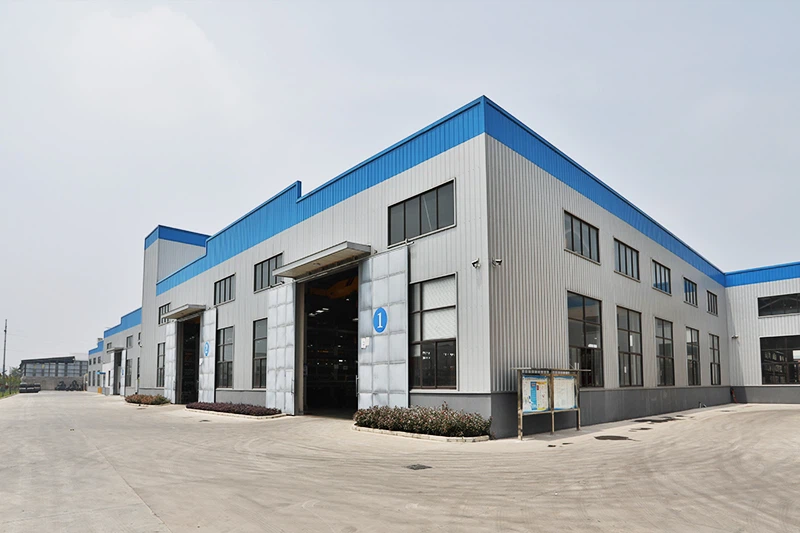
Jiangsu Jinrui Metal Products Co., Ltd. was established in 2018 and is located in Haian High-tech Zone, Jiangsu. The factory covers an area of 30,000 square meters, with a total investment of over 100 million yuan, an annual output of 20,000 tons, and business contacts in more than 40 countries around the world and region. Its parent company, Shanghai Jinrui Standard Parts Co., Ltd., was established in 2001 and is located in Baoshan District, Shanghai. After more than 20 years of unremitting efforts, it has developed into a new layout with Jiangsu Haian as its production base and Shanghai Baoshan and Henan Nanyang as its sales centers.
Why choose us?
Quality products
The company has passed ISO9001:2008 quality system certification and ISO/TS16949 automotive quality management system certification. Our state of the art production unit ensures durable product with excellent finishing.Multiple tests and checks are done at every stage of production process to ensure the chemical, mechanical and dimensional accuracy of each and every fastener.
Fast delivery
We leverage the synergies of efficient processes, advanced technologies and state-of-the-art manufacturing units capable of functioning at high capacities to deliver your customized products ahead of stipulated time-lines. Employing the assistance of trusted logistical partners only helps us ensure that your industrial hardware needs are met on time, always.
Customer support
Backed by our team of experienced professional with a strong service intent, open communication channels and a customer- oriented approach we provide customized solutions to our clients at the earliest. Making customer satisfaction our utmost priority and an attitude to resolve our strongest tool only helps us further strengthen our associations and establish our reliability time and again.
Quality packaging
At Jiangsu Jinrui Metal, we understand that a high-quality deliverable is possible only when excellence is upheld at every stage of the process. We have a well-equipped Packaging Unit, where we pack our products in a manner which keeps the products highly safe. Thus the main importance is given to the safe delivery of the product so that the final product dispatched to the client is the same as the one as received by him.
-
![Hex Bolts]() Add to Inquiry
Add to Inquiry -
![Oval Neck Bolts]() Add to Inquiry
Add to Inquiry -
![Hex Flange Bolts]() Add to Inquiry
Add to Inquiry -
![Carriage Bolts]() Add to Inquiry
Add to Inquiry -
![Hex Socket Bolt]() Add to Inquiry
Add to Inquiry -
![U Bolts]() Add to Inquiry
Add to Inquiry -
![Zinc Plated Hex Bolt]() Add to Inquiry
Add to Inquiry -
![Grade 8.8 Hex Bolt]() Add to Inquiry
Add to Inquiry -
![DIN933 Hex Bolt]() Add to Inquiry
Add to Inquiry -
![Zinc Plated Oval Neck Bolt]() Add to Inquiry
Add to Inquiry -
![Grade 8.8 Oval Neck Bolt]() Add to Inquiry
Add to Inquiry -
![Track Bolt]() Add to Inquiry
Add to Inquiry


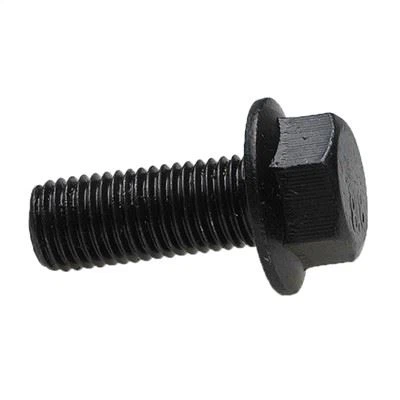


What is Bolts?
Bolts are cylindrical fasteners that are used to mechanically join two or more objects together. They consist of a threaded shaft with a head at one end and a nut or another threaded component at the other end that is tightened to create a secure, stable joint. Bolts are commonly made of steel, although they can also be made of other materials like brass, titanium, or aluminum. They are frequently used in construction, machinery, automotive, and other industries where strong and reliable mechanical connections are necessary.
Benefits of Bolts
One of the primary advantages of using bolts is that they create stronger joints than other types of fasteners. This is because bolts are designed to be tightened to a specific torque, which creates a more secure joint. Additionally, bolts are less likely to loosen over time, which can often be an issue with other types of fasteners.
Another advantage of using bolts is that they can help to increase safety. This is because bolts are less likely to fail than other types of fasteners, which can often come loose over time. Additionally, bolts are less likely to cause damage to the surrounding area if they do fail, as they will simply snap instead of shatter.
Bolts are also generally easier to install than other types of fasteners. This is because they do not require any special tools or equipment for installation. Additionally, bolts can be installed quickly and easily, even by those with limited experience.
Bolts are also more aesthetically pleasing than other types of fasteners. This is because they are available in a variety of finishes, such as zinc-plated or stainless steel. Additionally, bolts can be color coded to match the surrounding area, which can add a touch of style to any project.
Anchor Bolt
Attaching structural and non-structural components to concrete slabs is a common practice that calls for the usage of anchor bolts.
Arbor Bolts
For usage with power instruments, especially miter saws, an arbor bolt is required. These types of bolts fasten the blade firmly into place and ensure the instrument won’t fall apart.
Blind Bolts
As a structural fastener, a blind bolt outperforms a rivet or weld in terms of both strength and flexibility.
Carriage Bolt
In the context of fastening metal to metal or, more typically, wood to metal, a carriage bolt is a necessary type of Bolt.
Elevator Bolts
Elevator bolts have a slender body and a rounded head, and they are threaded. To prevent the bolt from rotating when the nut is tightened, either a square or ribbed neck can be used.
Eyebolt
A mechanical fastener, an eyebolt has a ring-shaped head on top of a threaded shaft. The purpose of an eyebolt is to fix an eye to a surface so that a line or cable may be run through it and fastened to the anchor.
Flange Bolts
A flange bolt’s round under-head flange serves as a washer to evenly disperse pressure. Types of bolts with a hex head rather than serrations on the flange are commonly referred to as frame bolts.
Hex Bolt
When tightening, the hexagonal head of hex cap screws and hex bolts is ideal. Hex bolts are different from standard bolts since they don’t have a washer under the head or a beveled end and hence need a nut to secure them.
J-Bolts
An example of a versatile bolt design is the J-shaped J bolt. These types of bolts don’t have bolt heads, but the threaded end may be used with a nut. They see the widespread application in the building trade.
Lag Bolts
Although they don’t have a nut slot, lag bolts and lag screws are still considered screw fasteners.
Machine Bolt
Machine bolts, like hex bolts, are used to fasten two pieces of metal together, however, unlike hex bolts, their heads aren’t chamfered and there is no washer-support surface.
Hanger Bolts
A hanger bolt is a double-ended bolt that is commonly used to attach legs to furniture. Hanger bolts are pretty much unsung heroes of hardware.
Material of Bolts
Steel: This is the most common material used for bolts. It is strong, durable, and widely available in different grades.
Stainless steel: This material is resistant to corrosion and is commonly used in applications where bolts are exposed to moisture or harsh environments.
Brass: This material is soft, ductile, and has good corrosion resistance. It is often used in electrical and plumbing applications.
Aluminum: This material is lightweight, has good corrosion resistance, and is often used in applications where weight is a concern.
Titanium: This material is lightweight, strong, and corrosion-resistant. It is often used in aerospace and medical applications.
Copper: This material is soft, ductile, and has good thermal and electrical conductivity. It is often used in electrical and plumbing applications.
Bronze: This material is strong, corrosion-resistant, and is often used in marine applications.
Application of Bolts
These Are The Applications Of Bolts In The Various Industries
Many steel structure and building fittings are fixed together with simply bolting. Hex bolts together with the matching nuts are used to join two pieces of fitting and fixtures.
For joining flange joints, bolts are used to join two or more flanges together. The flange is a method to join the valve, pipes pumps etc together. Bolts are used to join them which is the biggest work to provide strength to the equipment.


Small fixtures such as wood and furniture structures need bolts with the matching nuts to secure the two or more pieces of wood together at one place.
Bolts and nuts together with a washer are used to hold the sinking piece of woods and secure it tightly at a place hence provides strength and durability while fixing the pieces.
Process of Bolts
-
Wire: Uncoiled, straightened and cut to length.
-
Cold forging: Molding the steel into the right shape at room temperature.
-
Bolt head: Progressively formed by forcing the steel into various dies at high pressure.
-
Threading:Threads are formed by rolling or cutting.
-
Heat treatment: The bolt is exposed to extreme heat to harden steel.
-
Surface treatment: It depends on the application. Zinc-plating is common to increase corrosion resistance.
-
Packing/stocking: After quality control to ensure uniformity and consistency, the bolts are packaged.

Bolts are important fasteners that are commonly used in various industries and applications. They are typically used to join two or more parts together to form a secure, lasting bond. Bolts come in different materials, lengths, shapes, and sizes, and each component of a bolt serves a specific purpose. Here is a detailed overview of the components of bolts:
Head: This is the top part of the bolt that is used to hold and turn the bolt. Bolts can have different types of heads, including hexagonal, round, square, and more. Hexagonal (or hex) head bolts are the most common type and are designed to be turned with a wrench or socket.
Shank: The shank is the body of the bolt that extends from the head to the tip. The shank is usually smooth, but it can also be threaded, depending on the application.
Threads: The threads are the grooves that spiral down the shank of the bolt. These threads allow the bolt to be turned and screwed into a threaded hole or nut. Threads can be coarse or fine, depending on the application.
Thread pitch: The thread pitch is the distance between two adjacent threads. It is measured in threads per inch or millimeter (depending on the system of measurement). The thread pitch is an important factor that determines how tightly the bolt will hold the parts together.
Thread length: The thread length is the length of the shank that has threads. It is important to choose the correct thread length to ensure that the bolt will securely fasten the parts together.
Tip: The tip is the end of the bolt that is threaded. The tip can be pointy or flat, depending on the application.
Washer: A washer is a flat metal or plastic ring that is placed under the bolt head or nut. The washer helps to distribute the load evenly, reducing the risk of damage to the surface it is fastened to.
Nut: The nut is a threaded fastener that is used to secure the bolt in place. The nut is threaded onto the shank of the bolt, and when tightened, it presses against the surface, holding the parts together.
Bolts are versatile components of engineering and are used in various industries like aerospace, automobile, construction, marine, and manufacturing. Understanding the different components of a bolt assists in selecting the right type of bolt for an application and installing it correctly.
How to Maintain Bolts
Keep them clean
Clean the bolts every time you perform maintenance on your equipment or machinery. Dirt, rust, and debris accumulation can cause bolts to degrade, causing them to fail prematurely.
Lubricate the bolts
Use appropriate lubrication to maintain the bolts' quality. Lubrication protects bolts from rust and wear, making them last longer. Lubricants also make bolts easier to remove when you perform maintenance.
Tighten the bolts appropriately
Over-tightening the bolts can cause them to break or strip. Follow the manufacturer's recommended torque specifications to ensure that the bolts are tightened just right.
Replace worn-out bolts
The bolts' performance can degrade over time, so it's essential to replace them if they are showing signs of wear or rust. Continuing to use worn-out bolts can cause equipment or machinery failure, leading to costly damages and repairs.
Avoid mixing different bolt types
Using bolts of different types or materials can lead to corrosion that can weaken the bolts or compromise their integrity over time.
Store bolts in a dry and cool place
Store bolts in a cool and dry environment to prevent rust and other forms of corrosion.
Bolts are cylindrical mechanical fasteners that are commonly used to secure two or more objects together. They come in different sizes and shapes, but they all have a threaded shank or shaft and a head. The head can be in different shapes, including hexagonal, round, square, or flat. Bolts work by threading through a hole in an object and attaching to a nut on the other side.
The first step in using a bolt is to drill a hole through the material that requires fastening. The size of the hole should be slightly larger than the bolt's diameter to allow easy threading. Once the hole has been drilled, the bolt is inserted through it.
Next, a nut is placed on the non-threaded end of the bolt and is tightened by turning it clockwise. As the nut tightens, it applies force to the material being fastened and compresses it against the opposing surface. The force applied to the material depends on the torque used to tighten the nut.
Bolts can sustain different loads depending on their size, material, and design. The most important factor that determines the strength of a bolt is its tensile strength, which is the measurement of the amount of stress or load it can withstand without breaking. Higher tensile strength bolts are used for applications that require more strength.
Other important factors in bolt selection include the type of material, corrosion resistance, thread pitch, and thread length. Materials commonly used for bolts include steel, stainless steel, brass, and titanium. The thread pitch refers to the number of threads per unit of measurement. A fine thread pitch is better for applications requiring greater load-bearing strength. Thread length refers to the distance from the tip of the bolt to the end of the threading.
Bolts work by threading through a hole in an object and attaching to a nut on the other side. The nut tightens, applying force to the material being fastened and compresses it against the opposing surface. Many factors can affect the strength and durability of bolts, including their size, material, thread pitch, and thread length. Proper selection of bolts is important to ensure that the joint's strength and reliability meet the requirements of the application.
Certificate

Jiangsu Jinrui Metal Products Co., Ltd. was established in 2018 and is located in Haian High-tech Zone, Jiangsu. The factory covers an area of 30,000 square meters, with a total investment of over 100 million yuan, an annual output of 20,000 tons, and business contacts in more than 40 countries around the world and region. Jiangsu Jinrui has advanced multifunctional cold heading equipment, thread machine, nut machine and large hot heading equipment.



FAQ
Q: What is the definition of a bolt?
Q: What are bolts used for?
Q: What are called bolts?
Q: Is a bolt considered a screw?
Q: What bolts are mostly used?
Q: When should you use bolts?
Q: Why is bolts important?
Q: How do bolts work?
Q: How are bolts classified?
Q: What is a bolt in engineering?
Q: Are bolts steel or metal?
Q: How are bolts named?
Q: What is a bolt and nut?
Q: What is a bolt without a head called?
Q: What is the difference between a bolt and a fastener?
Q: How are bolts used in construction?
Q: What is bolt and its advantages?
Q: What is bolt strength?
Q: What is bolt process?
Q: Do bolts need threads?
We're professional bolts manufacturers and suppliers in China, specialized in providing high quality custom service. We warmly welcome you to wholesale high-grade bolts at competitive price from our factory.
