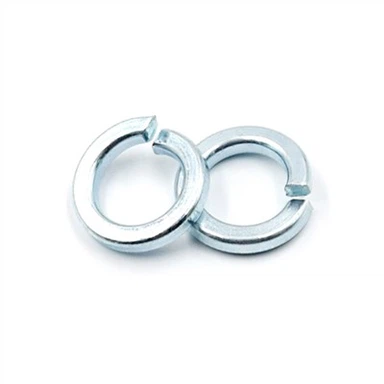

Unequal-Length Double-End Studs
Feb 05, 2026
There are various standards for stainless steel double-end studs, such as Type A and Type B of GB/T 901. A double-end stud is threaded at both ends with a smooth shank in the middle, which is how it gets its name. The suffix letters A and B in the standard have different meanings: Type A indicates the shank diameter is equal to the major diameter of the thread (thick shank), while Type B means the shank diameter matches the minor diameter of the thread (thin shank). The dimensions of the shank thickness are not arbitrary. For a thick shank, the smooth shank diameter is the same as the major diameter of the thread. For example, for an M16 thread, the shank diameter is 16 mm with a certain negative tolerance range. For a thin shank, the diameter equals the minor diameter of the thread (i.e., the wire diameter before thread rolling). For instance, the wire diameter before rolling an M16 thread is 14.2 mm, so the middle shank diameter of a thin shank stud is 14.2 mm.
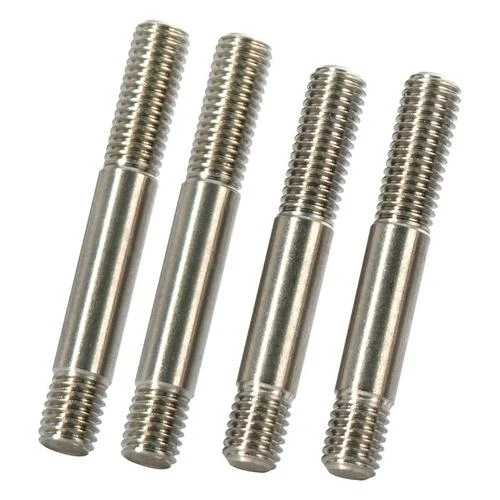
Stainless steel double-end studs are mainly used in valves and flanges. They are easy to install: simply pass them through pre-drilled holes and lock nuts on both ends, taking care to avoid the seizure characteristics of stainless steel fasteners. With industrial development, stainless steel double-end studs are now widely used in large equipment such as pressure vessels and mining machinery.
A wide range of materials can be used to produce double-end studs, including 304 and 316 stainless steel, as well as various grades of carbon steel, medium carbon steel, and high-strength alloy steel. However, we currently cannot supply one special material: A193-B7. This is a high-temperature-resistant alloy steel mainly used in the pressure vessel industry. Although some materials can be used as substitutes, pressure vessels are special equipment, and accidents can have severe consequences. Therefore, we do not offer products made of A193-B7 for the time being. We also remind users that this high-temperature-resistant material was originally imported, and some domestic enterprises directly use 42CrMoA as a substitute. While its performance is similar and it works fine in ordinary environments, it is not the material specified in the design, so caution is needed.
The production process of stainless steel double-end studs is relatively simple: wire rods are used as raw materials, cut to length, and then threaded at both ends. For thick shank studs, only an additional shank turning process is required. This is why many enterprises can produce double-end studs-the industry has a low entry barrier, and basic equipment is sufficient for production.
Currently, double-end studs are the most commonly used fasteners in reducers. Since reducers operate at high speeds for long periods, they cause significant wear on double-end studs. It is necessary to regularly check the thread locking condition and replace the matching nuts in a timely manner. We recommend using two nuts per threaded end. If the threads of a double-end stud are damaged, do not only replace the nuts- the stud itself must be replaced with a new one.
The purpose and standards of conventional double-end studs are easy to identify, and inspection and acceptance are straightforward. Therefore, this article focuses on an uncommon type of double-end stud: the unequal-length double-end stud complying with GB/T 897. Its special features can be seen in the technical drawings below:
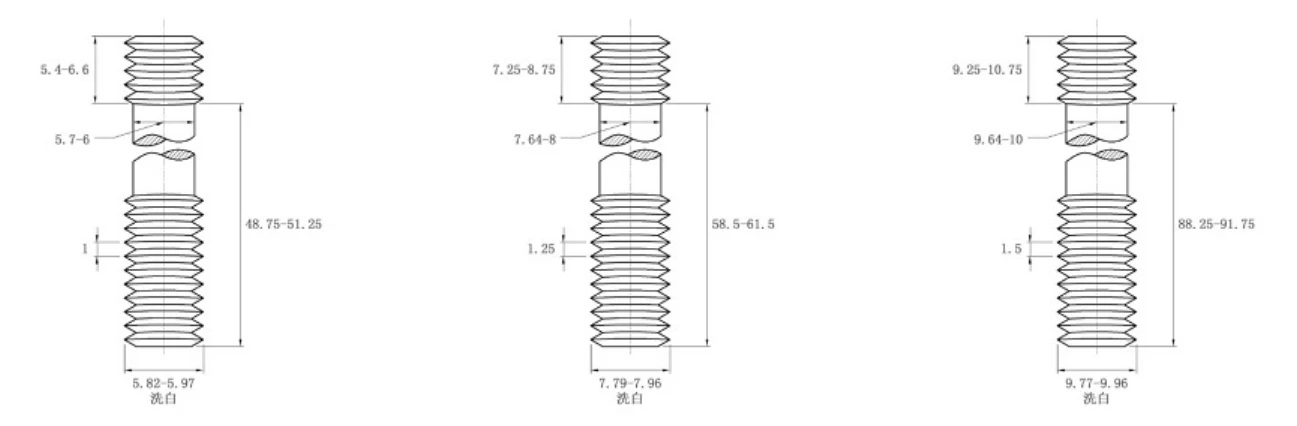
On the left is a stainless steel unequal-length double-end stud of specification M8×50, in the middle is M10×60, and on the right is M10×90. You may have noticed the difference: the length of conventional double-end studs is measured as the total length, while for unequal-length studs under GB/T 897, the length marking excludes the thread at one end. The thread length corresponds to the thread diameter as per the standard, which is the key point to note.

In the above drawings, the left one is M12×70, the middle is M16×90, and the right is M20×150. These are the common standards for such unequal-length double-end studs. The thread diameter is fixed, and the length can be purchased according to actual requirements.