

What Materials Are Used To Produce Stainless Steel Screws?
Jun 30, 2025
Why is the material of stainless steel screws important? In the pricing of stainless steel screws, material costs account for a significant proportion, whereas carbon steel screws have lower material costs (with main expenses from heat treatment or electrogalvanizing). Additionally, while material is a core factor, the performance of stainless steel screws is also influenced by manufacturing processes and surface treatments-not solely by material quality as previously assumed. Below is a breakdown of primary materials for producing stainless steel screws and their characteristics.
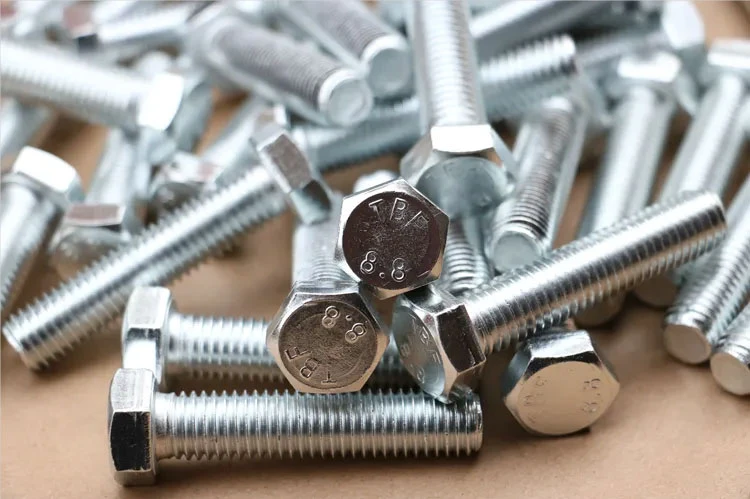
I. Domestic and International Standard Comparisons of Material Grades
Stainless steel screw material grade systems originated in Japan (e.g., SUS series), and China's current standard (GB/T 20878-2007) has standardized these definitions. Here are comparisons of mainstream materials across international and domestic standards, along with their application scenarios:
1. Austenitic Stainless Steel (Most Widely Used)
SUS304 (JIS) → 06Cr19Ni10 (GB)
Contains 18-20% Cr and 8-10.5% Ni, offering excellent comprehensive corrosion resistance. Used for producing hex bolts, socket head cap screws, nuts, and other fasteners.
SUS316 (JIS) → 06Cr17Ni12Mo2 (GB)
Added 2-3% Mo improves salt spray and acid resistance over 304, corresponding to property class A4-70 (marked on the screw head). Suitable for valves, pipelines, and corrosive environments.
304L (ASTM) → 022Cr19Ni10 (GB)
Low-carbon version with better weldability, commonly used in sheet metal processing and welded applications.
316L (ASTM) → 022Cr17Ni12Mo2 (GB)
Low-carbon 316 with enhanced intergranular corrosion resistance, suitable for medical devices, marine engineering, and harsh environments.
304F (ASTM) → Y12Cr18Ni9 (GB)
Contains sulfur (S≥0.15%) for superior machinability, used in automotive parts and precision machined screws.
2. Martensitic Stainless Steel (High-Strength Applications)
431 (ASTM) → 12Cr17Ni2 (GB)
Heat-treated to achieve tensile strength ≥1000MPa, suitable for self-tapping screws, self-drilling screws, and other high-hardness fasteners.
3. Ferritic Stainless Steel (Economical Option)
410 (ASTM) → 12Cr13 (GB)
Contains 12-14% Cr, with lower corrosion resistance than austenitic grades but lower cost. Used in scenarios with moderate corrosion requirements.
4. Special-Purpose Stainless Steels
321 (ASTM) → 06Cr18Ni11Ti (GB)
Titanium-stabilized to resist intergranular corrosion, suitable for self-tapping and machine screws in high-temperature environments.
310S (ASTM) → 06Cr25Ni20 (GB)
High Cr-Ni content for heat resistance (≤1200℃), used in furnace parts and high-temperature bolts.
329J1 (ASTM) → 022Cr25Ni6Mo2N (GB)
Duplex stainless steel combining strength and corrosion resistance, used in pipes, wires, marine engineering, and high-strength fasteners.
II. Material Characteristics and Selection Points
Corrosion Resistance and Alloying Elements
Cr forms a passivation film (≥12%), Ni enhances austenite stability, and Mo improves chloride ion resistance (e.g., 316 contains Mo unlike 304).
Misconceptions About Property Classes
A2-70 ((corresponding to 304) and A4-70 ((corresponding to 316) denote property classes, not material grades, and should be distinguished from specific alloys.
Impact of Processing Technology
Austenitic stainless steels are prone to work hardening during cold heading (e.g., 304), requiring deformation control; martensitic grades need heat treatment for strengthening (e.g., 431).
III. Common Misconceptions Corrected
"Stainless steel performance depends solely on material": False. Improper cold heading can cause stress concentration in 304 screws, and insufficient heat treatment reduces 431 screw strength.
"304F = 1Cr17":False. 304F is austenitic (with Ni), while 1Cr17 is ferritic (without Ni), showing significant property differences.
"329J1 is only for pipes and wires":False. It also applies to high-strength fasteners in marine engineering and other scenarios.
Conclusion
Material selection for stainless steel screws should balance corrosion resistance, strength, machinability, and cost:
Choose 304 (06Cr19Ni10) for general applications;
Use 316 (06Cr17Ni12Mo2) in corrosive environments;
Opt for 431 (12Cr17Ni2) for high-strength needs;
Select 321, 310S, etc., for special environments (high temperature, welding).
Note that material grades must conform to the latest GB/T 20878-2007 standard to avoid selection errors from outdated standards or common names.


