

How To Resolve Seizure Issues Of Non-Standard Screws
Oct 09, 2026
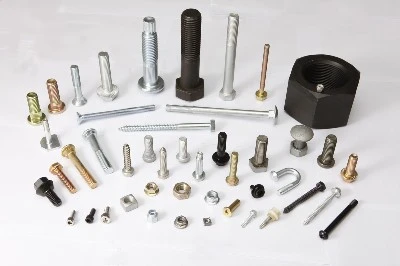
Non-standard screws are custom-made fasteners with non-general specifications manufactured according to equipment structure, assembly space and special working conditions. They can be made of stainless steel, special alloys and other corrosion-resistant materials upon requirements, and are widely used in precision scenarios requiring high corrosion resistance and cleanliness, such as environmental protection equipment, electronic devices, food machinery and medical instruments. The quality of finished non-standard screws depends on multiple indicators including specification accuracy, mechanical properties, thread precision, surface treatment and surface defects. During actual assembly and operation, non-standard screws are prone to thread seizure, galling and jamming failures, which directly affect assembly efficiency and equipment maintenance. For common seizure problems of non-standard screws, prevention and handling can be effectively implemented through model selection control, assembly specifications and process optimization.
1. Proper Model Selection to Match Working Conditions
Before assembly, accurately match the material, specification, strength and thread form accuracy of non-standard screws according to equipment load, service environment and assembly structure. Blind selection is prohibited to avoid abnormal thread stress caused by mismatched materials, insufficient strength or inconsistent specifications, which leads to assembly seizure, thread deformation and meshing failure.
2. Strictly Control Thread Quality and Keep Threads Clean
Rough threads, excessive burrs, substandard precision, or foreign matters such as iron filings, welding slag and dust trapped in thread gaps are one of the main causes of non-standard screw seizure. Check the thread condition of screws and tapped holes before assembly, remove impurities and burrs in a timely manner, ensure smooth meshing of clean threads without foreign objects, and avoid thread galling and jamming from the source.
3. Standardize Assembly Torque and Tightening Speed
Non-standard screws, especially those made of stainless steel or with PTFE coating, have poor thermal conductivity. Excessive tightening force or overly fast tightening speed will instantly generate high temperature from thread friction, resulting in thermal expansion and metal meshing of threads, and finally seizure and galling. Tighten at a constant low speed during assembly, strictly control the standard torque, and forbid violent rapid tightening and over-tightening to prevent high-temperature seizure.
4. Ensure Vertical Meshing and Avoid Skewed Stress
During tightening, ensure that nuts, wrenches and the centerline of screws are vertically coaxial for meshing. Skewed assembly and offset stress will cause unilateral extrusion and wear of threads, deformation of thread profile, leading to thread meshing stagnation and seizure. Uniform force and vertical screwing during assembly can effectively protect thread precision and prevent galling seizure.
5. Properly Use Anti-Loose Accessories and Optimize Assembly Structure
Select flat washers, spring washers, anti-loose shims and other accessories reasonably according to working conditions. Washers can distribute compression force, prevent surface pressure damage and reduce thread friction stress; spring washers can buffer vibration stress, prevent over-tightening seizure and subsequent loosening, greatly reducing the seizure probability of non-standard screws during assembly and service.
Conclusion
Seizure of non-standard screws is mostly caused by human and process problems such as improper model selection, dirty threads, non-standard assembly and uneven stress. Standardized operations including accurate model selection, thread cleaning, low-speed uniform assembly, vertical force application and proper matching of accessories can minimize seizure and galling failures of non-standard screws, and guarantee assembly quality and long-term stable operation of equipment.


