
Hex Bolt Manufacturing Process Explained Step By Step
Mar 17, 2026
What is a Hex Bolt?
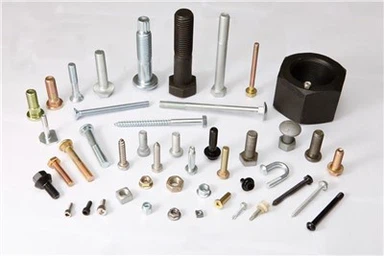
A hex bolt is a mechanical fastener with a regular hexagonal head and external threads on the shank. It is usually used with a nut to reliably connect two or more structural components through preload. Its hexagonal head design facilitates the application of torque using a wrench or socket, thus having obvious advantages in assembly efficiency and stress stability.
1: According to the structural form, they can be divided into full-thread bolts and half-thread bolts;
2: According to the strength grade, they can be divided into grades such as 4.8, 8.8, 10.9, and 12.9;
3: According to the material, they can be divided into carbon steel, alloy steel and stainless steel types.
Different specifications and performance grades correspond to different bearing capacities and service environments.

In construction structures, machinery manufacturing, automobile assembly, power equipment and various industrial connection scenarios, hex bolts are one of the most basic and widely used standard fasteners. Although the structure is simple, their strength control, dimensional accuracy and surface protection performance are directly related to connection safety and long-term stability.
Hex Bolt Manufacturing Process
The manufacturing process of hex bolts is an important foundation for ensuring their strength, accuracy and durability.
From raw material selection to finished product packaging, each process strictly follows standardized procedures to ensure that each bolt can bear the design load during use.
Usually, the manufacturing process includes raw material inspection, wire drawing and pretreatment, cold heading forming, thread rolling, heat treatment, surface treatment, full-size inspection and packaging and shipment.
Through scientific and reasonable process design, hex bolts not only have good mechanical properties, but also can meet the anti-corrosion, anti-wear and precision requirements in different environments. Understanding the overall manufacturing process helps to deeply understand the importance of each link to bolt quality and provide reference for subsequent production and procurement.
Raw Material Selection and Inspection
The performance of hex bolts first depends on the steel itself. Common materials include:
|
Carbon Steel |
Alloy Steel |
Stainless Steel |
|
Q235 |
35CrMo |
304 |
|
45# Steel |
40Cr |
316 |
Different materials determine the final strength grade (such as 8.8, 10.9, 12.9) and corrosion resistance of the bolt. Among them, Q235 carbon steel is mostly used for Grade 4.8 bolts, 45# steel can be used for Grade 8.8 bolts, alloy steels (35CrMo, 40Cr) are mostly used for high-strength bolts of Grade 10.9 and above, and stainless steels (304, 316) are mainly used in scenarios with high corrosion resistance requirements, not directly corresponding to the above strength grades.
After the materials enter the factory, we will conduct strict incoming inspection, including:
- Spectral analysis of chemical composition
- Tensile strength test
- Surface defect inspection
- Diameter tolerance detection
Raw material quality control is the foundation to ensure the overall performance of hex bolts, which directly determines the stability of the subsequent cold heading process.

Wire Drawing and Pre-treatment
Raw materials are usually supplied in the form of coiled wire. To meet the requirements of precise forming, wire drawing and surface pre-treatment are required.
- Pickling for oxide scale removal: Remove surface oxide scale, rust and impurities, which not only ensures surface finish, but also provides a good adhesion foundation for subsequent phosphating.
- Phosphating treatment: Form a uniform phosphating film on the metal surface, which not only reduces friction during cold heading and thread rolling, but also reduces mold wear, extends mold service life, and plays a preliminary anti-rust role.
- Wire drawing and sizing: Gradually draw the wire to the precise diameter through multi-stage wire drawing and sizing. Multi-stage wire drawing can not only strictly control the dimensional tolerance, but also improve the mechanical properties of the material, make the metal fiber structure denser, ensure uniform material flow during cold heading, and reduce the occurrence of cracks and burrs.

In addition, to further improve cold heading efficiency and bolt quality, we sometimes perform lubrication treatment on the wire, applying special lubricant on the surface to ensure the stability of the friction coefficient between the metal and the mold during the forming process, thereby improving the forming accuracy and surface finish of the hexagonal head.
This link directly affects the stability of cold heading forming. Uneven phosphating quality may lead to cracks or dimensional instability in the bolt head.
Cold Heading Forming (Head Manufacturing)
core process for manufacturing the head of hex bolts, and also a key link determining the bolt strength and appearance quality. The whole process is carried out at room temperature, and high pressure is applied to the blank through a multi-station cold heading machine to make the metal undergo plastic deformation to form the required shape without heating.
The main process includes:
1. Cutting: Precisely cut the wire into blanks according to the length of the bolt shank, and keep both ends flat to avoid burrs affecting subsequent forming.
2. Pre-forming: The blank is pressed into a preliminary head shape in the primary mold, initially forming a cylindrical or square shoulder contour to reduce stress concentration during final forming and prevent head cracking.
3. Hexagonal forming: Press the blank head into a standard hexagonal head through a high-precision mold to ensure stable opposite side size and head height tolerance, and form clear edges and corners to meet the wrench matching requirements.
4. Deburring and shaping: After forming, deburr the head to ensure smooth edges and reduce wear during assembly, and finely adjust and shape the head size to ensure compliance with standards.

The advantage of cold heading is that the metal flow line is continuous and not cut off, making the bolt head strength higher than that of machined bolts. At the same time, it has high production efficiency and excellent material utilization, suitable for mass production.
This process not only affects the bolt head size and appearance, but also directly determines the mechanical properties of the bolt and the smoothness of subsequent processing, which is the core foundation of the entire manufacturing process.
Thread Rolling
After cold heading forming, the hex bolt enters the thread processing link. Thread rolling is the current mainstream thread processing process. Different from cutting processing, thread rolling forms a complete thread by applying pressure to the blank shank through high-precision rollers to make the material plastically flow along the spiral direction without cutting off the metal.
The main process includes:
1. Thread positioning: Fix the cold-headed bolt blank on the thread rolling machine to ensure that the blank axis is accurately aligned with the roller tooth profile to avoid thread skew.
2. Roller pressing: Symmetrically arranged upper, lower or left and right rollers apply uniform pressure on the surface of the bolt blank to make the metal flow along the spiral direction and extrude to form standard threads.
3. Adjustment and correction: Fine-tune the pressure and roller gap through the thread rolling machine to ensure complete thread profile and accurate pitch, meeting the requirements of relevant standards.
4. Deburring and cleaning: After thread rolling, remove the burrs on the thread surface and clean the residual lubricant on the surface to ensure smooth thread assembly and avoid affecting the fit with the nut.

Advantages of thread rolling:
- Improve thread strength: The material forms a surface hardening layer through extrusion and pressing, and the wear resistance and tensile performance of the thread are better than those of cut threads.
- Save materials: No metal is cut, the material utilization rate is high, and the production cost is reduced.
- High surface finish: The thread surface is smooth, reducing friction during tightening and ensuring smooth assembly.
- High efficiency: Suitable for mass production, with stable thread accuracy and good consistency.
Through precise thread rolling, the threads of hex bolts not only meet the requirements of tight fit, but also can maintain reliable mechanical properties and long-term durability during assembly and use.
Heat Treatment (Strength Grade Control)
For bolts of Grade 8.8 and above, quenching and tempering heat treatment must be performed. Grade 4.8 bolts usually do not require quenching and tempering treatment, and only need annealing or normalizing treatment. The main process includes two core links: quenching and tempering:
Quenching:
Heat the bolt to the austenitizing temperature (usually between 830~880℃, the specific temperature is adjusted according to the material composition; for example, the quenching temperature of 45# steel is about 840~860℃, and the quenching temperature of 35CrMo is about 850~880℃), keep it warm for a sufficient time to completely transform the internal structure into austenite, and then quickly immerse it in a cooling medium (water, oil or air) for rapid cooling. Quenching can significantly improve the hardness and tensile strength of the bolt, but the quenched bolt without tempering is usually brittle and easy to break under stress, so it cannot be used directly.
Tempering:
The quenched bolt will be tempered at a lower temperature (generally 180~220℃; the tempering temperature of Grade 8.8 bolts is about 200~220℃, and the tempering temperature of Grade 10.9 and above bolts can be appropriately increased to 220~280℃, specifically adjusted according to the strength grade), and the time is usually 1~2 hours. The purpose of tempering is to eliminate the residual stress inside the bolt, improve toughness and elongation, and maintain the required strength. The metal structure after tempering is transformed from martensite to tempered martensite, making the bolt have both high strength and appropriate toughness, ensuring that it is not easy to break during tightening and use.
The core parameters of heat treatment control include:
- Heating temperature and holding time
- Cooling medium type (oil, water, air) and cooling rate
- Tempering temperature curve and temperature uniformity
If not properly controlled, the following may occur:
- Brittle fracture: Insufficient tempering, excessive residual stress and insufficient toughness.
- Uneven hardness: Uneven heating or cooling leads to large differences in hardness of various parts of the bolt.
- Abnormal structure: Such as undissolved ferrite, network cementite, etc., which affect the mechanical properties of the bolt.

By accurately controlling the quenching and tempering process, we can ensure that the hex bolt reaches the expected strength grade (such as 8.8, 10.9, 12.9), and at the same time ensure toughness and fatigue resistance. This step is the core guarantee of the overall performance of the bolt.
Surface Treatment
According to different service environments, hex bolts need corresponding anti-corrosion surface treatment. Different surface treatments have differences in applicable scenarios and performance:
- Electrogalvanizing: Suitable for indoor dry environments, low cost, general anti-corrosion effect and thin coating.
- Hot-dip galvanizing: Strong corrosion resistance, thick coating, suitable for outdoor humid and weak corrosive environments.
- Dacromet treatment: Excellent high-temperature resistance and corrosion resistance, no hydrogen embrittlement risk, suitable for high-strength bolts and harsh corrosive environments.
- Black oxide treatment: Improve basic anti-rust performance, black appearance, suitable for indoor sealed and low-corrosion environments.
- Stainless steel passivation: For stainless steel bolts, a dense oxide film is formed on the surface through passivation treatment to further improve corrosion resistance.

In practical applications, surface treatment not only needs to consider corrosion resistance, but also needs to take into account thread fit accuracy and tightening reliability. The thread may be slightly thickened after treatment, so the thread size and tolerance are usually re-inspected during the production process to ensure that the treated bolt can still be assembled smoothly. At the same time, when electrogalvanizing
high-strength bolts (Grade 8.8 and above), attention should be paid to eliminating hydrogen embrittlement to avoid bolt breakage during use.
Full-Size Inspection
Qualified hex bolts must undergo strict full-size inspection and performance inspection to ensure compliance with standard requirements, mainly including:

Dimensional inspection
- Opposite side size: Ensure the accuracy of the hexagonal head size to avoid wrench slipping or loose fit during installation.
- Head height and bolt length: Check whether the overall size meets the tolerance requirements to ensure assembly accuracy.
- Thread pitch and thread diameter: Detect through thread gauge or micrometer to ensure that the fit grade between the bolt and nut meets the design standard (such as Grade 6H).
- Total length and tolerance: Randomly inspect samples of each batch to ensure uniform length distribution and prevent installation errors.
Mechanical performance test
- Tensile strength and yield strength: Test through a tensile testing machine to ensure that the bolt will not break prematurely under stress and meet the requirements of the corresponding strength grade.
- Elongation and hardness: Verify material toughness and wear resistance to ensure that it has sufficient strength and is not easy to break brittlely in actual use.
In addition, we also conduct special performance tests:
- Salt spray test: Evaluate the corrosion resistance of the surface anti-corrosion coating in humid or salt spray environments, and set the test time according to the service environment requirements (such as 24 hours, 48 hours).
- Metallographic structure analysis: Observe the internal structure of the material through microscopy to judge whether the effects of heat treatment and forming process meet the standards, and ensure that the internal structure of the bolt meets the requirements.
- Torque test: Verify whether the bolt can bear the specified torque during installation and use, ensure tightening reliability, and detect the anti-loosening performance of the thread.
The entire inspection link forms a complete quality traceability system. Each batch of products has detailed inspection records, which not only ensures the stable quality of delivered products, but also facilitates subsequent engineering maintenance and customer trust.
Packaging and Shipment
Hex bolts that have been strictly inspected and confirmed to be qualified will enter the packaging link to ensure safety and integrity during transportation. We provide the following common packaging methods:
- Bulk ton bags: Suitable for large-volume orders, usually used with pallets, facilitating mechanical handling and warehousing, and reducing packaging costs.
- Small box packaging: Suitable for small and medium-volume orders or high-precision bolts. Each box is equipped with partitions to prevent friction damage between bolts and facilitate storage and use.
- Pallet stretch film: Used for full-pallet bulk products, fixed by stretch film to increase transportation stability and avoid bolt damage caused by vibration and collision during transportation.

In addition, for special orders or high-end customers, we can also provide customized packaging, such as moisture-proof bags, desiccants or anti-collision partitions, to ensure that the bolts are not damp or collided during long-distance transportation. Through scientific packaging solutions, we ensure that hex bolts maintain a perfect state throughout the whole process from factory to customer.
Key Points Behind Hex Bolt Manufacturing Process
The final quality of hex bolts is not determined by a single process, but by the collaborative management of the entire production system. Each link needs to be strictly controlled to ensure stable product performance. Key control points include:

- Raw material stability: The consistency of chemical composition and mechanical properties directly affects subsequent forming and final strength, and the qualification of raw material suppliers must be strictly controlled.
- Mold accuracy: The accuracy of cold heading and thread rolling molds determines the head size and thread quality. Regular maintenance, calibration and replacement are required to avoid mold wear affecting product accuracy.
- Heat treatment control: The quenching and tempering temperature, time and uniformity directly affect the hardness and toughness of the bolt. Precision temperature control equipment must be equipped to ensure stable process parameters.
- Surface treatment consistency: The anti-corrosion coating must be uniform and not affect the thread size to ensure service performance. At the same time, the appropriate surface treatment method should be selected according to the bolt application.
- Full-process traceability: Establish a full-process inspection record from material entry to finished product shipment to ensure traceability and stable quality of each batch of products.
Although hex bolts are small, they are indispensable key connectors in mechanical structures and equipment installation. Each manufacturing process directly determines the strength, durability and safety of the bolt.
Only through multi-link closed-loop management and real-time monitoring can we ensure that hex bolts have high strength, maintain dimensional accuracy and corrosion resistance during use, and meet the harsh requirements of various industrial applications.
If you are looking for a stable and reliable hex bolt supplier, please contact Jinrui. We implement full-process quality control from raw materials to finished products, support customization of various strength grades and surface treatments, and provide long-term and stable fastening solutions for your projects.