
Guardrail Bolt Standards
May 20, 2026
The standard specifications for guardrail bolts vary by country and region. The following are some common guardrail bolt standards for reference in selection:
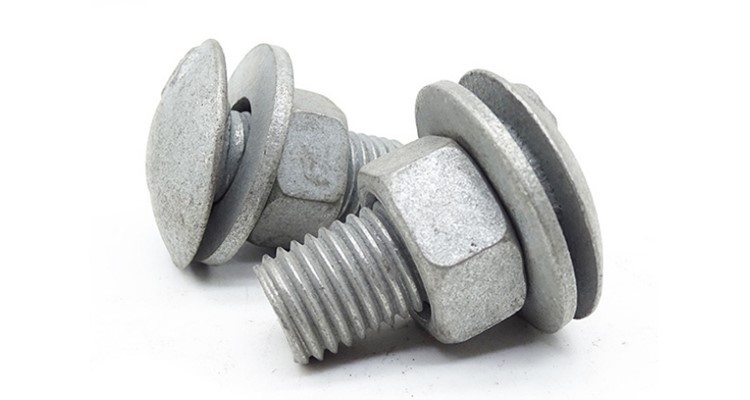
1. American Standard: In the United States, guardrail bolts usually comply with the ASTM F1554 standard. Developed by the American Society for Testing and Materials (ASTM), this standard applies to carbon steel guardrail bolts (including guardrail-specific anchor bolts) and includes three strength grades: Grade 36, Grade 55, and Grade 105, which correspond to different yield strength and tensile strength requirements. Among them, the yield strength of Grade 36 is not less than 36 ksi, Grade 55 is not less than 55 ksi, and Grade 105 is not less than 105 ksi, which are suitable for guardrail scenarios with different loads.
2. European Standard: In Europe, guardrail bolts usually comply with the EN 15048 standard. Developed by the European Committee for Standardization (CEN), this standard applies to bolted connection components for non-prestressed structures (including guardrail connections) and is divided into two parts: EN 15048-1 (General Requirements) and EN 15048-2 (Applicability Requirements), which cover the ordinary strength grades (such as Grade 8.8) and high-strength grades (such as Grade 10.9) of guardrail bolts respectively, and clarify the matching requirements for bolts, nuts and washer assemblies.
3. International Standard: ISO 7379 is a step bolt standard developed by the International Organization for Standardization (ISO), not a dedicated standard for guardrail bolts. Its core specifies the dimensions, materials and performance requirements of step bolts, which can be used for auxiliary connection scenarios of guardrails and is applicable to general matching needs worldwide.
It should be noted that different countries and regions may have their own industry standards or specific project specifications, which will further clarify the dimensions, materials and usage requirements of guardrail bolts to ensure adaptation to local engineering needs.
When selecting guardrail bolts, it is recommended to strictly refer to relevant standards and specifications to ensure that the selected bolts meet the requirements of specific application scenarios in terms of materials, dimensions and performance, so as to ensure the safety and stability of guardrail connections.
The following is additional information about guardrail bolt standards:
1. Australian Standard: In Australia, guardrail bolts usually comply with the AS/NZS 1252 standard. Jointly developed by the Australian and New Zealand Standards Organization, this standard applies to high-strength structural bolts (including guardrail bolts), covers various types of bolts, clarifies the mechanical performance requirements for strength grades such as Grade 8.8 and Grade 10.9, and is the core applicable standard for local guardrail projects.
2. British Standard: In the United Kingdom, guardrail bolts usually comply with the BS EN 15048 standard. Developed by the British Standards Institution (BSI), this standard is a localized implementation version of the European EN 15048 standard in the United Kingdom, applies to bolted connection components for non-prestressed structures (including guardrails), is fully corresponding to and consistent with the European EN 15048 standard, and covers the strength classification and matching requirements of guardrail bolts.
3. Canadian Standard: In Canada, guardrail bolts usually refer to the CSA S16 standard (Steel Structure Design Standard) and must be combined with CSA G164 (Dedicated Standard for Guardrail Fasteners). Among them, CSA S16 is developed by the Canadian Standards Association (CSA), mainly used for steel structure design, including the dimensions, materials and performance requirements of bolts for steel structures (including guardrail bolts), while CSA G164 further clarifies the special requirements such as corrosion resistance and strength for guardrail-specific fasteners.
In addition to the standards of the above-mentioned countries and regions, other countries and regions may also have their own dedicated guardrail bolt standards and specifications. Therefore, when selecting guardrail bolts, priority should be given to local standards and specifications to ensure that the selected bolt materials and specifications are fully adapted to actual engineering needs.
If you have specific questions about guardrail bolt standards in a particular country/region, please provide detailed information for further assistance.