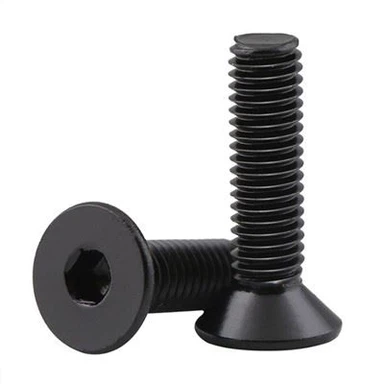

Differences Between Hex Bolts And Socket Head Cap Screws
Mar 16, 2026
In the field of fasteners, hex bolts (external hexagon) and socket head cap screws (internal hexagon) are two common and important connecting components. Although they share similar functions-both used for structural connection and fixation-they differ significantly in structural design, usage methods, mechanical properties, and application scenarios. Distinguishing their characteristics and selecting appropriately is crucial for ensuring connection reliability, safety, and assembly efficiency. The following is a detailed comparison and optimized explanation of these two types of bolts:
I. Definition and Appearance
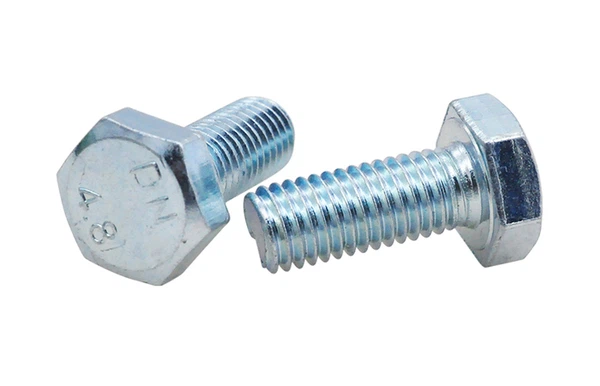
1. Hex Bolt (External Hexagon)
- Definition: A hex bolt features an externally hexagonal head and is typically used with a nut and washer for fastening. The tension of the nut firmly clamps the connected components to ensure uniform force distribution.
- Appearance: The head is a regular hexagon with a clear contour, making it easy to tighten or loosen using tools such as wrenches, pliers, or sockets that directly grip the head. The bolt shank usually consists of a smooth section and a threaded section, with an overall simple structure.
2. Hex Socket Head Cap Screw (Internal Hexagon)
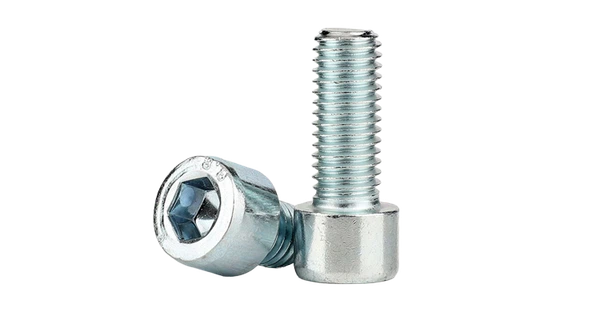
- Definition: A socket head cap screw (also referred to as a cylindrical head socket screw) has a standard internal hexagonal hole at the center of its head. It does not require a nut and can be directly screwed into a prefabricated threaded hole or thread bushing, fastened with a dedicated Allen key (hexagonal wrench).
- Appearance: The head is typically cylindrical (some designs are countersunk), with a standard internal hexagonal hole in the center to match the Allen key. The shank thread usually runs through the entire length or most of it, resulting in a compact overall structure.
II. Usage Methods
1. Hex Bolt (External Hexagon)
- Tools Used: Common tools include adjustable wrenches, open-end wrenches, sockets, or pneumatic tools. No specialized tools are required, as these tools can directly grip the external hexagonal head to transmit torque, resulting in low operational threshold.
- Operational Key Points: Before installation, pre-check the hole diameter to ensure the bolt specification matches the nut. Using a washer can evenly distribute pressure, reduce local stress concentration on connected components, and avoid material damage. For disassembly, simply reverse the installation steps; maintenance is convenient.
2. Socket Head Cap Screw (Internal Hexagon)
- Tools Used: A dedicated Allen key (L-shaped, T-shaped, etc.) is mandatory, and the key size must strictly match the internal hexagonal hole (e.g., ISO 4762 standard). Mismatched sizes will easily cause the internal hexagonal hole to strip or the wrench to break.
- Operational Key Points: During installation, insert the wrench into the internal hexagonal hole and apply uniform torque; the screw can be directly screwed into the threaded hole without additional nuts. For disassembly, ensure the wrench fits tightly against the hole wall to avoid excessive force causing hole wall deformation. After long-term use, clean dirt accumulated in the hole to facilitate disassembly.
III. Advantages and Disadvantages Comparison
1. Hex Bolt (External Hexagon)
Advantages: Simple structure, easy to process and produce; can withstand large axial and shear forces. The large stress-bearing area of the hexagonal head enables higher preload capacity, especially suitable for large-diameter bolts (above M12); easy to install and disassemble without specialized tools, offering flexibility for on-site maintenance; low manufacturing and procurement costs compared to socket head cap screws of the same specification; large head contact area, combined with anti-loosening measures, provides excellent anti-slip performance and resistance to loosening in vibration environments.
Disadvantages: The protruding head occupies a large space, limiting the wrench rotation radius and making it unsuitable for narrow installation spaces; repeated disassembly/assembly or over-tightening may cause wear on the head edges, affecting subsequent disassembly; the exposed hexagonal head impairs the surface flatness and aesthetics of equipment, making it inappropriate for scenarios with high appearance requirements (e.g., furniture, precision instruments).
2. Socket Head Cap Screw (Internal Hexagon)
Advantages: Compact and small head that can be recessed into the workpiece via countersunk design, saving installation space. Only requires inserting the wrench from above, making it ideal for narrow spaces (e.g., deep holes, equipment interiors, densely arranged components); the close fit between the internal hexagonal hole and the wrench ensures more accurate torque transmission and no slipping, delivering higher torsional strength and preload precision; the hidden head results in a flat workpiece surface after installation, offering aesthetic advantages and avoiding hanging risks; the countersunk structure reduces the likelihood of loosening, with strong vibration resistance, making it commonly used for moving parts (e.g., machine tool guides, robot joints).
Disadvantages: Strong dependence on specialized tools; worn tools can easily cause stripping, hole wall deformation, or even wrench breakage; the internal hexagonal hole weakens the head strength, limiting its use under high torque-cautiously select for specifications exceeding M20; long-term use leads to accumulation of oil dirt or rust in the hole, increasing disassembly difficulty; the more complex processing of the internal hexagonal hole results in a higher unit price than external hexagon bolts of the same specification.
IV. Typical Application Scenario Comparison
|
Application Scenario |
Recommended Type |
Reason for Selection |
|
Heavy equipment, steel structures, bridges, building structures |
Hex Bolt (External Hexagon) |
High torque and high load demand, easy disassembly, cost sensitivity, and convenient maintenance |
|
Precision instruments, electronic equipment, furniture |
Socket Head Cap Screw (Internal Hexagon) |
Limited installation space, high requirements for surface flatness and aesthetics, and need for precise torque control |
|
Automobile engines, gearboxes, machine tool guides |
Socket Head Cap Screw (Internal Hexagon, Countersunk) |
High preload demand in compact spaces, vibration resistance, and reduced airflow or motion interference |
|
Outdoor/corrosive environments |
Hex Bolt (External Hexagon, Galvanized) |
High tool versatility for convenient maintenance; internal hexagonal holes are prone to accumulating corrosive media |
|
Field equipment, scenarios with frequent on-site maintenance |
Hex Bolt (External Hexagon) |
No specialized tools required, flexible maintenance, and adaptability to complex on-site environments |
V. Selection Suggestions
Prefer Socket Head Cap Screws (Internal Hexagon) in the following cases:
- Installation space is limited (e.g., pipeline interiors, densely arranged components, deep holes);
- High requirements for workpiece surface flatness and aesthetics (e.g., appearance parts, precision instruments);
- Need for precise torque control (e.g., bearing fixation, moving parts);
- Better anti-loosening performance is required in vibration environments.
Prefer Hex Bolts (External Hexagon) in the following cases:
- Large bolt diameter and high load-bearing capacity are required (e.g., building anchors, heavy machinery);
- High maintenance convenience is demanded (e.g., field equipment, frequent on-site maintenance);
- Projects are cost-sensitive, pursuing cost-effectiveness;
- Installation space is sufficient with no restrictions on appearance or dimensions.
Important Notes:
- For socket head cap screws, strictly match the Allen key size and avoid using low-quality wrenches to prevent stripping or failure of the internal hexagonal hole;
- For high-vibration scenarios, both types of bolts should be used with anti-loosening washers or thread locker to ensure stable connection;
- In outdoor or corrosive environments, hex bolts should undergo anti-corrosion treatments such as galvanizing or Dacromet, while socket head cap screws need regular cleaning of accumulated dirt in the internal hexagonal hole to avoid rust affecting disassembly.
In summary, hex bolts and socket head cap screws each have unique structural and functional characteristics, with no absolute superiority or inferiority. In practical selection, it is necessary to comprehensively consider specific application requirements, installation space, load demands, maintenance convenience, and cost budget to maximize structural reliability, installation efficiency, and maintenance convenience.