
What Are Hex Bolts Used For? Top 10 Applications
Mar 17, 2026
What is a Hex Bolt?
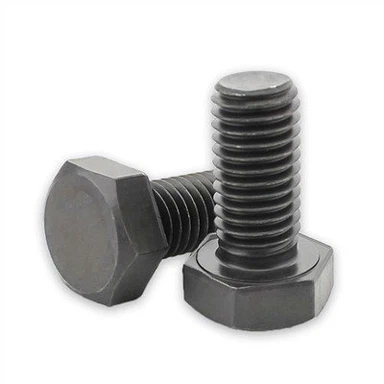
A hex bolt is a standard fastener with a hexagonal head and an externally threaded shank. It is usually used with a nut and washer to achieve a reliable connection between two or more components by applying preload. Its hexagonal head structure facilitates torque application using a wrench or socket tool, making the connection more stable and efficient. Therefore, it has become one of the most common and widely used fasteners in the industrial field.
Jinrui provides a variety of hex bolt products, with different combinations of strength grades and materials, enabling them to adapt to various working conditions from light equipment assembly to high-strength structural connections.
- Thread Type: Full Thread / Partial Thread
- Performance Grade: Grade 4.8 – Grade 12.9
- Material Type: Carbon Steel / Alloy Steel / Stainless Steel

Precisely because hex bolts have the characteristics of good load-bearing capacity, high standardization, high assembly efficiency and convenient maintenance, they are widely used in many industries such as construction, machinery, automotive, energy, and chemical industry. Different industries have different focuses on their strength, corrosion resistance, fatigue resistance and dimensional accuracy. Therefore, understanding their specific application scenarios is crucial for reasonable selection and procurement decisions. Next, we will detailedly understand the ten major uses of hex bolts through this article.
I. Construction and Steel Structure Engineering
The construction industry is one of the most extensive fields using hex bolts. In the construction of modern factories, office buildings, high-rise buildings and bridges, the joint connection of steel structures relies almost entirely on bolts. Bolts need to bear not only the static load caused by the self-weight of the building, but also dynamic loads such as wind load and earthquake. The preload and installation sequence of joint bolts are directly related to the overall stability and safety of the structure.
Bolt loosening, fatigue cracks or local stress concentration caused by improper installation on the construction site are common engineering problems. To ensure long-term stability, engineers will select high-strength grade (Grade 8.8 and above) bolts, and adopt hot-dip galvanizing or Dacromet anti-corrosion treatment in outdoor environments. Stainless steel can be used in some harsh scenarios.
- High strength grade (Grade 8.8 and above) ensures structural safety and adapts to dynamic load requirements
- Strict control of torque and preload to avoid installation deviation
- Adoption of friction-type or preload-type connection design to improve the anti-pulling and anti-shearing capacity of joints
In addition, during the construction phase, special torque wrenches and torque measurement equipment are usually used to ensure that each bolt meets the design requirements. At the same time, re-inspection work after installation is done to avoid missing tightening or over-tightening.
II. Heavy Machinery Manufacturing
In mining equipment, metallurgical machinery, cranes and large-scale processing machine tools, hex bolts bear harsh working environments of high impact, high vibration and long-term fatigue. Bolt loosening or fracture may lead to equipment shutdown or even safety accidents, with high maintenance costs and great danger.
Therefore, most of such machinery adopt Grade 10.9 or 12.9 alloy steel bolts (such as 35CrMo, 40Cr), supplemented by anti-loosening designs, such as spring washers, nylon lock nuts, thread locker or lock pins. The uniform hardness distribution and toughness control after heat treatment are the core to ensure long-term durability and fatigue resistance. At the same time, the bolts need to be subjected to surface anti-corrosion treatment to avoid performance impact caused by environmental corrosion.
- Multiple anti-loosening measures in high-impact and high-vibration environments to eliminate bolt loosening
- Product batch consistency and quality traceability to meet industrial-level control requirements
- Strict control of heat treatment hardness and toughness to avoid bolt brittle fracture
During the installation process, it is also necessary to strictly follow the bolt torque standards, and conduct periodic maintenance inspections to prevent equipment failures caused by bolt fatigue or loosening. At the same time, the bolts should be cleaned and protected to avoid impurities entering the threads and affecting the fit.
III. Automobile Manufacturing
The automobile manufacturing industry has extremely high requirements for bolt precision, batch consistency and material corrosion resistance. Hex bolts are widely used in key parts such as chassis, suspension systems, engine brackets and frame joints. Vehicles vibrate frequently during operation, and bolt loosening or insufficient torque may directly affect driving safety.
To ensure vehicle safety and production efficiency, bolts usually adopt high-strength steel (such as Grade 10.9 alloy steel), and precise torque control and bolt detection systems (such as torque sensors, tightening traceability systems) are used in automated assembly lines. Batch consistency and traceability are key requirements of the automotive industry. At the same time, the surface anti-corrosion grade must be stable, and electrogalvanizing, hot-dip galvanizing or Dacromet treatment are commonly used to cope with rain, salt spray and long-term service environments.
- Batch consistency and full-process traceability, in line with automotive industry quality control standards
- High-precision thread fit to ensure assembly accuracy and connection stability
- Stable surface anti-corrosion grade to resist corrosion in complex service environments
High-quality bolts can ensure the safety of vehicles in long-term use, reduce after-sales maintenance costs, and reduce the risk of recalls caused by bolt failure.
IV. Construction Machinery
Construction machinery such as excavators, bulldozers and concrete mixers have complex and changeable working environments, often in open-air, dusty and high-impact scenarios. Bolts need to bear high impact and high vibration, and at the same time face wear and corrosion from external factors such as soil, dust and gravel. Bolt failure will not only affect equipment performance, but also bring safety risks.
Common measures include using high-strength bolts of Grade 10.9 and above, combined with anti-loosening designs (such as spring washers, lock nuts or anti-loosening washers), and conducting hot-dip galvanizing, Dacromet or phosphating + oil film treatment to improve corrosion and wear resistance. Installation process is also important. It is necessary to strictly control the bolt torque and installation sequence to avoid local stress concentration, and conduct regular maintenance to ensure long-term stability.
- High-strength bolts and multiple anti-loosening designs, suitable for high-impact and high-vibration working conditions
- Professional anti-corrosion and wear-resistant treatment to resist erosion in harsh environments
- Regularly check preload and corrosion status, and replace aged and damaged bolts in time
The selection of bolts in the construction machinery industry not only focuses on strength, but also emphasizes long-term durability and maintenance convenience, reducing equipment shutdown and maintenance costs.
V. Petroleum and Chemical Industry
The petroleum and chemical industry has particularly harsh requirements for hex bolts. Bolts are used in key parts such as pipeline flanges, pressure vessels, valves and equipment fixation, and must bear high temperature, high pressure and corrosive media (such as acid-base, oil and gas). Bolt failure will not only lead to equipment shutdown, but also may cause major safety accidents such as leakage and explosion.
In selection, high-temperature and corrosion-resistant alloy steel (such as 35CrMo, Inconel) or stainless steel (316, 316L) bolts are usually adopted to ensure high-temperature and corrosion-resistant performance. At the same time, the thread precision must strictly meet the standard (such as Grade 6H) to avoid leakage risks. Each batch of bolts must undergo strict testing (such as tensile test, salt spray test, metallographic analysis) to ensure performance traceability. In some scenarios, it is also necessary to comply with industry-specific standards (such as API standards).
- High-temperature and corrosion-resistant materials, suitable for chemical media and high-temperature and high-pressure working conditions
- Precise thread fit grade to eliminate medium leakage
- Strict batch testing and certification, in line with industry safety standards
During the design phase, bolt strength calculation is usually carried out in combination with working temperature, pressure and medium characteristics to ensure long-term safety and reliability of equipment nodes. At the same time, bolts are regularly tested, and aged and corroded bolts are replaced in time.
VI. Electric Power and Energy Industry
In wind power, thermal power and photovoltaic equipment, bolts are mainly used in equipment foundations, tower structures and support systems. Long-term outdoor exposure makes bolts subject to wind load, temperature difference, rain and ultraviolet radiation. Some thermal power equipment also need to bear high-temperature environments. Therefore, corrosion resistance, high-temperature resistance and durability are the core requirements of the energy industry.
Common solutions include hot-dip galvanizing or high anti-corrosion coating (such as Dacromet, fluorocarbon coating) bolts. High-strength alloy steel bolts of Grade 10.9 and above are selected for key parts of wind power and thermal power equipment, combined with strict torque control and installation sequence management. During long-term operation, it is necessary to regularly check the bolt preload and corrosion status, and take protective measures to ensure structural stability.
- Used in long-term outdoor environments, with excellent corrosion resistance and UV resistance
- High corrosion resistance requirements to resist rain and salt spray erosion
- Bear wind load, vibration and temperature difference changes, with excellent fatigue resistance
The reliability of bolts in the energy industry is directly related to the service life and safety performance of equipment. Once bolts fail, it may lead to equipment shutdown and huge economic losses.
VII. Rail Transit Industry
The rail transit system includes trains, track auxiliary equipment and support structures (such as track brackets, bridges). Bolts bear high-frequency vibration, dynamic load and temperature difference changes, requiring extremely high fatigue resistance and vibration resistance, and also need to meet fire prevention and corrosion resistance requirements. The rail transit industry has strict requirements for batch traceability, material consistency and safety level. Each bolt must undergo complete testing and comply with industry-specific standards (such as TB/T standards).
- High safety level requirements, suitable for the strict safety standards of rail transit
- Strict control of material batches to ensure performance consistency
- High requirements for thread precision and surface treatment, with excellent fatigue resistance and corrosion resistance
Rail transit bolts not only bear structural safety, but also directly affect train operation reliability. Therefore, regular maintenance and testing are required to replace fatigued and corroded bolts in time.
VIII. Marine and Offshore Engineering
Ships and offshore platforms are in a marine environment with high salt spray, humidity and high moisture for a long time. Corrosion is the main cause of bolt failure. At the same time, they need to bear the impact and vibration caused by wind and waves. High anti-corrosion grade bolts are required for hull structures, deck equipment and platform fixtures to ensure long-term stability and safety.
- Materials: Stainless steel 304/316 is preferred for ordinary marine environments, and super stainless steel is used for deep-sea and strong corrosion environments
- Surface Treatment: Thick-layer hot-dip galvanizing, Dacromet or special marine anti-corrosion coating to enhance corrosion resistance
Regularly check corrosion and preload, and establish a complete maintenance system
In the marine environment, the corrosion resistance of bolts is more critical than strength. The maintenance cycle and testing plan directly affect structural safety, avoiding equipment damage or safety accidents caused by bolt corrosion failure.
IX. Agricultural Machinery Industry
Agricultural machinery such as tractors, harvesters and seeders, bolts need to bear frequent vibration and corrosive environments such as soil, moisture and chemical fertilizers. The working environment is harsh and the maintenance frequency is low. Cost performance and maintenance convenience are very important in selection, and the durability of bolts must also be guaranteed.
Common solutions include medium-strength grade bolts (Grade 8.8), materials selected from carbon steel or ordinary stainless steel, and surface treated with galvanizing or hot-dip galvanizing to ensure durability and cost control. During installation and maintenance, regularly check the bolt preload and corrosion status, and fasten or replace them in time, which can effectively extend the service life.
X. Automation and Industrial Equipment Systems
In automated production lines, robot brackets, mold equipment and industrial frame systems, bolts are used for structural fixation and modular assembly. Precision, repeated disassembly and assembly capacity and long-term reliability are core requirements. In some scenarios, they also need to meet the vibration requirements during equipment operation.
- High-precision assembly to ensure stable operation of equipment and avoid precision deviation
- Repeated disassembly and assembly to facilitate equipment maintenance, inspection and module replacement
- Materials and surface treatment need to meet industrial environments, with certain corrosion resistance and wear resistance
Reasonable selection and installation can improve production efficiency, reduce equipment shutdown time, and ensure long-term stable operation of industrial systems, reducing maintenance costs.
Conclusion
In short, hex bolts play a basic but crucial connecting role in various engineering structures. Whether in high-strength load environments or long-term outdoor corrosion conditions, the material selection, strength grade and surface treatment method of bolts will directly affect the safety and service life of the overall structure. A truly reliable product depends not only on the completeness of specifications, but also on the stability of the manufacturing process, strict testing and consistency of batches.
In actual project supporting, choosing a supplier with stable supply capacity and a complete quality control system is often more important than simply focusing on price, which can effectively reduce the safety risks and economic losses caused by bolt failure.
If you are looking for a long-term cooperative hex bolt supplier for your project, Jinrui can provide you with professional support:
- Multiple strength grades available (Grade 4.8 - Grade 12.9) to adapt to different load requirements
- Support customization of different materials (carbon steel, alloy steel, stainless steel) and surface treatments (hot-dip galvanizing, Dacromet, etc.)
- Strict quality inspection process to ensure each batch of products meets standards and is traceable
- Support customization and batch supply to meet the needs of different project scales
- Stable delivery and complete specifications to ensure project progress
Welcome to contact Jinrui to obtain a hex bolt solution matching your project needs.