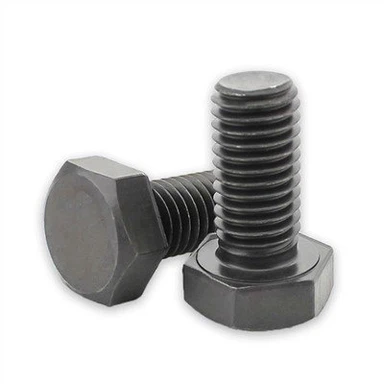

Analyzing The Four Major Factors Of Dynamic Torque in Fasteners
Oct 18, 2024
For most users of fasteners, they may know the types of dynamic torque standards for fasteners during use, but they may not be aware of some factors that affect the dynamic torque of fasteners, which seriously affects the performance of fasteners during use.

Below, Xiaorui will analyze the four major factors affecting the dynamic torque of fasteners:
1. Shape of fastener head
As the diameter of the head bearing surface increases, the friction surface continues to increase, and the torque required to achieve the same axial preload force also continues to increase. Therefore, under the same conditions, the larger the diameter of the head friction surface, the greater the torque required for fasteners.
2. Friction coefficient of fastener surface
The friction coefficient of fasteners with different surface treatment methods varies greatly. But the friction coefficient of the surface can be adjusted to the desired range by adding a regulator.
The friction coefficient of surface electroplating (white, yellow, black, dark green) without the addition of friction coefficient adjuster is around 0.3; When there is oil on the surface, it is around 0.1;
The surface without coating (such as welding bolts, welding nuts) is about 0.1; The GM standard is 0.1~0.16;
Due to the significant influence of surface friction coefficient on the axial force generated under the same torque conditions, it is necessary to specify the range of surface friction coefficient for important fasteners.
3. Actual fit between threads
Usually, there should be a clearance fit between threads. After coating the surface of the bolt, it takes 6 hours, and after coating the surface of the nut, it takes 6 hours. However, due to manufacturing errors in the fasteners themselves and errors in the thickness of the surface coating, the fasteners may actually have interference fit or clearance fit. This may result in incomplete tightening or tooth slippage.
4. Characteristics of fasteners (self tapping, adhesive coating, self-locking, etc.)
The nut corresponding to the self tapping bolt has no threads, and the bolt needs to be directly threaded on the nut, therefore, additional torque needs to be increased. For threads coated with thread glue (for anti loosening or sealing purposes), or nuts that are self-locking, it will cause the actual fit between threads to be interference fit, therefore, additional torque needs to be increased.