
Introduction To Common Anti-Corrosion Technologies For Fasteners
Apr 08, 2026
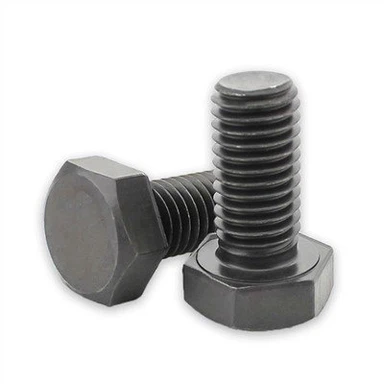
Fasteners are the most common components in mechanical equipment used for fastening connections, all of which are used in specific environments. The long-term interaction between fasteners and the environment will always change their state and performance, that is, corrosion occurs, which is one of the main forms of fastener failure. Mild corrosion of fasteners will affect the detachability and reusability of threads, while severe corrosion will damage the strength of the connection between components, and even lead to sudden failure of workpieces and catastrophic accidents. Therefore, the anti-corrosion of fasteners has always been a topic of great concern.
Common Anti-Corrosion Technologies for Fasteners
The anti-corrosion treatment of fasteners usually forms a coating or anti-corrosion layer on the surface of the workpiece through certain methods to prevent the external environment from affecting the fasteners themselves and achieve the effect of corrosion resistance. There are four main common anti-corrosion technologies for fasteners: film treatment technology, metal plating technology, coating technology and changing the internal structure of metal (such as stainless steel).
1. Film Treatment Technology
Film treatment technology mainly refers to the process of generating a stable chemical (electrochemical) conversion film on the metal surface by using chemical or electrochemical methods. For example, in urban rail vehicles, blackening/blueing treatment and phosphating treatment are widely used for the film treatment of fasteners.
1.1 Blackening and Blueing
The process of placing steel parts in a concentrated alkaline solution containing oxidants and treating them at about 140℃ for a certain period of time to form a chemical oxide film (mainly composed of Fe₃O₄) on the surface of steel parts is called blackening/blueing treatment.
Technical characteristics of blackening/blueing treatment:
1) The film thickness is 0.5-1.5 μm.
2) The neutral salt spray test (NSS) time is generally only 2~5 Hrs, at which time the oxide film has broken, and even a lot of rust will appear.
3) Low hydrogen embrittlement sensitivity, can be used for high-strength bolts.
4) As a fastener, its torque-preload consistency is poor.
5) Bright color and good decorative effect.
6) Low cost.
1.2 Phosphating Treatment
The process of immersing steel parts in a solution containing manganese, phosphoric acid, phosphate and other reagents to form a water-insoluble phosphate conversion film on the metal surface is called phosphating treatment. The technical characteristics of phosphating treatment are as follows:
1) The film is firmly combined with the substrate (thickness 1~50 μm).
2) The neutral salt spray test (NSS) time can reach 10~20 Hrs, and some can reach 72 Hrs.
3) Poor mechanical strength and brittle texture.
4) As a fastener, its torque-preload consistency is good.
5) The color is dark such as light gray, and the decorative effect is poor.
6) Low hydrogen embrittlement sensitivity, can be used for high-strength bolts.
7) Low cost.
2. Metal Plating Technology
Metal plating technology is a surface treatment process that mainly forms a thin metal layer on the surface of metal materials by using plating technology to endow metal materials with decorative or protective properties. In urban rail vehicles, the metal plating technology for fasteners is mainly galvanizing, as well as other special metal platings (chromium plating, nickel plating, cadmium plating, silver plating, etc.).
2.1 Galvanizing
Zinc and iron are miscible, and their standard electrode potential is -0.76 V. For the steel substrate, the zinc coating is anodic coating, which can better protect the steel substrate. Therefore, galvanizing technology is very widely used in fasteners. There are three common galvanizing methods: hot-dip galvanizing, electrogalvanizing and mechanical galvanizing.
2.1.1 Hot-Dip Galvanizing
Hot-dip galvanizing refers to the process of immersing steel parts in molten liquid zinc, causing a series of physical and chemical reactions on the surface of the workpiece to form a metal zinc coating. The thickness of hot-dip galvanizing coating is relatively thick (up to 30~60 μm), and its corrosion resistance is excellent. It is widely used in steel parts used outdoors for a long time (such as TV towers, highway guardrails, etc.). For fasteners, hot-dip galvanizing is generally applicable to bolts of M6 and above, but it cannot be used for high-strength fasteners. The main reason is that the operating temperature of the hot-dip galvanizing process is relatively high (400℃~500℃), which is easy to cause temper softening of high-strength fasteners and reduce their strength.
2.1.2 Electrogalvanizing
Electrogalvanizing is the use of electrolysis principle to form a uniform, dense and well-bonded zinc coating on the surface of steel parts. The thickness of the electrogalvanized zinc layer is relatively thin (5~30 μm), and its corrosion resistance is the worst among galvanizing anti-corrosion treatments. However, its process is simple, the cost is low, and it has little impact on thread engagement, so it is widely used in fasteners. Because electrogalvanizing has high hydrogen embrittlement sensitivity and it is difficult to completely remove hydrogen (the electrogalvanized layer will peel or fall off when the temperature is above 100℃), electrogalvanizing cannot be used for high-strength fasteners.
2.1.3 Mechanical Galvanizing
Mechanical galvanizing refers to a surface treatment process in which steel parts form a zinc coating by impacting the surface of steel parts with impact media under the action of chemical substances such as zinc powder, dispersant and accelerator. The thickness of the mechanical galvanized layer is generally 5~50 μm. The surface of the coating is dense and uniform, with good decorative effect and excellent corrosion resistance; moreover, it has no shortcomings such as high-temperature tempering and hydrogen embrittlement existing in hot-dip galvanizing and electrogalvanizing, so it is a surface treatment process especially suitable for the anti-corrosion of fasteners.
2.2 Other Metal Platings
2.2.1 Chromium Plating
As a metal coating, chromium has the characteristics of strong adhesion, good wear resistance, excellent decorative effect, and high heat resistance (can be used normally below 500℃). Therefore, it is very ideal to use chromium coating as the metal coating of fasteners.
The main disadvantages of chromium plating are as follows:
1) The process is complex, and nickel or copper must be plated first before chromium plating.
2) High price.
3) The chromium coating is hard and brittle, and easy to fall off.
2.2.2 Nickel Plating
As a metal coating, nickel has good electrical conductivity, high hardness, good decorative effect and heat resistance (can be used normally below 600℃), so it is also ideal to use nickel plating for fasteners.
The main disadvantages of nickel plating are as follows:
1) The process is complex, and copper must be plated first before nickel plating (the original "before chromium plating" is a typo).
2) The nickel coating is porous, and the matrix corrosion will be accelerated when the coating is thin.
3) High price.
2.2.3 Cadmium Plating
As a metal coating, cadmium is an anodic coating, which has the characteristics of strong hydrochloric acid corrosion resistance, low hydrogen embrittlement and good decorative effect. It is especially suitable for fasteners used in marine environments (such as fasteners of marine aircraft and oil drilling platforms).
The main disadvantages of cadmium plating are as follows:
① High environmental pollution. The gas generated when cadmium melts and soluble cadmium salts are toxic.
② High price.
2.2.4 Silver Plating
As a metal coating, silver has excellent electrical conductivity, excellent reflective performance, good lubricity and excellent heat resistance (can be used normally below 870℃). Therefore, silver plating is widely used in fields such as electronics and electrical engineering, high-frequency components (such as generator conductive bolts, vehicle battery outlet terminals).
The main disadvantages of silver plating are as follows:
① The process is complex, and copper must be plated first before silver plating.
② The price is very expensive.
2.2.5 Zinc-Nickel Plating
Zinc-nickel composite coating is a new type of alloy metal coating developed on the basis of zinc plating surface treatment technology, which has many advantages:
1) The neutral salt spray test (NSS) time can reach 500~1500 Hrs.
2) The electrode potential of the coating is between Fe and Zn, which is more suitable for assembly with aluminum parts.
3) High coating hardness and good decorative effect.
4) Almost no hydrogen embrittlement, can be used for high-strength fasteners.
5) Good heat resistance (can be used normally below 800℃; the original "8009C" is a typo).
The main disadvantage of zinc-nickel coating is its high price (about 6 times that of ordinary galvanizing), but its excellent comprehensive performance has been more and more widely recognized.
3. Coating Technology
Coating technology is a surface treatment technology that applies specific coatings to the surface of objects through certain equipment and methods to form a dense, continuous and uniform film on the surface, and then dries and cures it by natural or artificial methods to form a protective or decorative coating.
In fasteners, the most widely used coating technology is zinc-chromium coating technology, which is a coating formed on the surface of steel parts by applying zinc-chromium coating on steel parts and baking through a full closed-circuit cycle coating, also known as Dacromet treatment. It has the following excellent characteristics:
1) The neutral salt spray test (NSS) time can reach 500~1000 Hrs.
2) Good permeability.
3) No hydrogen embrittlement sensitivity.
4) Low environmental pollution.
5) As a fastener, its torque-preload consistency is very good.
6) Moderate price (about 2 times that of ordinary galvanizing).
The main disadvantages of Dacromet treatment are as follows:
1) Poor wear resistance (hardness is only 1 H).
2) Single color (only silver white and silver gray), poor decorative effect.
3) Poor electrical conductivity, not suitable for parts with conductive connections.
4. Changing the Microstructure of Steel
4.1 Change of Composition (such as Stainless Steel)
Stainless steel is the abbreviation of stainless acid-resistant steel, which has excellent corrosion resistance and good decorative effect, and is widely used in various fields. At present, it is generally believed that the corrosion resistance mechanism of stainless steel is mainly as follows:
1) When the Cr content exceeds 13%, the electrode potential of the steel will rise from negative potential to positive potential, making the steel matrix itself "inert";
2) Cr will form a dense Cr-rich passive film on the steel surface to further protect the matrix;
3) Stainless steel can be divided into martensitic steel, ferritic steel, austenitic steel, austenitic-ferritic stainless steel, etc. according to the microstructure. Among them, austenitic stainless steel has the best corrosion resistance, such as A2 and A4 series stainless steel.
Stainless steel mainly has the following deficiencies:
① Low yield strength (generally not more than 300 MPa), not suitable for the connection of major structural parts;
② Prone to thread seizure: when stainless steel bolts are tightened, it is easy to damage the thread surface, and at this time, an oxide layer will be spontaneously generated, which will further aggravate the bolt adhesion and locking;
③ Prone to intergranular corrosion: at a certain temperature, C and Cr in stainless steel will form compounds, especially near the grain boundaries, which will lead to the appearance of "Cr-depleted areas" at the grain boundaries and cause intergranular corrosion;
④ Poor corrosion resistance to Cl⁻ medium (except A4 stainless steel);
⑤ High price (about 4 times that of Dacromet treatment).
4.2 Change of Heat Treatment State
Steel materials are mainly multiphase structures (impurities, carbides, intermetallic compounds and other second phases usually exist as cathodes in steel, while the Fe matrix acts as an anode). There is a potential difference between each phase in the multiphase structure, forming a corrosion microcell. The second phase may be either anodic passivation phase or cathodic dissolution phase, both of which will affect the corrosion resistance of the matrix.
Taking stainless steel as an example, its welding and heat treatment processes need extra caution. After high-temperature solution treatment, if stainless steel is heated between 400℃ and 850℃, a large number of Cr₂₃C₆ and Cr₇C₃ carbides will precipitate along the grain boundaries, forming a Cr-depleted area near the grain boundaries. Carbides act as the cathode of the corrosion cell, and the Cr-depleted area acts as the anode of the corrosion cell, thus causing intergranular corrosion and leading to a significant decrease in the corrosion resistance of stainless steel.