
Does Surface Treatment Affect Bolt Tightening Characteristics?
Apr 07, 2026
Does surface treatment affect the tightening characteristics of bolts? Yes. To reduce the dispersion error of bolt torque coefficient and improve corrosion resistance, fasteners are usually subjected to surface treatment. However, different surface treatments have a significant impact on the friction coefficient of threaded fasteners, which ultimately affects the tightening characteristics of bolts. Combining relevant knowledge of fasteners, the following analyzes the impact of surface treatment on bolt tightening characteristics.
I. Theoretical Analysis of the Impact of Friction Coefficient on Bolt Torque Coefficient
1. Tightening Torque of Bolt Connection
1.1 Friction in Triangular Bolt Helical Pairs
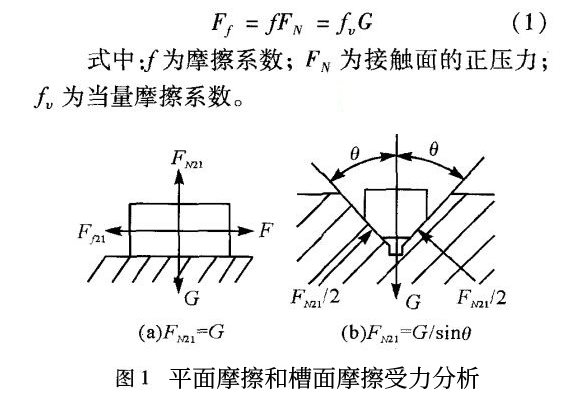
Friction in moving pairs can be divided into plane friction, inclined plane friction and groove friction according to the shape of the contact surface. To simplify the calculation of friction force in moving pairs, regardless of the geometric shape of the two kinematic pair elements of the moving pair, the contact of the two components with different geometric shapes can be regarded as a moving pair in contact along a single plane (as shown in Figure 1), and the calculation formula of its friction force can be uniformly expressed as Formula (1):
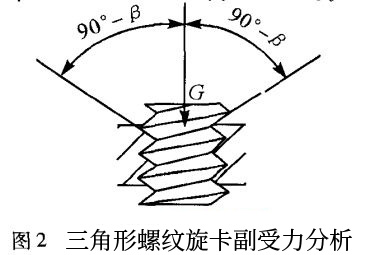
Groove friction: The triangular thread rotating pair can approximate the movement of the nut on the screw as the movement of a wedge-shaped slider on an inclined groove surface, that is, a combination of groove friction and inclined plane friction. At this time, the groove angle is equal to 90°-β (as shown in Figure 2).
1.2 Tightening Torque of Bolts
The total torque required during the bolt tightening process consists of two parts: the tightening torque to overcome the friction of the thread pair, and the friction torque between the bolt head or nut and the support surface.
2. Torque Coefficient of Bolt Connection
The total bolt torque is divided into three parts, namely, friction consumption on the bolt support surface, thread friction consumption and preload consumption (as shown in Figure 3).
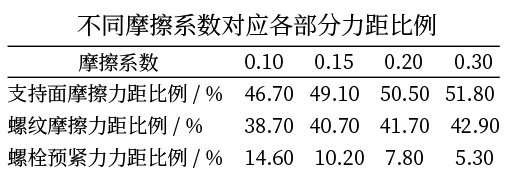
It can be seen from Table 1 that during the tightening process, the energy consumed by friction on the bolt support surface accounts for about 50%, thread friction consumption accounts for about 40%, and preload work consumption accounts for about 10%. Under the same tightening torque, when the friction coefficient changes by 0.05, the variation range of preload is as high as 43.1%. That is to say, if there are slight differences in the surface treatment of bolts, assuming the friction coefficient increases by 0.05, the axial preload is only 57% of the original, which will bring major potential safety hazards to the reliability of bolt connections. Therefore, full attention must be paid to the research on the friction coefficient of thread pairs.
II. Analysis of the Impact of Surface Treatment on Torque Coefficient
Through the multi-functional bolt fastening analysis system, the clamping force, total torque and torque on the thread pair during the bolt tightening process can be measured, which can accurately and in real time reflect the relationship between clamping force and torque, and at the same time measure the friction coefficient of the bolt thread and the bolt head support surface. Data analysis shows that the thickness of the galvanized layer has little impact on the friction coefficient of the bolt head, but has a significant impact on the thread friction coefficient, which ultimately also has a significant impact on the torque coefficient.
III. Impact of Surface Treatment on Allowable Strength of Bolts
Threaded fasteners are subjected to combined torsion-tension stress during tightening. According to the third strength theory, the allowable equivalent stress of threaded fasteners can be obtained by Formula (9):

When threaded fasteners are tightened, the total torque is divided into three parts: friction consumption on the bolt support surface, thread friction consumption and preload consumption. Among them, the friction consumption on the bolt support surface and thread friction consumption will make the rod part of the threaded fastener bear torsional shear stress, and the preload consumption will make the rod part of the threaded fastener generate actual tensile stress. The equivalent tensile stress that the bolt can bear is fixed and must not exceed the yield stress of the bolt. Therefore, reducing the torsional shear stress borne by the rod part of the threaded fastener can increase the tensile stress generated by the actual preload, that is, by reducing the friction consumption on the bolt support surface and thread friction consumption, the torque is converted into preload as much as possible.
Friction coefficient analysis shows that bolts with a small friction coefficient can obtain a larger axial preload by applying a small torque, which is of great significance for saving energy consumption and improving the service efficiency of bolts.
IV. Factors Affecting Bolt Tightening Characteristics
(1) Analysis shows that the friction coefficient has a significant impact on the distribution of energy in the friction consumption of the bolt support surface, thread friction consumption and preload work consumption during the tightening process. A small change in the friction coefficient will cause a large fluctuation in the preload.
(2) Through experimental analysis on the relationship between different surface treatments and the friction coefficient of threaded fasteners, as well as torque-preload, the influence rules of galvanized layer thickness and different chromate treatments on the friction coefficient and torque coefficient are obtained: the greater the coating thickness, the higher the friction coefficient; the friction coefficient of bolts treated with C2C chromate is much larger than that of bolts treated with C2D chromate.
(3) Compared with bolts treated with C2C chromate, using bolts treated with C2D chromate can reduce the friction consumption of torque on the bolt support surface and thread, and obtain a larger axial preload, which is of great significance for saving energy consumption and improving the service efficiency of bolts.