
Phenomena Analysis Of How To Decarburize High-strength Bolts in Heat Treatment
Apr 13, 2023
Processing and production of high-strength bolts, the process is a very complex project, it is a layered and complex multi-layer process, and each process is strictly guaranteed to be high-strength bolts. In order to fully meet the pre-designed standards, more rigorous testing, reasonable storage, transportation and correct installation are required to finally achieve the real effect of high-strength bolts.
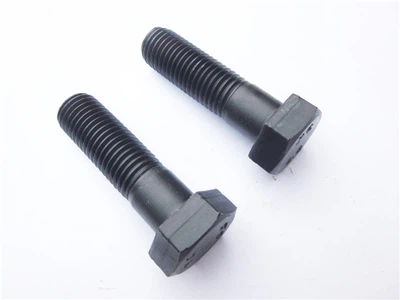
One of the high-strength bolt manufacturing processes is to improve the comprehensive mechanical properties of fasteners, which is the heat treatment process. This process has a very important influence on the intrinsic quality of high-strength bolts, especially high-strength bolts.
With the development of the times, the continuous heat treatment production line with protective effect has occupied a dominant position after entering the 1990s. In addition to the extremely good sealing performance of the furnace, the quenching and tempering line is very accurate in computer control of temperature and process parameters, and has complete equipment failure alarm and display functions. During the whole process of quenching and tempering heat treatment, some oxidized gas will be brought from outside the furnace, and through a series of chemical changes, it will react with the rust on the surface of high-strength bolts, which will cause decarburization of the high-strength bolt material itself.
According to the research of technicians, it is found that the degree of decarburization of medium carbon alloy steel is more serious than that of carbon steel, and the fastest decarburization temperature is between 700 and 800 degrees Celsius. Mainly because the objects attached to the surface of the wire decompose the compound very quickly under certain conditions. If the control of the continuous mesh belt furnace gas is not good, it will also cause decarburization of the screw. When high-strength bolts are used in the cold head forming process, the original material not only remains in the annealed decarburized layer, but is also extruded to the top of the high-strength bolt threads. At this time, the high-strength bolt surface that needs to be quenched cannot be obtained. Pre-designed hardness requirements, at this time the mechanical properties of high-strength bolts will be greatly reduced.