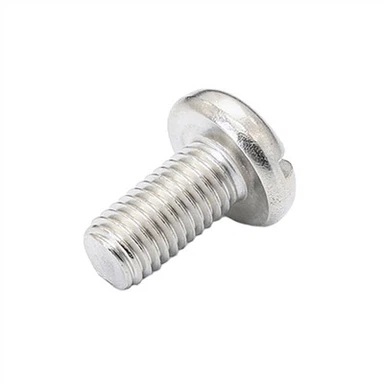

Introduction And Usage Specifications Of Stainless Steel Stud Bolts
Sep 17, 2026
Stainless steel stud bolts are special fasteners with full external threads at both ends and a smooth shank in the middle, which are locked and fixed by matching nuts on both ends. Featuring a unique structural design, they clamp connected components through nuts on both sides, enabling flexible and convenient installation, disassembly and maintenance. They are widely applied in special assembly scenarios where standard single-head bolts cannot be used.
Stainless steel stud bolts are commonly manufactured from 304 and 316 stainless steel. These materials possess excellent oxidation resistance, acid and alkali resistance, and overall corrosion resistance. They can effectively resist erosion caused by moisture, salt spray and chemical media, and deliver a longer service life than ordinary carbon steel fasteners in corrosive working environments.
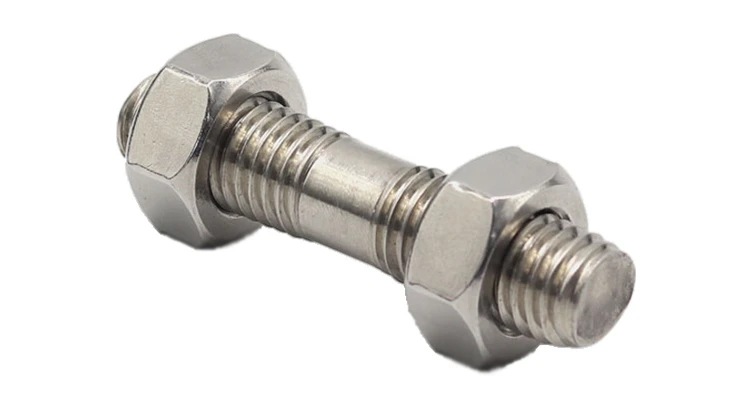
Core Advantages of Stainless Steel Stud Bolts
1. Convenient Installation: Adopting a dual-thread locking structure, it requires no customized auxiliary fixing parts. The simple assembly process fits various embedded and enclosed mounting structures.
2. Easy Disassembly and Maintenance: Components can be separated simply by loosening the nuts at both ends without removing the entire bolt body, greatly facilitating equipment inspection, part replacement and daily maintenance.
3. Space-Saving Design: The compact structure with no bolt head occupation is ideal for narrow installation spaces, closed cavities and equipment with compact layout requirements.
4. Excellent Corrosion Resistance: 304 and 316 stainless steel materials provide superior rust and corrosion resistance, ensuring long-term stable performance in humid, outdoor and chemical corrosive working conditions.
Application Fields
Stainless steel stud bolts are widely used in general mechanical equipment, marine facilities, chemical complete sets of equipment, building steel structures, pressure vessels, pipeline flanges and other fields. In practical use, users shall select appropriate sizes and thread specifications and implement standardized installation and tightening to ensure stable connection and overall operational performance.
Precautions for Use
1. Matching Thread Specifications
Select corresponding thread specifications according to equipment screw hole standards to achieve precise fitting. Common types include metric M series (national standard general-purpose) and imperial UNC/UNF series. Strict specification distinction is required to avoid assembly failure caused by thread mismatch.
2. Reasonable Tightening Torque Control
Tighten the nuts at both ends evenly with standard torque to ensure firm connection and balanced stress. Excessive torque will cause thread stripping, tooth breakage and bolt deformation, while insufficient torque will lead to loosening and sealing failure due to equipment vibration during operation.
3. Selection of Matching Nuts and Gaskets
Select standard nuts, lock nuts, flat washers, spring washers and other accessories according to actual working conditions. For vibrating environments, anti-loosening locking structures are preferred to improve overall anti-loosening performance and meet the fastening and anti-loosening requirements of different equipment.
4. Adaptation of Material and Working Environment
Stainless steel is not completely corrosion-free, and different grades adapt to different working conditions. 304 stainless steel is suitable for conventional indoor and slightly humid environments, while 316 stainless steel with stronger corrosion resistance must be adopted for coastal salt spray, strong acid and alkali, and severe chemical corrosion environments to prevent fastener failure caused by pitting corrosion and crevice corrosion.
5. Regular Inspection and Maintenance
Regularly check the tightening state of stud bolts during equipment operation, and inspect for abnormalities such as loosening, corrosion and deformation. Retighten or replace defective bolts in a timely manner to ensure long-term and stable equipment operation.
6. Professional Consultation for Special Working Conditions
For special application scenarios such as high pressure, high temperature, strong corrosion and high-precision equipment, consult structural engineers or professional fastener suppliers to obtain accurate solutions for material selection, specification matching and assembly processes.
Summary
With the advantages of compact structure, easy assembly and disassembly, and outstanding corrosion resistance, stainless steel stud bolts are applicable to most industrial fastening scenarios. Scientific selection, standardized installation and regular maintenance can effectively guarantee the connection reliability of fasteners and improve the overall operational stability and service life of equipment.