

Five Common Problems And Corresponding Solutions Of Stainless Steel Screws
Jun 22, 2026
Stainless steel screws have been widely applied in daily life and industrial equipment assembly. Nevertheless, many users still encounter various quality and application problems during actual use, such as surface blackening, loosening, rust corrosion, fracture and thread galling. This article summarizes the causes and practical solutions of these five common faults of stainless steel screws, helping users have a comprehensive understanding of stainless steel screws and achieve standardized use and maintenance.
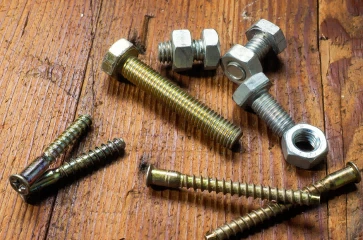
1. Surface Blackening of Stainless Steel Screws
1.1 Causes of Surface Blackening
Surface blackening mostly occurs on the cross recess of stainless steel screws. The core cause is excessive heat accumulation generated during cold heading and thread rolling processes. Insufficient lubricating oil supply and excessively fast machine operating speed will lead to concentrated high temperature on the screw surface and further cause blackening. Besides process factors, unqualified raw material of stainless steel wire rod will also result in permanent surface blackening of finished screws.
1.2 Treatment Process for Blackened Screws
Process flow: Degreasing → Water rinsing → Cross recess cleaning → Water rinsing → Neutralization → Water rinsing → Drying
Heat the special cross recess cleaning agent to 70℃ first. Put fully degreased stainless steel screws into the cleaning agent and soak for 5 to 15 minutes. Then rinse the screws with clean water, complete neutralization treatment, and dry them thoroughly finally.
2. Loosening of Stainless Steel Screws
2.1 Main Causes of Screw Loosening
Active loosening: Caused by external impact, continuous vibration and alternating dynamic loads.
Relaxation loosening: Caused by compression settlement of connected parts, material creep and natural stress relaxation of threaded connections.
To prevent screw spontaneous loosening, relative sliding between connecting workpieces shall be eliminated or controlled below the critical value. Effective improvement methods include increasing axial preload of screws, improving friction between fitting surfaces, and reducing cyclic impact as well as alternating thermal loads.
2.2 Anti-loosening Solutions
Elastic anti-loosening method: Attach high-elastic engineering resin to screw threads. Relying on excellent resilience of the resin, continuous mechanical friction resistance will be generated between screws, nuts and workpieces to offset vibration impact and completely avoid screw loosening.
Thread locking adhesive method: Apply thread locking adhesive (anaerobic adhesive) to screw threads. This adhesive features high adhesion and non-toxicity. After curing, it can form firm bonding force between internal and external threads, providing reliable long-term anti-loosening performance.
3. Corrosion and Rusting of Stainless Steel Screws
3.1 Common Corrosion Causes
Electrochemical corrosion: Dust or foreign metal particles attached to screw surfaces form galvanic cells with condensed water in humid air. The galvanic reaction destroys the passive protective film of stainless steel and triggers electrochemical corrosion.
Organic corrosion: Organic residues attached to screw surfaces generate organic acid under humid and oxygen-containing conditions. Long-term erosion of organic acid will damage metal surfaces gradually.
Chemical corrosion: Splashes of alkaline liquid, lime water and other acid, alkali and salt substances will cause local pitting corrosion on stainless steel surfaces.
Atmospheric chemical corrosion: In polluted air containing sulfide, carbon oxide and nitrogen oxide, condensed water will form corrosive acid droplets, leading to chemical corrosion on screw surfaces.
3.2 Prevention and Solutions for Corrosion
Clean screw surfaces regularly to remove attachments and eliminate external corrosion inducing factors.
Adopt 316 stainless steel screws for coastal areas to resist seawater salt spray corrosion.
Purchase fasteners from reputable manufacturers. Some unqualified stainless steel products fail to meet national material standards and are prone to rusting in daily use.
Rust not only affects the appearance of stainless steel screws, but also weakens connection performance. Regular daily maintenance is required to avoid premature corrosion failure.
4. Fracture of Stainless Steel Screws
4.1 Main Fracture Causes
Stainless steel wire rod has high toughness, so screw fracture rarely happens under normal working conditions. Common fracture causes are listed as follows:
Raw material problem: Impure stainless steel wire rod with excessive impurities leads to insufficient hardness and mechanical strength of finished screws.
Production process defect: Screw head eccentricity, excessive stamping depth and undersized R-angle design during cold heading process will cause serious stress concentration.
Improper operation during use: Excessive tightening torque exceeds the ultimate breaking load of screws.
4.2 Fracture Prevention Methods
Add gaskets to reduce stress concentration on screw rods;
Improve cold heading and thread rolling processing techniques to eliminate structural defects;
Optimize standard machining parameters to improve overall structural strength of screws.
5. Thread Galling (Seizure) of Stainless Steel Screws
5.1 Causes of Thread Galling
5.1.1 Thread deflection & soft material property of stainless steel
Stainless steel screws and nuts adopt standard clearance fit. The central axes of internal and external threads cannot be completely aligned during assembly. Thread deflection reduces the actual contact area of thread surfaces.
Larger assembly deflection leads to smaller stressed area of threads, making thread teeth more vulnerable to damage.
Uneven tightening force aggravates axis deflection, changing uniform surface stress into point stress and causing local overload of threads.
Stainless steel is softer than carbon steel. Metal debris produced by thread friction will adhere to thread surfaces instead of falling off, hindering normal thread meshing and eventually causing thread seizure.
5.1.2 Excessive tightening force & low thermal conductivity of stainless steel
Friction heat generates during screw tightening. Due to low thermal conductivity of stainless steel, heat cannot dissipate quickly. High pressure and high temperature will destroy the chromium oxide passive film on stainless steel surface, resulting in direct cold welding and adhesion between exposed metal threads.
Excessive tightening torque exceeds the yield point of stainless steel screws, causing irreversible permanent elongation of screw rods. Once the screw deformation exceeds the elastic limit, threads will be completely locked.
5.2 Solutions to Avoid Thread Galling
Keep the central axis of screws and nuts perpendicular to the mounting surface to minimize thread deflection.
Tighten screws slowly with manual wrenches, keep threads clean, and apply lubricants to reduce friction heat and metal adhesion.
Use torque wrenches or socket wrenches to control tightening torque within a safe range and avoid over-tightening.
Select stainless steel screws with higher hardness to enhance thread shear resistance.
Coat threads with professional anti-seize compound, which can effectively reduce the probability of thread galling.


