

Complete Guide To Fastener Types
Aug 04, 2026
Screws, bolts and nails are the essential basic fasteners used in construction, mechanical assembly and various engineering projects. They are designed to firmly connect different materials including plastic, wood, metal and cement. Proper fasteners can simplify construction procedures, improve working efficiency, and make the finished structure safer, more stable, more durable and aesthetically neat. This article systematically introduces the structure, characteristics, application scenarios and selection principles of various fasteners, serving as a complete reference guide for fastener selection.
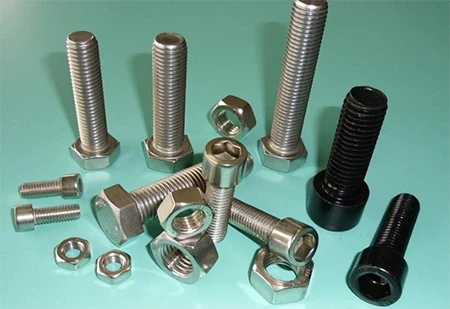
1. Basic Introduction and Classification of Screws
As one of the most widely used threaded fasteners, screws achieve self-locking fastening through threaded shanks and pointed ends. They can be directly screwed into substrates without matching nuts, and are mainly used for bonding two or more materials. They are commonly applied in drywall, woodworking, roofing and siding projects. The selection of screws depends on five core factors: thread type, head style, drive type, working condition and material. Proper selection effectively improves construction efficiency and structural durability.
1.1 Main Thread Types of Screws
Screw threads are mainly divided into two categories to adapt to substrates of different hardness:
1. Standard Thread: Features fine and regular threads. Pre-tapped threaded holes are required on the substrate. Fastening is realized through precise thread meshing. It is suitable for hard materials such as siding, hard plastic and metal, and is mostly used in precision assembly scenarios.
2. Self-Tapping Thread: Equipped with sharp and highly penetrating threads. It cuts threads directly into the substrate during tightening without pre-tapping holes. Also known as self-drilling screws, they are ideal for soft materials such as wood and ordinary plastic.
In addition, thread pitch determines application purposes. Machine screws and precision bolts generally adopt fine and dense threads with smaller pitch and higher precision, while wood screws adopt wide and sparse threads with larger pitch for stronger gripping force.
1.2 Screw Head Styles and Application Scenarios
The screw head determines installation flatness, fitting mode and applicable scenarios. The mainstream head types are as follows:
Flat Head / Countersunk Head: Features a flat countersunk profile. The head sinks completely below the material surface after installation for a flush finish. It is widely used for decorative parts, hinges and precision surface finishing, and is the preferred choice for decorative construction.
Oval Countersunk Head: Similar to standard flat countersunk heads with curved transitional countersunk surfaces. It adapts well to non-precision pre-drilled holes and is the mainstream head type for drywall screws.
Oval Head: A type of countersunk head with a slightly arched top above the material surface. It balances fitting flatness and appearance, and is commonly used for high-end decorative assembly.
Round Head: Features a fully rounded top with smooth transition between the head and shank. The drive slot is located on the top with stable structural performance, widely applied in various machine screw assemblies.
Pan Head: Comes with an arc bottom and flat top, slightly protruding above the substrate with uniform bearing capacity, suitable for general mechanical fastening scenarios.
Truss Head: Has an ultra-wide curved head with a low profile to disperse pressure evenly. It is specially designed for thin metal sheets, insulating materials and cabinet panels, and provides anti-tampering performance due to its low-profile design.
Button Head: A low-profile non-countersunk head with a compact rounded shape. It offers higher pressure resistance than countersunk screws, suitable for thick substrates and finished decorative surfaces, and most types require special driving tools.
Cheese Head / Cylindrical Head: A non-countersunk disc-shaped head with a neat appearance. It is less commonly used nowadays and mainly applied in old equipment maintenance and traditional tooling matching.
Knurled Head: Features cross knurling on the head side for manual tightening without tools. It is applicable to working conditions requiring frequent assembly, disassembly and fine adjustment, serving as an alternative to traditional wing screws.
1.3 Screw Drive Types and Matching Tools
The head drive type determines matching tools and serves as a core selection basis for assembly work. Common types are listed below:
Slotted Drive: A classic universal structure with a straight single slot on the head, compatible with ordinary flat screwdrivers with simple structure and high versatility.
Phillips Drive: The most widely used drive type with a centered non-through cross slot. It provides precise positioning and anti-slip performance, requiring Phillips screwdrivers of corresponding sizes.
Combination Drive: Integrates cross and straight dual slots, compatible with both flat and Phillips screwdrivers, featuring strong versatility for general assembly scenarios.
One-Way Drive: A special anti-tampering structure with a single-sided inclined limit design. It only allows forward tightening and prevents reverse disassembly. Special tools are required for removal, commonly used for safes, gates, public buildings and anti-theft facilities.
Robertson / Square Drive: Features a recessed square slot with uniform stress distribution, minimizing slipping and wear. It adapts to narrow and deep hole assembly with higher stability than slotted and Phillips drives.
Hex Socket Drive: Equipped with a recessed hexagonal hole for anti-slip performance and high bearing capacity, matched with hex keys for precision machinery and high-strength fastening applications.
Torx / Star Drive: Adopts a six-point star recessed structure with large stress-bearing area, effectively preventing thread stripping and slipping under high torque. It is widely used in precision equipment and automotive component assembly.
2. Types and Applications of Bolts and Nuts
2.1 Core Characteristics of Bolts
Bolts are externally threaded standard fasteners used in combination with nuts. They penetrate through substrates and achieve bidirectional fastening via nut locking. Different from screws, bolts usually feature partial threads and smooth middle shanks, providing higher strength, shear resistance and tensile resistance. They are suitable for heavy-load, high-pressure and alternating load working conditions, widely used for steel structures, equipment frames and load-bearing component connections. Some long-size bolts can be pre-embedded in concrete and steel beams for fixed installation.
2.2 Common Bolt Head Types
Square Head Bolt: Features a four-sided head, which was the standard design before the popularization of hex bolts. Currently, it is mainly used for old project renovation and retro-style structural assembly.
Hex Head Bolt: The current standard bolt type. It can be matched with washers for even pressure distribution, suitable for most industrial and construction scenarios. Some slotted versions support dual assembly with wrenches and screwdrivers.
Carriage Bolt: Has a round head with a square anti-rotation shoulder directly below the head. The upper shank is smooth while the bottom is threaded, mainly used for fixing wood and metal brackets.
Lag Bolt: A high-strength load-bearing bolt with a sharp point and wide threads. It provides extreme bearing capacity for building load-bearing structures and large equipment fixation, requiring pre-drilled holes for installation.
Flange Bolt / Washer-Faced Bolt: Integrates a hexagonal head with a circular flange face, eliminating the need for separate washers. It distributes pressure over a larger area with excellent anti-loosening and pressure resistance, ideal for precision and heavy-duty assembly scenarios.
2.3 Common Types of Fastening Nuts
Nuts are matched with bolts with strictly consistent thread specifications. The mainstream types are as follows:
Hex Nut: The most common standard nut, available in standard, heavy-duty thickened and low-profile locking types, compatible with most hex bolts.
Square Nut: A four-sided nut exclusively matched with square head bolts, mostly used for old equipment and traditional tooling support.
Wing Nut: Equipped with double metal wings for manual tightening and disassembly without tools, suitable for frequently adjusted furniture, bicycles, musical instruments and small equipment.
Nylon Lock Nut: Also known as nylon insert lock nut. Embedded with a nylon anti-loosening ring, it achieves self-locking through extrusion friction to prevent vibration-induced loosening, available in standard and low-profile thin types.
Cap Nut: Features a closed arched top to fully cover the bolt thread end. It protects threads from rust and impact damage while improving overall appearance, combining decoration and practicality.
3. Common Materials and Coatings for Screws and Bolts
Stainless Steel: Offers excellent corrosion resistance, stability and rust-proof performance for humid, outdoor and corrosive environments. It features good toughness but cannot be heat-treated and hardened, so it is not suitable for ultra-heavy load and high-impact working conditions.
Carbon Steel: Provides high strength, hardenability and bearing capacity with high cost performance. It is the mainstream material for heavy-duty fasteners, while it has poor natural rust resistance and requires surface coating protection.
Zinc Coating: Divided into electro-galvanizing and hot-dip galvanizing. The zinc layer isolates air and moisture to delay corrosion. Electro-galvanizing provides moderate protection with a smooth surface, while hot-dip galvanizing forms a thick zinc layer for optimal corrosion resistance, suitable for harsh outdoor environments.
Chrome Plating: Features high surface smoothness, excellent texture and good rust resistance. Due to high cost, it is mainly used for decorative and precision equipment surface assembly.
4. Types, Materials and Applications of Nails
Nails are simple mechanical fasteners installed by hammer impact. With low cost and convenient construction, they are widely used for light fixing and surface decoration. Nail sizes are traditionally marked with the penny (d) system: a 1-inch nail is defined as 4d, and the size increases by 1d for every 1/4-inch increase in length.
4.1 Common Nail Types
Common Round Head Nail: A universal nail with a small round head and long straight shank, suitable for various basic fixing scenarios with the highest versatility.
Finishing Nail: Features an ultra-small head that sinks into the substrate after driving. It avoids wood cracking and provides a neat finish, ideal for fine decoration and precision renovation projects.
Brad Nail: A miniature nail with a length of 1 inch or less and a slender shank, effectively preventing wood splitting. It is specially used for fixing cabinet boards, plywood and decorative thin panels.
Smooth Shank Nail: Equipped with a smooth shank for easy insertion and removal, widely used for wall, roof and surface decoration fixing.
Ring Shank Nail: Designed with annular anti-slip rings on the shank to enhance gripping force, effectively preventing loosening and detachment. It is commonly used for drywall and siding fixation requiring stable locking performance.
4.2 Common Nail Materials
Carbon Steel Nail: High hardness and cost-effective, serving as the mainstream general-purpose nail, most of which are galvanized for rust prevention.
Stainless Steel Nail: Features excellent corrosion resistance and stability, suitable for outdoor, humid and high anti-rust requirement scenarios.
Copper Nail: Provides superior rust and corrosion resistance with good airtightness and weather resistance. It is the preferred material for roof waterproofing and exterior wall siding, and is specified in many building codes.
Coated Nail: Surface-coated with cement or vinyl materials to enhance friction and anti-corrosion performance, applicable to special outdoor working conditions and light heavy-duty fixing scenarios.


