
Does Surface Treatment Affect Bolt Tightening Characteristics?
Nov 24, 2026
Yes, it does. Fasteners are usually surface-treated to reduce the dispersion error of the bolt torque coefficient and improve corrosion resistance. However, different surface treatments have a significant impact on the friction coefficient of threaded fasteners, which ultimately affects bolt tightening characteristics. The following analysis examines the influence of surface treatment on bolt tightening performance.
1. Theoretical Analysis of Friction Coefficient on Bolt Torque Coefficient
1. Bolt Tightening Torque
1.1 Friction in Triangular Thread Screw Pairs
Friction in moving pairs can be classified by contact surface shape into plane friction, inclined-plane friction and groove friction. To simplify the calculation of friction force in moving pairs, regardless of the geometric shape of the two moving pair elements, the contact can be approximated as a plane moving pair, and the friction force is expressed by a unified formula.
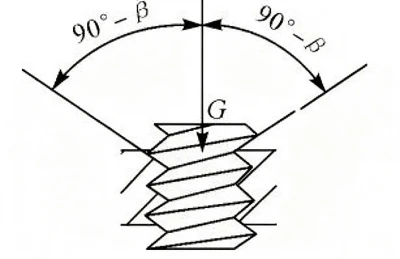
A triangular thread rotating pair can be approximated as the movement of a wedge slider on an inclined groove surface, namely a combination of groove friction and inclined-plane friction, where the groove angle equals 90°-β.
1.2 Bolt Tightening Torque
The total torque required during bolt tightening consists of two parts: the torque overcoming thread pair friction, and the friction torque between the bolt head or nut and the bearing surface.
2. Torque Coefficient of Bolted Joints
Total bolt torque consumption is divided into three parts: bearing surface friction loss, thread friction loss and preload work consumption.
Test data show that during tightening, energy consumption accounts for approximately 50% at the bearing surface, 40% at the threads, and only 10% is converted into preload work. Under the same tightening torque, when the friction coefficient changes by 0.05, the preload can vary by as much as 43.1%. In other words, a slight difference in bolt surface treatment that raises the friction coefficient by 0.05 reduces the axial preload to only 57% of its original value, posing a major safety risk to joint reliability. Therefore, research on the thread pair friction coefficient deserves full attention.
2. Influence of Surface Treatment on Torque Coefficient
Using a multi-functional bolt tightening analysis system, the clamping force, total torque and thread pair torque during bolt tightening can be measured. This system reflects the relationship between clamping force and torque accurately in real time and simultaneously measures the friction coefficients of the bolt threads and the head bearing surface.
Data analysis shows that zinc plating thickness has little effect on the friction coefficient of the bolt head bearing surface, but a significant effect on the thread friction coefficient, which in turn substantially affects the torque coefficient.
3. Influence of Surface Treatment on Allowable Bolt Strength
Threaded fasteners are subjected to combined torsion-tension stress during tightening. According to the third strength theory (Tresca criterion), the allowable equivalent stress of threaded fasteners can be calculated by the corresponding formula.
Total bolt torque comprises bearing surface friction loss, thread friction loss and preload work consumption. The first two produce torsional shear stress on the fastener shank, while preload work generates tensile stress on the shank. The equivalent stress the bolt can withstand is limited and must not exceed the material yield stress. Therefore, reducing torsional shear stress on the shank - that is, reducing bearing surface and thread friction losses - allows more torque to be converted into preload and raises the actual axial preload.
Friction coefficient analysis shows that bolts with a lower friction coefficient develop a larger axial preload with only a small applied torque, which is of great significance for energy saving and improved bolt efficiency.
4. Factors Affecting Bolt Tightening Characteristics
Analysis reveals how the friction coefficient affects bearing surface friction loss, thread friction loss and preload work consumption during tightening: a small change in friction coefficient can cause a large variation in preload.
Experimental analysis of the friction coefficient and torque–preload relationship of threaded fasteners under different surface treatments yields the influence of zinc coating thickness and different chromate treatments on the friction coefficient and torque coefficient: the thicker the coating, the higher the friction coefficient; the friction coefficient of c2C chromate treatment is substantially higher than that of c2D chromate treatment.
Bolts with c2D chromate treatment consume less torque on bearing surface and thread friction than c2C-treated bolts, achieving a larger axial preload, which is highly significant for energy saving and improved bolt efficiency.