
Core Differences Between Steel Structure Bolts And Ordinary Bolts
Sep 09, 2026
The essential differences between steel structure bolts and ordinary bolts lie in six major dimensions: force transmission mechanism, material performance, strength grade, construction technology, reusability and application scenarios. The two types of bolts are not interchangeable and must be selected strictly according to working conditions.
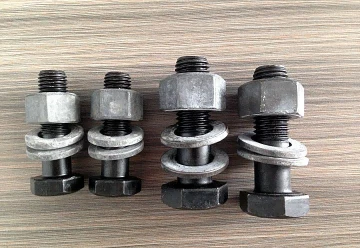
High-strength steel structure bolts are specially designed for building steel structures to ensure the overall stability, seismic performance and long-term bearing safety of steel structures. As general fasteners, ordinary bolts only meet common locking requirements for mechanical equipment and hardware components and are not applicable to main load-bearing structures. Steel structure bolts are manufactured from high-strength alloy steel with high strength grades, excellent slip resistance, fatigue resistance and load-bearing capacity. Ordinary bolts are mostly made of common carbon steel with relatively low strength and limited load-bearing performance, without structural safety margin for load-bearing applications.
Steel structure bolts include special types such as large hexagon high-strength bolts and torsion-shear high-strength bolts, which transmit force through friction and feature high sealing performance and anti-slip capacity. Ordinary bolts adopt a universal structural design with small heads and thread sizes, relying on mechanical locking for force transmission and possessing low structural redundancy. In accordance with engineering specifications, high-strength steel structure bolts are designed for permanent structural connections and are prohibited from reuse. Ordinary bolts are easy to disassemble with low damage risk and allow repeated assembly and disassembly.
The detailed differences between the two bolt types are listed as follows:
1. Structural Shape and Dimensional Differences
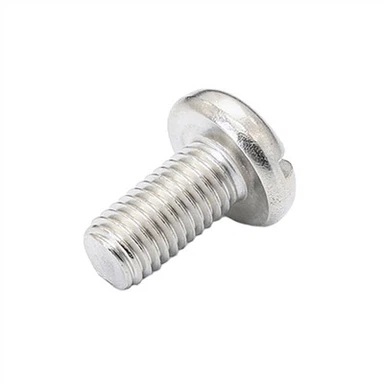
Large hexagon high-strength steel structure bolts feature larger heads, wider bearing surfaces, thicker thread profiles and larger nominal diameters. The oversized bearing surface effectively disperses fastening pressure, improves fitting tightness and sealing performance, and significantly enhances the anti-slip and shear-bearing capacity of structural joints. Ordinary bolts adopt standard universal designs with small heads, threads and bearing surfaces, which only satisfy conventional fastening requirements and cannot withstand heavy loads or alternating loads.
2. Material and Strength Grade Differences
High-strength steel structure bolts are made of specially quenched and tempered high-strength steel such as 45# steel, 35CrMo and 42CrMo. Through integral heat treatment, they reach high strength grades including 8.8, 10.9 and 12.9, delivering outstanding tensile, shear and fatigue resistance without deformation or fracture under heavy loads. Ordinary bolts are mainly manufactured from common carbon steel such as Q235 and Q195 without precise quenching and tempering treatment. Dominated by grades 4.8 and 5.8, they have limited bearing capacity and are only suitable for non-load-bearing auxiliary connections.
3. Force Transmission Mechanism Differences
High-strength steel structure bolts transmit force through interface friction. Precise preload compresses connected plates, and the friction between plate surfaces offsets external shear and sliding loads. This connection features high rigidity and minimal deformation, serving as the core force-bearing mode for steel structure joints. Ordinary bolts transmit force throughshank compression and shear resistance, which easily causes clearance slippage under stress. With low overall connection rigidity, they cannot withstand vibration, impact and alternating loads.
4. Application Scenario Differences
High-strength steel structure bolts are exclusively used for main load-bearing structures such as high-rise building steel frames, steel structure workshops, bridges, power transmission towers and large steel supports. As critical force-bearing fasteners, they comply with strict steel structure construction specifications. Ordinary bolts are only applied to non-load-bearing and low-load connections including equipment housings, hardware accessories, decorative components and auxiliary brackets, and are strictly prohibited for main load-bearing joints of steel structures.
5. Installation Process and Construction Requirements
High-strength steel structure bolts require rigorous installation procedures. Construction starts with the detection of the anti-slip coefficient of friction surfaces. Professional torque wrenches and final tightening tools are adopted for standardized three-step construction: initial tightening, re-tightening and final tightening. All torque parameters are strictly controlled, and the operation must be performed by certified professional workers with special inspection and acceptance after construction. Ordinary bolt installation is simple without strict torque requirements, which can be completed with conventional manual or pneumatic tools without complex construction procedures or acceptance standards.
6. Reusability Differences
High-strength steel structure bolts generate plastic stress and preload fatigue after tightening. Disassembly leads to attenuation of mechanical properties and failure of preload accuracy. In accordance with national steel structure codes,secondary reuse is strictly prohibited. Ordinary bolts bear low stress without high preload strain, retaining intact performance after disassembly and allowing repeated use.