

Bolt Torque Standard Table
Oct 22, 2026
Bolt torque standards serve as key reference data for bolt manufacturing and also constitute unified technical specifications for bolt tightening operations. Below is a detailed introduction to bolt torque standards for your reference.
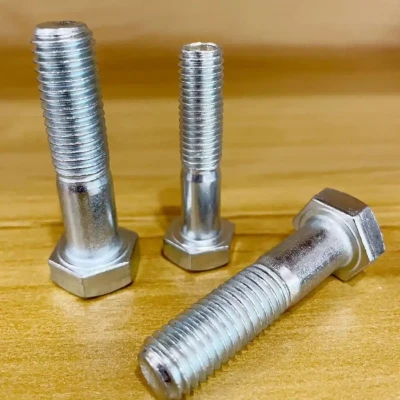
Bolt torque indicates the tightening moment of bolts. Based on extensive tests and verifications, the industry has compiled reference torque values for bolts of different specifications to achieve proper preload and fastening performance. The international standard unit for torque is N·m (Newton metre). Older documents often use kgf·m (kilogram-force metre), where kgf stands for the force unit and m refers to the length of the moment arm, instead of a simple ratio of mass and length.
Bolt Torque Reference Standard Table
表格
| Bolt Specification | Across-flat Size S (mm) | Reference Torque (kgf·m) |
|---|---|---|
| M6 | 10 | 1.2 |
| M8 | 13 | 2.5 |
| M10 | 17 | 5.5 |
| M12 | 19 | 9 |
| M14 | 22 | 14 |
| M16 | 24 | 23.5 |
| M18 | 27 | 32 |
| M20 | 30 | 47 |
| M22 | 32 | 66.5 |
| M24 | 36 | 82.5 |
| M27 | 41 | 120 |
| M30 | 46 | 155 |
| M33 | 50 | 200 |
| M36 | 55 | 250 |
| M39 | 60 | 300 |
| M42 | 65 | 373 |
| M48 | 75 | 561 |
| M52 | 85 | 725 |
| M56 | 95 | 907 |
| M56×4 | 95 | 957 |
| M64 | 105 | 1360 |
| M64×4 | 105 | 1450 |
| M72 | 115 | 2090 |
| M76×4 | 115 | 2460 |
| M80 | 130 | 2870 |
| M90 | 145 | 4110 |
| M100 | 160 | 5670 |
This table lists the reference tightening torque for bolts of various thread specifications for quick lookup. In practical working conditions, torque is affected by bolt property class, thread lubrication condition, contact surface status, gasket type and other factors.
In short, bolt torque standards are critical to the quality of bolted connections. They directly determine the preloading effect of bolts and the selection of torque tools. During on-site production and assembly, tightening operations shall follow the standard torque values combined with actual working conditions. Adjustments shall be made in accordance with technical documents where necessary to guarantee product quality and operational safety.


