
Advantages Of Titanium Alloy Bolts
Feb 26, 2026
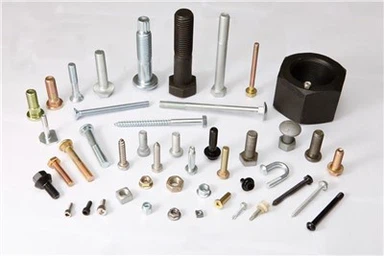
Bolts made of titanium alloy are mainly used in aerospace applications and are relatively rare in the general market, so many people are not very familiar with them. Here are the main advantages of titanium alloy bolts.
Titanium alloy bolts are based on titanium, with main alloying elements including oxygen, nitrogen, and carbon. These elements give titanium alloy bolts very high strength, allowing stable performance at high temperatures without degradation in harsh environments. At room temperature, the tensile strength of titanium alloy bolts can reach 540 MPa, with a Brinell hardness (HB) of approximately 200. If design adjustments are needed, these alloying elements can be regulated or removed by vacuum annealing.

Titanium alloy bolts also have certain disadvantages: they have low ductility. Due to their alloy composition, the material has high hardness, making plastic deformation difficult with standard molds. Therefore, titanium alloy bolts require annealing and solution treatment. Annealing reduces hardness, while solution treatment relieves internal stress, resulting in more stable performance and preventing fracture during service. Turning titanium alloy requires very high‑performance tools because the material is hard, prone to built‑up edge, and has low thermal conductivity. During cutting, the material structure may change, and chips tend to wrap around the tool. If turning is necessary, diamond tools are recommended for better results.
Although titanium alloy bolts are hard, their surfaces are easily scratched. So during turning, clamping requirements are strict: clamping force should not be excessive, and high‑quality cutting fluid must be used for lubrication and cooling.
Compared with standard material bolts, titanium alloy bolts are very expensive. High material cost and difficult processing are the main reasons. Titanium alloy bolts are mostly used in aerospace equipment, with low demand in general industry; otherwise, the total cost would be extremely high based on typical fastener consumption.
To show the price difference: a standard carbon steel M8×25 bolt costs about 0.2 RMB, a stainless steel one about 0.5 RMB, while a titanium alloy version costs over 2 RMB.
Most conventional bolts are produced by cold heading. Cold heading involves pressing steel into shape at room temperature using dies. Since metals already have high hardness and mechanical properties, cold heading requires high forming pressure. Small bolts are relatively easy, but large bolts above M12 must be produced on multi‑station cold headers.
There are four main processing methods for titanium alloy bolts.The first is turning. Early titanium alloy bolts and threads were machined on lathes, but this method is costly and low‑yielding. It is now mostly obsolete and only used for non‑standard titanium alloy bolts.The second is hot forging, which works in the opposite way to cold heading: the material is heated red‑hot before being pressed into shape. This is used when equipment pressure is insufficient for room‑temperature deformation. Hot forging is still used but only for some common material bolts.The third is casting. This method is no longer used for standard titanium alloy bolts, only occasionally for large eye bolts, and is considered outdated.The fourth method, the focus of this article, is multi‑station cold heading. This is the most common and mainstream production method for titanium alloy bolts. It provides good quality, high efficiency, and low cost, so almost all fastener manufacturers use multi‑station cold headers to produce various titanium alloy bolts and nuts.
Early multi‑station cold headers for titanium alloy bolts were only used in developed countries such as Japan, Europe, and the United States. With rapid industrialization in China, the fastener industry has expanded greatly, and such specialized cold headers have been introduced and widely used domestically.
Multi‑station cold headers are large and provide high forming force, enabling the production of standard and non‑standard bolts and nuts from various metal wires using dies. The machines adopt an environmentally friendly design and are equipped with advanced automation. Production requires no manual supervision; the system automatically detects faults and stops, minimizing scrap rates.
For titanium alloy bolt production, multi‑station cold headers maximize material savings and greatly improve precision. Cold‑headed titanium alloy bolts offer good economic benefits. The crankshaft, frame, and connecting rods of the machine are made of high‑strength alloy, ensuring long service life and easy maintenance. Variable frequency speed regulation allows stepless adjustment during production, making operation very convenient.