
What Is A Carriage Bolt Used For? Core Functions & Application Guide
May 25, 2026
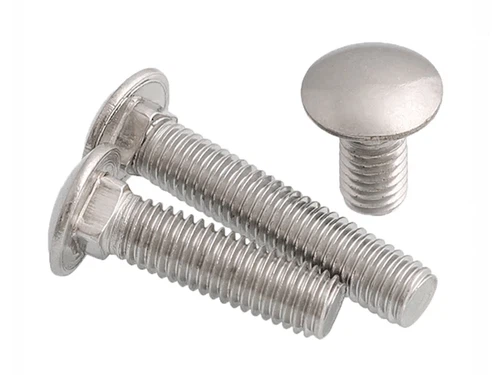
As a specialized structural fastener, the carriage bolt is not designed for universal fastening scenarios. Instead, it is structurally optimized for specific installation conditions, featuring one-sided installation, anti-rotation performance, a flush surface, and stable connection. Its simple appearance consists of three basic parts: a round head, a square neck, and a threaded shank. However, its core functional value lies entirely in the unique square neck structure, which solves many practical installation pain points that standard bolts cannot address.
Core Purposes of Carriage Bolts
The essential functions of carriage bolts can be summarized into three core application scenarios, which define their irreplaceable advantages in engineering assembly:
- Fastening connections for wood and other soft composite materials
- Installation scenarios where operation is only accessible from a single side
- Structural fixation requiring permanent anti-rotation performance
In practical engineering construction, a common dilemma is that workers can only tighten the nut from one side, with no space to fix the bolt head from the reverse side. Ordinary bolts will spin freely during tightening, leading to failed fastening. The square neck design of the carriage bolt is a targeted structural solution to this problem, ensuring non-slip, stable connections in one-sided operation environments.
How Does a Carriage Bolt Prevent Rotation?
Most users mistakenly believe that the thread is the key component of a carriage bolt. In fact, its core performance relies on the square neck embedding and mechanical locking mechanism.
The standard installation and anti-rotation principle is as follows:
- Drill a standard pilot hole on the mounting material in advance;
- Insert the carriage bolt through the hole from one side;
- Press the square neck tightly into the material interior to form a bite fit;
- Tighten the nut smoothly without bolt rotation.
The square neck is not an auxiliary structure but an active anti-rotation locking component. It forms a firm mechanical occlusion with wood and soft composite materials, completely restricting bolt rotation and delivering long-term stable fastening performance.
Typical Application Scenarios
Wood Structure Engineering
Wood structure construction is the most mainstream and widely applicable scenario for carriage bolts, covering most outdoor and architectural wood projects. Common applications include wooden decks, outdoor fences, wood beam support connections, landscape wooden walkways, and integral wood structural frames.
These projects are characterized by complex construction sites, dense connection points, and limited operating space. Carriage bolts perfectly adapt to such working conditions with three major advantages:
- The embedded square neck provides reliable anti-rotation locking for stable structural connection;
- One-sided installation greatly improves on-site construction efficiency;
- The smooth round head avoids sharp protrusions and preserves the integrity and aesthetics of wood structures.
Furniture Manufacturing & Industrial Design
In the furniture industry, carriage bolts are widely used for frame assembly, especially for products that require both structural strength and efficient batch assembly. Typical use cases include table and chair support frames, bed frame connections, modular storage systems, and assembled industrial-style furniture.
For mass-produced furniture products, assembly efficiency and appearance are equally important. The advantages of carriage bolts are prominent:
- One-sided fastening simplifies assembly procedures and reduces production costs;
- The flush round head creates a neat surface, ideal for visible furniture structures;
- It supports repeated disassembly and assembly without damaging basic connection performance.
In this field, carriage bolts serve as an optimized structural connection solution rather than a simple fastener.
Outdoor Facilities & Architectural Auxiliary Structures
Carriage bolts are extensively applied to light-duty outdoor auxiliary structures. Although these structures do not bear primary building loads, they require long-term stability against natural environmental interference. Common scenarios include awning and canopy brackets, landscape wooden platforms, park public facilities, and lightweight wood-steel composite frames.
Exposed to wind, humidity, and slight vibration all year round, outdoor structures demand fasteners with stable anti-loosening performance and easy maintenance. Carriage bolts fit perfectly with the following strengths:
- The square neck occlusion structure effectively reduces loosening risks caused by long-term environmental vibration;
- Simple installation and later maintenance save engineering costs;
- The low-profile round head coordinates well with landscape and outdoor architectural designs.
Special Scenarios for Metal & Composite Structures
Though optimized for wood materials, carriage bolts also apply to partial metal and wood-metal composite structures, especially for non-critical load-bearing positions. Typical applications include single-sided connection points of closed structures, local auxiliary fixation, low-to-medium load non-primary structural connections, and equipment support frames.
Such scenarios feature complex installation spaces but low load requirements, prioritizing construction convenience over extreme strength. Carriage bolts simplify the construction process via one-sided installation, solving the problem of limited operating space while maintaining basic connection stability.
Key Usage Notes for Carriage Bolts
Most installation failures are caused by improper usage rather than defective bolt quality. The following specifications must be followed to ensure optimal performance:
1. Match the pilot hole size accurately An oversized pilot hole prevents the square neck from embedding firmly, completely losing anti-rotation functionality and causing bolt spinning.
2. Select suitable biteable materials Carriage bolts are ideal for wood and composite materials. Hard pure metal surfaces cannot form effective occlusion with square necks, easily leading to slipping and invalid fastening.
3. Follow reasonable force-bearing rules Carriage bolts are suitable for static structures bearing shear force. They are not applicable to primary load-bearing structures with frequent dynamic vibration or high impact loads.
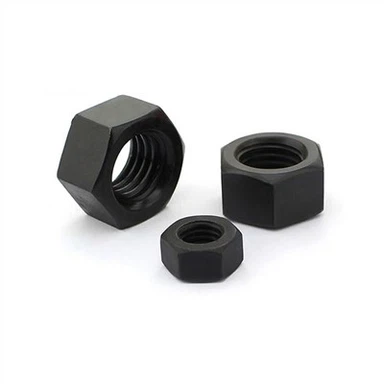
4. Use matched accessories To enhance connection stability and durability, standard matching accessories are recommended: washers for uniform pressure dispersion, lock nuts for anti-loosening protection, and anti-corrosion coatings for outdoor exposed environments.
Conclusion
The core value of carriage bolts can be summarized concisely: structural design replaces complex construction, and square neck occlusion realizes reliable anti-rotation fastening. Widely used in wood engineering, furniture manufacturing, and outdoor facility projects, they provide a high-efficiency, stable, and low-maintenance fastening solution for single-sided installation scenarios.
If you need reliable carriage bolt supplies for wood structures, outdoor engineering, and industrial assembly, or require customized specifications and bulk stable delivery, Jinrui offers one-stop professional fastener solutions. We help your projects achieve more stable structural connections and higher construction efficiency.