
How To Measure A Carriage Bolt: A Complete Guide
May 25, 2026
Carriage bolts are staple fasteners widely used in wood construction, steel-wood composite connections, outdoor fencing, furniture manufacturing, and mechanical equipment fixation. Many purchasers only specify general sizes such as "M8" or "4-inch" when placing orders, yet they frequently encounter installation issues afterward-misaligned holes, insufficient bolt length, loose square necks, and persistent bolt spinning during tightening.
Most of these on-site problems stem from incorrect bolt measurement. This step is especially critical for replacing old bolts, customizing non-standard parts, converting between metric and imperial standards, and precision wood structure installation. Accurate measurement is far more essential than simply referencing a nominal bolt model for reliable project assembly.
What Is a Carriage Bolt?
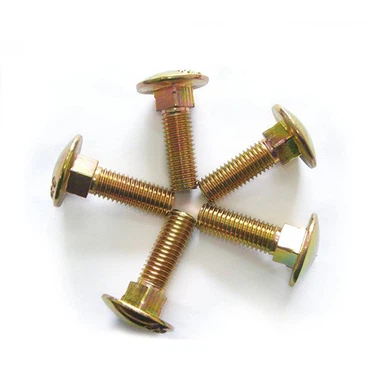
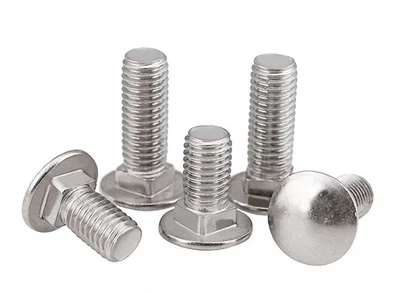
A carriage bolt is defined by its signature round smooth head and square neck, distinguishing it from standard hex bolts. Its two core structural features deliver unique functional advantages:
- Smooth round head: Creates a flush, scratch-resistant surface after installation for safer, cleaner finishes.
- Square neck design: Embeds into mounting materials to lock the bolt in place and prevent rotation during nut tightening.
Thanks to these properties, carriage bolts are the preferred fastener for scenarios requiring flat surfaces and anti-rotation, tamper-resistant connections. Typical applications include:
- Wood structural construction
- Outdoor fences and railing systems
- Wooden decks and platforms
- Residential and commercial furniture assembly
- Playground and recreational facilities
- Agricultural machinery and equipment
- Steel and wood composite structures
Key Parameters for Measuring Carriage Bolts
Most beginners only measure overall length, which leads to incomplete size matching. A full, accurate inspection requires verifying six core parameters that jointly determine installation compatibility and structural performance:
- Thread Diameter: Confirms bolt nominal size and specification standard.
- Shank Length: Determines suitability for the thickness of connected materials.
- Square Neck Dimension: Ensures effective anti-rotation locking.
- Thread Length: Defines the effective fastening range for nut engagement.
- Head Diameter: Governs bearing area and surface pressure distribution.
- Thread Pitch: Differentiates metric and imperial thread standards for precise matching.
How to Correctly Measure Carriage Bolt Length
Carriage bolt length measurement follows a unique rule that differs completely from countersunk screws: always measure from the underside of the round head to the bolt tail, not the top of the head.
The round head only serves as a bearing and cosmetic component and does not penetrate or fasten materials. Only the shank below the head participates in structural connection.
Common Measurement Mistakes & Consequences
Measuring from the top of the round head to the thread tail will overstate the actual usable length, resulting in:
- Oversized nominal length selection
- Exposed excessive threads after installation
- Inaccurate fastening positioning, especially problematic in wood structure assembly
How to Measure Thread Diameter
Thread diameter determines the bolt's core specification, covering mainstream metric and imperial models.
- Common Metric Sizes: M6, M8, M10, M12, M16
- Common Imperial Sizes: 1/4", 5/16", 3/8", 1/2"
Standard Measurement Method
Use a vernier caliper to measure the outer crest diameter of the threads, not the thread root diameter, to obtain the accurate nominal size.
Why Square Neck Measurement Is Critical
The square neck is the core functional structure of carriage bolts, far more than just diameter and length. Its primary function is to embed into pre-drilled holes and lock the bolt body, eliminating rotation during nut tightening.
Problems Caused by Improper Square Neck Size
- Undersized square neck: Fails to clamp the hole tightly, causing bolt spinning, ineffective locking, and requiring auxiliary fixation tools.
- Oversized square neck: Cannot fit into standard pre-drilled holes; forced installation leads to wood cracking and metal hole deformation.
Carriage Bolt Size Chart: Standard Length Ranges
Metric Specifications & Common Lengths
- M6: 20mm – 100mm
- M8: 25mm – 150mm
- M10: 30mm – 200mm
- M12: 40mm – 300mm
- M16: 50mm – 400mm
Imperial Specifications & Common Lengths
- 1/4": 1" – 4"
- 5/16": 1" – 5"
- 3/8": 1-1/2" – 6"
- 1/2": 2" – 8"
Scientific Length Selection Formula
Optimal Bolt Length = Material Thickness + Washer Thickness + Nut Height + 2~3 Exposed Thread Turns
This formula ensures stable fastening, avoids insufficient engagement, and prevents unsightly, unsafe overexposed threads.
Carriage Bolt Pilot Hole Size Guide
Pilot hole sizing is decisive for high-quality wood structure installation. Improper hole dimensions directly cause assembly failures and structural instability.
Risks of Incorrect Pilot Holes
- Too small: Difficult installation, wood cracking, and failed square neck embedding.
- Too large: Weak square neck clamping, loss of anti-rotation function, and loose connections during long-term service.
Recommended Pilot Hole Sizes for Metric Bolts
- M6: 6mm – 6.5mm
- M8: 8mm – 8.5mm
- M10: 10mm – 10.5mm
- M12: 12mm – 12.5mm
Why Slight Hole Clearance Is Required for Wood
Wood is a natural material prone to moisture absorption, thermal expansion and contraction, and fiber extrusion. A tiny reserved gap accommodates natural wood deformation, ensuring smooth installation and long-term connection stability.
Stainless Steel vs Carbon Steel Carriage Bolts
Stainless Steel Carriage Bolts
- Ideal Application Scenarios: Outdoor projects, coastal salt spray environments, high-humidity areas, and corrosion-prone facilities.
- Core Advantages: Excellent rust and corrosion resistance, durable service life, and stable appearance in harsh conditions.
Carbon Steel Carriage Bolts
- Ideal Application Scenarios: Indoor structures, conventional engineering projects, and cost-sensitive batch procurement.
- Core Advantages: High mechanical strength, cost-effective, and suitable for mass construction applications.
Conclusion
Although carriage bolts are small standard fasteners, their dimensional accuracy, pilot hole matching, square neck fit, and material selection directly determine the overall stability and service life of wood and composite structures. Accurate measurement and scientific selection are the foundation of reliable engineering assembly, far more important than simply choosing low-cost products.
If you need professional carriage bolt solutions-including standard parts, non-standard customization, bulk procurement, and engineering technical support-Jinrui provides one-stop customized fastener services to match your project's quality, budget, and delivery requirements.