

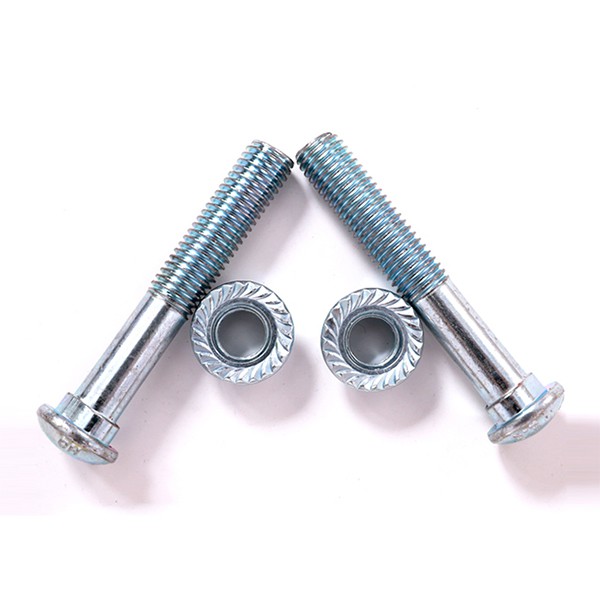
Oval neck bolt refers to a specific type of fastening hardware characterized by its unique design, which includes an oval-shaped neck just below the bolt head. This distinctive feature serves a particular purpose in certain applications. The oval neck is intended to provide a smooth and streamlined surface beneath the head, promoting a flush fit when installed. This design is particularly advantageous in situations where a protruding or raised fastener head might interfere with adjacent components or surfaces. By incorporating an oval neck, the bolt can sit more flush with the connected materials, reducing the risk of snagging, interference, or potential damage to surrounding structures.oval neck bolts are commonly used in industries and applications where aesthetics, safety, or a smooth surface finish is crucial. These bolts find utility in various sectors, including furniture manufacturing, automotive assembly, and architectural projects, where maintaining a sleek and unobtrusive appearance is desirable. The design of oval neck bolts not only ensures a secure and reliable connection but also addresses concerns related to the physical profile of the fastener in the overall assembly.
Advantages of oval neck bolt
Prevents rotational movement
The oval neck of these bolts is intended to prevent rotational movement during installation. This feature is particularly advantageous in applications where the bolt needs to remain stationary, ensuring a stable and secure fastening.
Enhanced security
Oval neck bolts are less prone to tampering or unauthorized removal due to their unique head design. This added security feature makes them suitable for applications where the prevention of tampering or unauthorized access is crucial.
Facilitates easy tightening
The oval-shaped neck provides a comfortable and ergonomic grip for tools during tightening. This design feature makes the installation process more user-friendly, especially in situations where accessibility may be limited.
Suitable for countersunk applications
Oval neck bolts are well-suited for countersunk applications, where the bolt head needs to sit flush with the surface. The oval shape allows for a smooth transition between the bolt head and the material, ensuring a neat and even finish.
-
![Oval Neck Bolts]() Add to Inquiry
Add to Inquiry -
![Zinc Plated Oval Neck Bolt]() Add to Inquiry
Add to Inquiry -
![Grade 8.8 Oval Neck Bolt]() Add to Inquiry
Add to Inquiry -
![Track Bolt]() Add to Inquiry
Add to Inquiry


Why Choose Us
High quality
Our products are manufactured or executed to a very high standard, using the finest materials and manufacturing processes.
24H online service
We try and respond to all concerns within 24 hours and our teams are always at your disposal in case of any emergencies.
Professional team
Our professional team collaborates and communicates effectively with each other, and is dedicated to delivering high quality results. We are capable of handling complex challenges and projects that require our specialized expertise and experience.
Advanced equipment
A machine, tool or instrument designed with advanced technology and functionality to perform highly specific tasks with greater precision, efficiency and reliability.
What Materials Are Commonly Used to Manufacture oval neck bolts
Oval neck bolts, like other types of fasteners, can be manufactured from various materials depending on the specific application requirements. The choice of material is influenced by factors such as the desired strength, corrosion resistance, environmental conditions, and cost considerations. Here are some commonly used materials for manufacturing oval neck bolts:
Aluminum oval neck bolts are lightweight and corrosion-resistant. They are suitable for applications where weight reduction is a priority, such as in automotive and aerospace industries.
Carbon steel
Carbon steel is a widely used material for manufacturing bolts due to its affordability and general-purpose strength. While not as corrosion-resistant as some other materials, carbon steel can be coated with zinc or other protective finishes to enhance its durability.
Stainless steel
Stainless steel is known for its excellent corrosion resistance, making it a popular choice for oval neck bolts, especially in applications where exposure to moisture or corrosive elements is a concern. Common stainless steel grades include 18-8 (Type 304) and 316.
Alloy steel
Alloy steel is a material that incorporates additional alloying elements, such as chromium, molybdenum, or nickel, to enhance its mechanical properties. Alloy steel oval neck bolts are chosen for applications requiring higher strength and toughness.
Brass
Brass is a non-ferrous metal that is corrosion-resistant and exhibits good electrical conductivity. oval neck bolts made from brass are often used in applications where both corrosion resistance and aesthetics are important.
Titanium
Titanium is known for its high strength-to-weight ratio, corrosion resistance, and biocompatibility. While less common due to its higher cost, titanium oval neck bolts find applications in industries like aerospace and medical equipment.
Nylon
In some specialized applications, oval neck bolts may be manufactured with a nylon neck. Nylon is non-metallic, lightweight, and offers excellent resistance to corrosion and electrical insulation. These bolts are often used in industries where non-metallic fasteners are preferred.
What Are the Standard Dimensions for oval neck bolts
The dimensions of oval neck bolts can vary depending on factors such as the bolt's diameter, thread pitch, length, and the specific standards or specifications governing the manufacturing process. oval neck bolts are designed with a distinctive oval-shaped neck beneath the head, allowing for a flush fit when installed. While there may not be a universally standardized set of dimensions for oval neck bolts, the following outlines typical dimensions that might be specified based on industry standards or specific applications:
The length of oval neck bolts is measured from the bottom of the head to the end of the threaded portion. It is an essential dimension and can vary widely based on the specific requirements of the application. Length is typically specified in inches or millimeters.
Head height
The head height is the distance from the bottom of the head to the top of the head. It contributes to the overall height of the bolted joint and is an important consideration in design and assembly.
Diameter
The diameter of oval neck bolts is a critical dimension and is typically specified in inches or millimeters. Common diameters range from 1/4 inch to 1 inch or more, with metric equivalents.
Thread pitch
The thread pitch represents the distance between threads on the bolt's shaft and is usually specified in threads per inch (TPI) for imperial bolts or millimeters for metric bolts. Common thread pitches include coarse, fine, or extra fine, depending on the application.
Head width (Across Flats)
The head width, often referred to as the "across flats" dimension, represents the distance across opposite flat surfaces of the hexagonal head. This dimension is critical for selecting the appropriate wrench or socket size for installation.
Are oval neck bolts Interchangeable with Other Types of Bolts
The interchangeability of oval neck bolts with other types of bolts depends on several factors, including the specific application requirements, the design of the joint, and the standards governing the fasteners. Here are some considerations regarding the interchangeability of oval neck bolts with other types of bolts:
Oval neck bolts have a unique head design with an oval-shaped neck beneath the head. This design allows for a flush fit when installed, which may be advantageous in certain applications. If the specific design of the joint accommodates this head shape, oval neck bolts can be used interchangeably with bolts of other head types.
The head width (across flats) of oval neck bolts determines the wrench or socket size needed for installation. If the available tools are compatible with the head width, oval neck bolts can be interchangeable with bolts of similar diameter and head width.
The thread diameter and pitch of oval neck bolts must match the corresponding specifications of the joint and the nuts or tapped holes they engage with. As long as the thread specifications align, oval neck bolts can be used interchangeably with other bolts with similar thread configurations.
Consider the specific requirements of the application. oval neck bolts may be preferred in situations where a flush or low-profile head design is necessary to prevent interference with adjacent components. If the application allows for this head design, oval neck bolts can be used effectively.
Bolts, including oval neck bolts, are often manufactured to specific industry standards, such as those set by ASTM (American Society for Testing and Materials) or ISO (International Organization for Standardization). Ensure that the chosen bolt type complies with the applicable standards for the intended application.
Consider the load-bearing capacity required for the joint. Different bolt types and grades have varying levels of strength. Verify that the selected bolts, including oval neck bolts, meet the necessary load and strength specifications for the application.
Ensure that the material of the oval neck bolts is compatible with the materials of the connected components and the environmental conditions. Material compatibility is crucial for preventing corrosion and ensuring the overall durability of the joint.
What Industries Commonly Use oval neck bolts
oval neck bolts find applications in various industries where their unique design characteristics offer advantages for specific use cases. The flush-fit design beneath the head makes oval neck bolts suitable for situations where a protruding bolt head might interfere with adjacent components or surfaces. Here are some industries that commonly use oval neck bolts:
Furniture manufacturing
In the production of furniture, particularly in assemblies where aesthetics and a streamlined appearance are important, oval neck bolts may be used to achieve a flush fit without compromising the structural integrity of the joints.
Automotive industry
Oval neck bolts can be found in automotive applications where their low-profile head design helps prevent interference with surrounding components. They may be used in various automotive assemblies, including interior components and certain exterior attachments.
Architectural and construction
Architectural and construction projects often require bolts that not only provide structural support but also contribute to a clean and visually appealing finish. oval neck bolts can be used in architectural metalwork and construction applications where aesthetics are a key consideration.
Marine industry
In marine environments where corrosion resistance is crucial, oval neck bolts made from materials like stainless steel can be utilized. Their flush design helps maintain a smooth surface in marine structures, and corrosion-resistant materials ensure durability in saltwater conditions.
Electronics and electrical equipment
In certain electronics and electrical applications, especially those with limited space, oval neck bolts might be preferred to ensure a compact and tidy appearance. The low-profile head design can be advantageous in situations where protruding bolts are undesirable.
Appliance manufacturing
Oval neck bolts may be used in the assembly of household appliances where a sleek and unobtrusive appearance is desired. Their design contributes to a neat and professional finish in appliance construction.
Aerospace industry
In aerospace applications where weight reduction and precise fit are critical, oval neck bolts made from lightweight yet durable materials like titanium might find use. Their low-profile design can be beneficial in specific aerospace components.
Recreational equipment
Manufacturers of recreational equipment, such as bicycles, outdoor gear, or sporting goods, may use oval neck bolts to achieve a streamlined and visually appealing design without compromising the strength of the fastening.
Medical equipment manufacturing
Certain medical equipment and devices may require bolts with a low-profile head to ensure smooth surfaces and prevent interference with surrounding components. oval neck bolts can be employed in the assembly of medical devices.
Lighting and fixtures
Oval neck bolts can be utilized in the assembly of lighting fixtures, where a clean and aesthetically pleasing finish is important. Their low-profile design can contribute to the overall appearance of the fixture.
What Tools Are Required to Install oval neck bolts
To install oval neck bolts, you will need a set of tools that are appropriate for the bolt size and specifications. Here are the primary tools required for the installation of oval neck bolts:


Wrench or socket
A wrench or socket is necessary to tighten the nut onto the threaded portion of the oval neck bolt. The wrench or socket size should match the head width (across flats) of the bolt. Ensure that the chosen tool provides a secure grip on the bolt head for effective tightening.
Torque wrench
A torque wrench is used to apply a specific amount of torque to the oval neck bolt during installation. This is crucial for achieving the desired clamping force and ensuring that the bolt is tightened to the specified torque value. Refer to engineering specifications or industry standards for the recommended torque values.
Power tools
Depending on the size and application, power tools such as impact wrenches or electric drills with appropriate socket attachments may be used to expedite the installation process. It's essential to exercise caution when using power tools to avoid over-tightening, which can lead to bolt or joint damage.
Thread-locking compound
In certain applications where vibration is a concern, a thread-locking compound may be applied to the threads of the oval neck bolt before installation. This compound helps prevent self-loosening over time. Follow the manufacturer's instructions for proper application.
Lubricant
Applying a lubricant to the threads of the oval neck bolt before installation can help reduce friction, ensuring smooth tightening and preventing galling or seizing. This is especially beneficial when working with bolts in challenging environments. Choose a lubricant suitable for the specific application.
Thread tap
In cases where the threads in the receiving material are damaged or obstructed, a thread tap may be required to clean or re-tap the threads. This ensures proper engagement of the oval neck bolt and helps avoid cross-threading during installation.
Measuring tools (Calipers, Ruler)
Measuring tools may be needed to verify the dimensions of the oval neck bolt, ensuring that it matches the specifications required for the application.
How Do You Ensure Proper Seating of an oval neck bolt
Ensuring the proper seating of an oval neck bolt is crucial to achieving a secure and reliable fastening. The seating refers to the positioning of the bolt within the joint or assembly, and it's essential for maintaining structural integrity and preventing potential issues such as loosening or misalignment. Here are steps to ensure the proper seating of an oval neck bolt:
Inspect components
Before installation, thoroughly inspect the components that the oval neck bolt will secure. Ensure that the surfaces are clean, free of debris, and properly aligned. Any misalignment or obstructions may affect the seating of the bolt.
Verify Thread engagement
Confirm that the threads of the oval neck bolt properly engage with the corresponding threads in the receiving material (nut or tapped hole). Ensure that the threads are not damaged, and if necessary, use a thread tap to clean or re-tap the threads.
Apply lubrication
Applying a suitable lubricant to the threads of the oval neck bolt can help facilitate smooth and even seating. This is particularly beneficial in reducing friction and preventing galling or seizing during installation.
Hand-tighten initially
Begin the installation process by hand-tightening the oval neck bolt until it makes contact with the receiving material. Hand-tightening helps prevent cross-threading and allows for initial alignment.
Use the correct wrench or socket
Once hand-tightened, use the correct wrench or socket to further tighten the oval neck bolt. Ensure that the tool size matches the head width (across flats) of the bolt to prevent slipping and damage.
Torque to specifications
Refer to the engineering specifications or industry standards for the recommended torque values for the specific oval neck bolt and application. Use a torque wrench to achieve the specified torque, ensuring that the bolt is properly seated and providing the necessary clamping force.
Verify flush fit
If a flush fit is desired for aesthetic or functional reasons, visually verify that the oval neck of the bolt is flush with the surface of the material. This ensures that the design intent of the oval neck bolt is met and that there are no protruding elements.
Inspect for proper alignment
Inspect the assembled components to ensure that the joint is properly aligned. Misalignment may indicate improper seating or potential issues with the installation. Rectify any misalignment before finalizing the installation.
Apply thread-locking compound
In applications where vibration is a concern, consider applying a thread-locking compound to the threads of the oval neck bolt. Follow the manufacturer's instructions for proper application, and allow sufficient curing time if required.
Perform final torquing
After verifying the initial seating, perform the final torquing of the oval neck bolt to the specified values. This ensures consistent clamping force and helps prevent issues such as bolt loosening over time.
Perform post-installation inspection
Once the oval neck bolt is fully tightened, conduct a post-installation inspection to ensure that the joint is secure, aligned, and meets the project requirements. Address any issues promptly.
How Do You Calculate the Torque Requirements for oval neck bolts
Calculating the torque requirements for oval neck bolts involves considering several factors, including the specific characteristics of the bolt, the materials being fastened, and the requirements of the application. Torque values are crucial for achieving proper clamping force, ensuring a secure and reliable joint. Here's a general guideline for calculating torque requirements:
Determine bolt specifications
Gather information about the oval neck bolt, including its diameter, thread pitch, material grade, and any specific features that may impact torque requirements. This information is typically provided by the bolt manufacturer.
Understand the application
Consider the specific requirements of the application, including the materials being fastened, the desired clamping force, and any environmental factors. Torque requirements may vary based on these factors.
Consult engineering standards
Refer to relevant engineering standards, such as those provided by organizations like ASTM (American Society for Testing and Materials) or ISO (International Organization for Standardization), for torque recommendations based on bolt specifications and material grades.
Use torque tables
Many manufacturers provide torque tables that correlate bolt specifications with recommended torque values. These tables may include different torque values for various lubrication conditions, so choose the appropriate column based on the application.
Consider lubrication
The use of lubricants on the threads can affect the torque required for proper tightening. If a lubricant is used, refer to the manufacturer's recommendations or torque tables that account for lubricated conditions.
Apply coefficient of friction
Torque values are influenced by the coefficient of friction between the bolt threads and the mating threads. If the coefficient of friction is known, it can be used to adjust the torque value accordingly. The formula for adjusting torque with friction is Torque = Friction Factor × Torque without Friction.
Calculate torque
Use the appropriate formula or torque chart to calculate the torque requirement based on the specific characteristics of the oval neck bolt. The formula for torque (T) is often represented as T = K × D × F, where:
- T is the torque.
- K is a constant based on the bolt material and lubrication conditions.
- D is the bolt diameter.
- F is the desired clamping force.
What Is the Importance of the Oval Neck in Preventing Loosening
The oval neck in oval neck bolts serves a specific purpose in preventing loosening and enhancing the overall reliability of the fastening. The design of the oval neck contributes to the stability and effectiveness of the bolt in various applications. Here are the key reasons for the importance of the oval neck in preventing loosening:
Suitability for limited space
In situations where there is limited space for the bolt head, the oval neck allows for a compact design without sacrificing the strength of the fastening. This is particularly beneficial in applications where space constraints are a consideration.
Resistance to shear forces
The oval neck design helps resist shear forces that may act on the bolted joint. By providing a flush and stable connection, the oval neck enhances the bolt's ability to withstand lateral or shear loads without compromising its integrity.
Flush fit
The oval neck is designed to provide a flush fit beneath the head of the bolt. This means that when the bolt is tightened, the oval neck sits smoothly against the surface of the connected material. This flush fit minimizes protrusions and eliminates potential spaces that could allow for movement or vibration.
Reduced vibration-induced loosening
The flush fit achieved by the oval neck helps reduce the likelihood of loosening due to vibrations. When a bolt has a protruding head or uneven surface, vibrations can cause it to shift or rotate over time. The oval neck minimizes such movement, contributing to the overall stability of the bolted joint.
Enhanced clamping force
The oval neck design contributes to the effective application of clamping force during the tightening process. As the bolt is torqued, the oval neck ensures that the head maintains close contact with the material surface, distributing the clamping force evenly. This even distribution helps prevent localized stress concentrations that could lead to loosening.
Prevention of backing out
The flush fit and the even distribution of clamping force provided by the oval neck contribute to the prevention of the bolt backing out over time. The streamlined design minimizes the opportunity for the bolt to unscrew itself, maintaining a secure connection.
Improved aesthetics
In applications where a neat and streamlined appearance is important, the oval neck design not only contributes to functionality but also enhances aesthetics. The flush fit creates a visually appealing finish, especially in industries like furniture manufacturing, automotive, and architectural projects.
How Do Oval Neck Bolts Contribute to Structural Integrity
Oval Neck Bolts contribute to structural integrity in various ways, leveraging their design features to provide secure and reliable fastening in structural assemblies. Here are several ways Oval Neck Bolts enhance structural integrity:
The oval neck in Oval Neck Bolts allows for a flush fit beneath the bolt head. This design minimizes protrusions and creates a smooth surface when tightened. The flush fit is particularly advantageous in applications where a streamlined appearance is desired, reducing the risk of snagging or interference with adjacent components.
Reduced interference
By providing a low-profile head design, Oval Neck Bolts minimize the risk of interference with surrounding structures or components. This is crucial for maintaining clearances in tight spaces and preventing potential damage or misalignment.
Reliable load transfer
Oval Neck Bolts play a crucial role in transferring loads within a structure. When properly torqued and securely fastened, they provide a reliable means of transferring forces and ensuring structural stability under various loading conditions.
Prevention of misalignments
The low-profile head design of Oval Neck Bolts helps prevent misalignments in the joint. Misalignments can introduce stress concentrations and compromise the structural integrity of the assembly. The flush fit minimizes the risk of misalignments during installation.
Prevention of backing out
The flush fit design, coupled with proper torque application, helps prevent Oval Neck Bolts from backing out over time. This is important for maintaining the structural integrity of the assembly, ensuring that the bolts remain securely fastened and do not compromise the stability of the structure.
Even distribution of clamping force
Oval Neck Bolts contribute to structural integrity by facilitating an even distribution of clamping force across the joint. The oval neck design ensures that the clamping force is applied uniformly, reducing the risk of localized stress concentrations that could lead to structural weaknesses.
Resistance to vibrations
The streamlined design of Oval Neck Bolts enhances their resistance to vibrations. The flush fit and reduced protrusions minimize the potential for the bolts to loosen or shift under dynamic loads, contributing to the structural stability of the assembly.
What Is the Difference Between an oval neck bolt and a Round Head Bolt
The primary difference between an oval neck bolt and a Round Head Bolt lies in the design of their respective heads. These differences impact the overall functionality, appearance, and applications of the two types of bolts. Here's a breakdown of the distinctions:
Oval neck bolt: The defining feature of an oval neck bolt is its head, which has an oval-shaped neck just below it. This design allows for a flush fit when tightened, providing a smooth and streamlined appearance. The oval neck minimizes protrusions, reducing the risk of interference with adjacent components.
Round Head Bolt: A Round Head Bolt, on the other hand, has a head with a circular or rounded shape. The head is generally flat on top, providing a larger surface area for tool engagement. Round Head Bolts protrude more prominently compared to oval neck bolts.
Oval neck bolt: The oval neck in an oval neck bolt contributes to a flush fit, enhancing aesthetics, and preventing potential snagging or interference in applications where appearance is important. This design is often chosen for its neat and streamlined finish.
Round Head Bolt: Round Head Bolts have a more traditional appearance with a visible, rounded head. While they may be functional, they might not offer the same level of flush fit or aesthetic appeal in applications where a sleek design is desired.
Oval neck bolt: Oval neck bolts are often chosen for applications where a low-profile head design is crucial to prevent interference or where aesthetics play a significant role. Common applications include furniture manufacturing, automotive assembly, and architectural projects.
Round Head Bolt: Round Head Bolts are versatile and find use in various applications where a protruding head is acceptable or necessary. They are employed in construction, machinery, and general fastening applications where the appearance of the head may be less critical.
Oval neck bolt: Oval neck bolts typically require a wrench or socket for installation. The tool size should match the head width (across flats) of the bolt.
Round Head Bolt: Round Head Bolts also require a wrench or socket for installation, with the tool size determined by the flat surfaces across the head.
Oval neck bolt: The flush fit provided by the oval neck contributes to improved resistance against vibrations and movement, reducing the likelihood of loosening over time.
Round Head Bolt: While effective, the design of Round Head Bolts may not offer the same level of vibration resistance as oval neck bolts due to their more prominent head.
How to Maintain oval neck bolt



Regular inspections
Conduct regular visual inspections of the oval neck bolts to check for signs of corrosion, damage, or any other issues. Inspect the flush fit of the oval neck to ensure that it remains consistent.
Tightness checks
Periodically check the tightness of the oval neck bolts to ensure they remain secure. Use the appropriate tools, such as a torque wrench, to verify that the bolts are tightened to the specified torque values.
Corrosion prevention
Apply corrosion-resistant coatings or finishes to the oval neck bolts if they are exposed to corrosive environments. Consider using bolts made from materials with inherent corrosion resistance, such as stainless steel.
Thread lubrication
Apply a suitable lubricant to the threads of the oval neck bolts during installation. Lubrication helps reduce friction, making it easier to achieve proper torque and preventing galling or seizing.
Environmental protection
Protect oval neck bolts from harsh environmental conditions, especially in outdoor or marine applications. Consider using weather-resistant coatings or covers to shield the bolts from moisture and contaminants.
Address misalignments
If misalignments or displacements are observed during inspections, address them promptly. Misalignments can lead to uneven stress distribution and compromise the effectiveness of the bolted joint.
Replacement of damaged bolts
Replace oval neck bolts that show signs of damage, wear, or corrosion. Damaged bolts may not provide the necessary clamping force and could compromise the integrity of the assembly.
Proper storage
Store oval neck bolts in a dry and controlled environment to prevent exposure to moisture and humidity. Ensure that the storage area is free from contaminants that could affect the bolts' performance.
Consider environmental factors
Assess the specific environmental factors affecting the oval neck bolts in your application. Factors such as temperature, humidity, and exposure to chemicals can impact the bolts' durability.
Use thread-locking compounds (If Needed)
In applications prone to vibrations, consider using thread-locking compounds on the threads of the oval neck bolts. Follow the manufacturer's recommendations for application and curing.
FAQ
Q: What is an oval neck bolt?
Q: How is an oval neck bolt different from other bolts?
Q: What are the primary applications of oval neck bolts?
Q: What advantages does the oval-shaped neck provide?
Q: Are oval neck bolts suitable for countersunk applications?
Q: Can oval neck bolts be tamper-resistant?
Q: What materials are oval neck bolts typically made from?
Q: How is stress concentration reduced in oval neck bolts?
Q: Are oval neck bolts corrosion-resistant?
Q: Can oval neck bolts be used in structural applications?
Q: Are oval neck bolts compatible with standard wrenches and tools?
Q: Do oval neck bolts require special installation techniques?
Q: How do oval neck bolts contribute to a streamlined appearance?
Q: Can oval neck bolts be used in outdoor applications?
Q: Are oval neck bolts reusable?
Q: Can oval neck bolts be used in furniture assembly?
Q: How do oval neck bolts contribute to stability in installations?
Q: Are there variations in the oval shape of the neck?
Q: Can oval neck bolts be painted or coated?
Q: What standards govern the manufacturing of oval neck bolts?
We're professional oval neck bolt manufacturers and suppliers in China, specialized in providing high quality custom service. We warmly welcome you to wholesale high-grade oval neck bolt at competitive price from our factory.
Grade 8 8 Oval Neck Bolt, Track Bolt, Oval Neck Bolts