
Treatment Of Non-Standard Screw Seizure And Material Selection Guidelines For Special Screws
Sep 11, 2026
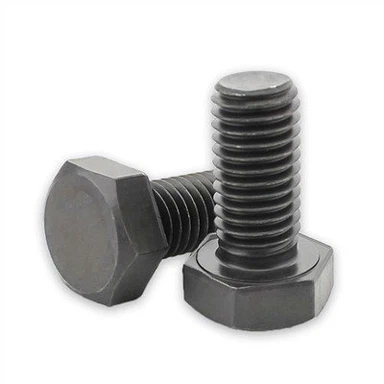
Non-standard screws are custom fasteners tailored to specific structural and working condition requirements, differing from standard specifications such as GB, ANSI and DIN. Some non-standard screws adopt special materials and surface treatments to achieve excellent corrosion resistance and rust-proof performance. Their quality is mainly determined by customized dimensions, mechanical properties, thread accuracy, surface finish and environmental durability. They are widely used in precision and special equipment including environmental protection machinery, electronic devices, food processing machinery and medical equipment. Non-standard screws are prone to thread seizure, galling and jamming during assembly, which can be effectively avoided and resolved through standardized operating procedures, as detailed below.

1. Prevention and Solutions for Non-Standard Screw Thread Seizure
1.1 Reasonable Selection According to Working Conditions
Before assembly, select the appropriate material, specification and strength grade based on mechanical loads, service environment and installation space. Ensure that the screw's mechanical performance, corrosion resistance and dimensional accuracy fully match operational requirements, so as to prevent jamming and seizure caused by improper selection.
1.2 Strict Control of Thread Quality and Cleanliness
Rough threads, excessive burrs, deformed tooth profiles, or foreign contaminants such as welding slag and metal chips trapped in threads will cause abnormal meshing and eventually lead to seizure. Clean all thread surfaces and inspect thread integrity before assembly, and prohibit the use of defective products.
1.3 Controlled Tightening Torque and Speed
High-strength stainless steel and alloy non-standard screws are highly sensitive to assembly temperature rise. Excessive tightening force or overly fast rotation speed generates intense friction heat, resulting in thermal adhesion and thread galling. Screws shall be tightened at a uniform low speed with strictly controlled torque to avoid overheating and instantaneous overload.
1.4 Vertical Assembly Without Deflective Loading
During tightening, the screw shall be coaxially and vertically aligned with the mounting surface. Deflective assembly causes unilateral overloading and thread extrusion deformation, which leads to jamming and permanent seizure.
1.5 Proper Matching of Flat Washers and Spring Washers
Equipped with standard flat washers and spring washers according to working conditions, the fastening pressure can be evenly distributed, assembly gaps compensated, and vibration friction buffered. This effectively prevents over-tightening, thread crushing and assembly seizure, while improving overall anti-loosening performance.
2. Material Selection Guidelines for Special Screws and Matching Parts
Material selection for non-standard and special screws directly determines structural strength, hardness, weldability and service life. Material specifications for different components and processing scenarios are as follows:
2.1 Material Selection for Flat Washers
Ordinary flat washers without mechanical performance requirements can be manufactured from Q235A residual materials for basic leveling and protection. For low-level hardness requirements, thickened Q235A plates can be processed by calendaring to achieve qualified surface hardness for general load-bearing fastening scenarios.
2.2 Material Selection for Rivets and Pins
Conventional rivets and pins generally adopt the same materials as matching screws. Certain precision and flexible connection rivets require low hardness, with some working conditions requiring hardness below HRB 60. Normalized steel typically ranges from HRB 70 to 80, which fails to meet low-hardness demands. Therefore, such rivets require annealing treatment to achieve qualified hardness and toughness.
2.3 Material Selection for Weldable Special Screws
Screws for arc welding and gas welding have general adaptability to ordinary carbon steel without special material restrictions. For spot welding applications, low-carbon steel must be used to reduce quenching risk and prevent welding cracks. Low-carbon high-manganese steel can be adopted to enhance structural strength while maintaining good weldability.
2.4 Material Substitution Principles for Special Screws
When customer-specified materials are difficult to procure or involve long lead times, alternative materials may be proposed in written applications on the premise that mechanical properties, corrosion resistance and assembly performance fully meet actual working conditions. Many customers lack professional fastener selection experience, and their specified materials may not be optimal for practical application. Reasonable material optimization can ensure product quality while improving stability and reducing costs.
Conclusion
Standardized screw selection, strict thread quality control and standardized assembly processes can effectively eliminate thread seizure and galling. Scientific material selection for special screws and reasonable material substitution strategies significantly improve the assembly quality, operational stability and service life of non-standard fasteners.