
Steel Structure Bolt Fasteners
Jul 29, 2025
The standards for steel structure bolts differ from those for ordinary bolts. What are the specific differences? Can they undergo hot-dip galvanizing like ordinary bolts? Below is a detailed analysis.
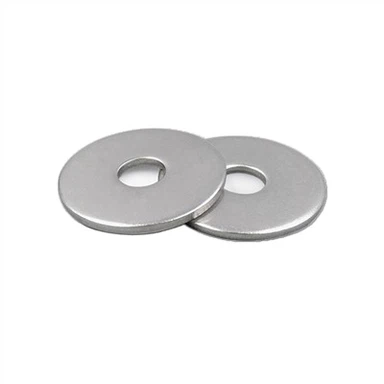
First, regarding standards: Steel structure bolts are produced in accordance with national standard GB/T 1228, which includes one bolt, one nut, and two washers. Therefore, steel structure bolts are sold as a set. Among them, GB/T 1229 corresponds to nuts, and GB/T 1230 corresponds to flat washers. Their strength grade is 10.9, with matching nuts at grade 10. The flat washers are made of reinforced materials, thicker than ordinary washers. Bolts must undergo quenching and tempering before use; in their original state, they are gray, with a Rockwell hardness C (HRC) of approximately 35 (calculated by average, as hardness may vary slightly across different parts).
Steel structure bolts require a minimum tensile strength of 600kN in tensile tests and a minimum torque of 1250N·m (these are the minimum values specified in national standards, and actual tests must not fall below these standards). During installation, torque magnitude is related to tightness: excessive torque can damage threads, while insufficient torque may cause loosening. Thus, installation must be done with standard torque tools.
Occasionally, broken steel structure bolts are found on-site. Professional analysis shows that such fractures are not caused by heat treatment but by inherent material issues. If a bolt is already damaged, combined with asymmetric torque application, the bolt is prone to fracture under the interaction of internal and external factors. However, such fractures are random and will not occur on a large scale; careful inspection during installation can prevent them.

Can steel structure bolts undergo hot-dip galvanizing like ordinary bolts?
This question needs to be explained in points: First, steel structure bolts are high-strength bolts, and high-strength bolts are generally not recommended for surface treatment (including hot-dip galvanizing and cold galvanizing). Therefore, in principle, they are not suitable for hot-dip galvanizing. But what if the design requires hot-dip galvanizing?
In practice, hot-dip galvanized steel structure bolts are indeed used in scenarios such as outdoor utility pole connections. To ensure quality and avoid fractures, fluxing treatment must be performed during hot-dip galvanizing. This step acts as a tempering process, reducing the risk of brittle fracture and ensuring the zinc coating does not peel off. Thus, steel structure bolts can undergo hot-dip galvanizing, but extra caution is required during production.
Hot-dip galvanizing for matching steel structure nuts differs from that for ordinary nuts. Due to usage volume, manufacturers usually do not stock them in advance. To meet delivery deadlines upon receiving orders, nuts are first galvanized and then tapped on a threading machine, leaving the internal threads of steel structure nuts without zinc coating. However, there is no need to worry about rust, as the thread bores are coated with anti-rust oil.
Steel structure bolts are also called "connection sets," including twist-off type steel structure bolts. To ensure stable quality, components in a set are typically produced using the same batch of materials and undergo heat treatment in the same furnace. In terms of strength grade, 10.9 is most suitable for steel structure bolts, with specifications starting from M16 and commonly maxing out at M30 (different from ordinary bolts). The matching high-strength nut has a circular boss on one side, which should face inward during installation; other installation guidelines are the same as for ordinary bolts.
Steel structure bolts began to be formally adopted in 1970, with many early industrial plant installations using them. Before being introduced to China, they were patented products not included in national standards, making them inaccessible to domestic construction due to patent restrictions. During China's period of rapid development, with surging construction demand and other countries formulating their own standards, China also improved and incorporated steel structure bolt standards into national standards based on actual needs, allowing them to be widely used and realize their maximum value.
In production, material procurement and testing for steel structure bolts are extremely strict. Only after third-party testing institutions issue authoritative reports on chemical composition, torque parameters, etc., can the materials be used. Construction uses silent equipment for installation, with many electric tools having built-in power supplies; the early air compressor installation method is basically no longer used-since steel structure bolts are mostly used outdoors, connecting air compressors to power is inconvenient, while tools with built-in lithium batteries are more portable.
Upon arrival at the factory, materials first undergo pickling to remove surface residues, forming a phosphating film on the surface to protect the material and ensure surface finish meets requirements during cold heading. Before being put into the machine, raw materials undergo spheroidizing treatment and wire drawing; if the material is too hard, annealing is also required. After forming, bolts undergo tempering to enhance strength, and finally, after inspection and packaging, they are delivered to users.
Storage of steel structure bolts differs from that of ordinary bolts: they should be stored in a dry, dust-free warehouse to ensure that during installation, nuts and threads can quickly form a good fit, allowing easy tightening. Matching flat washers are made of the same material as the bolts; rain protection measures should be taken during installation in rainy weather. After installation, it is best not to loosen them easily-though not disposable products, they are recommended to be used in one go.