
Pros And Cons Of Hex Head Screws Vs. Socket Head Screws: Why Do Machinery Favor Socket Head Screws?
Nov 27, 2026
1. Hex Head Screws
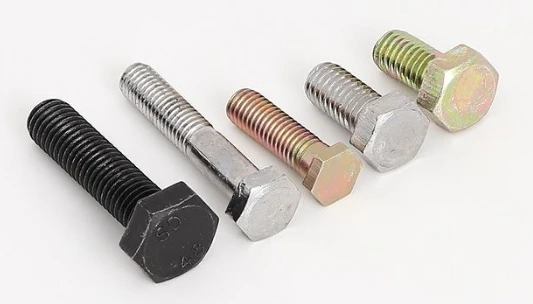
The threads of hex head screws are generally coarse or fine ordinary threads with good self-locking performance. They are mainly used on thin-walled parts and in applications subject to impact, vibration or alternating loads.
Hex head screws usually have partial threads. Fully threaded hex head screws are mainly used where the nominal length is short or a longer thread engagement is required. Holed hex head screws are used where pin locking is needed. Reamed hex head bolts can precisely locate the relative position of connected parts and withstand shear and extrusion caused by transverse forces.
Advantages: Large bearing contact area allows high preload; commonly used on large equipment; lower manufacturing cost than socket head screws; the wrench-bearing section of the head is thinner, making it irreplaceable in some locations.
Disadvantages: Large space occupation; the head protrudes and cannot be used in countersunk holes.
2. Socket Head Screws
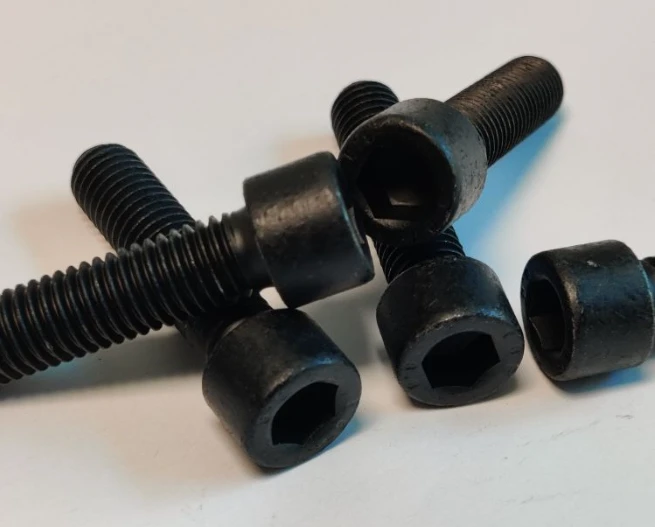
Socket head screws are commonly used on machinery. Their main advantages are convenient fastening and removal, and high resistance to slipping. The matching Allen key is an L-shaped tool bent at 90° with a long arm and a short arm; when the short end engages the screw, gripping the long arm saves effort and delivers better tightening. Common head styles of socket head screws include cylindrical head and countersunk head, which can be inserted and removed at an angle in positions where other wrenches are inaccessible.
Advantages: Compact footprint and available in countersunk form; widely used on small equipment and tight structures.
Disadvantages: Smaller bearing contact area limits maximum preload; slightly higher price; fully threaded designs are not available beyond a certain length.
3. Why Do Mechanical Equipment Favor Socket Head Screws?
1. Higher Tightening Torque Capacity
The internal hex socket offers six bearing surfaces. Compared with the two bearing surfaces of slotted and Phillips screws, it transfers torque more effectively and resists cam-out.
Note: Socket head screws are generally made of stainless steel, carbon steel or alloy steel, basically the same materials as other screw types. Higher property grade means greater strength. Property grade must be selected strictly according to application requirements, and prices vary by grade.
2. Countersunk Installation
The screw head can be sunk into the workpiece, keeping the surface flat and smooth and avoiding external protrusions that may catch on other parts.
3. Easy Installation
Compared with hex head screws, socket head screws suit more assembly situations, especially confined spaces, and are convenient for assembly, adjustment and maintenance.
4. Tamper-Resistant Feature
Common tools such as adjustable wrenches, screwdrivers and open-end wrenches cannot remove socket head screws; a dedicated Allen key is required. Unauthorized removal by non-professionals is difficult, which serves as a tamper-prevention feature in specific applications.