
How Much Do You Know About Expansion Bolts?
Jul 25, 2023
Expansion bolts are a type of fastener specifically used to fix hard materials such as concrete and masonry. Their working principle is to fix the bolts in the hole through an expansion sleeve, and then achieve the goal of tightly grasping the hole wall. Compared to other fixed components, expansion bolts are easy to operate and have a wide range of applications, making them widely used in construction projects such as buildings, bridges, highways, tunnels, railways, hydropower stations, etc. This article will provide a detailed introduction to the scope of use, main components, and usage steps of expansion bolts.
1】、 Scope of use of expansion bolts
The application field of expansion bolts is very extensive, mainly used for fixing in construction projects such as buildings, bridges, highways, tunnels, railways, hydropower stations, etc. Its applications include hard materials such as concrete, red bricks, hollow slabs, and stones. Compared to other fixed parts, the expansion bolt fixation is more stable and reliable.
2】、 Main components of expansion bolts
Expansion bolts mainly consist of three parts: bolts, expansion sleeves, and expansion nuts.
1. Bolt
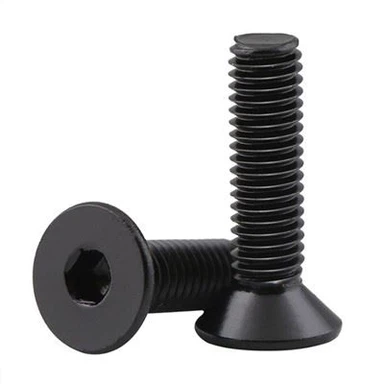
Bolts are the main part of expansion bolts and are generally made of Wuxi steel material. The length, diameter, and thread parameters of bolts need to be selected based on the thickness and characteristics of the fixed material. At the same time, the surface of the bolts will be hot-dip galvanized to avoid oxidation and rust.
2. Expansion sleeve
The expansion sleeve is an important part of the expansion bolt, and its material is generally plastic or iron. When using expansion bolts, the expansion sleeve will expand under tension, thereby locking the bolts in the hole diameter. At this point, the expansion sleeve will automatically adapt to the shape of the aperture and ensure that it is firmly fixed in the hole.
3. Expansion nut
Expansion nuts are generally made of stainless steel, and their function is to fix the expansion sleeve, so that when tightened with the bolt, the expansion sleeve will expand and tightly grasp the hole wall. It is worth noting that when installing expansion bolts, it is necessary to correctly match the expansion nuts, otherwise the expansion sleeve may affect the quality and fastness of fixation.

3】、 Steps for using expansion bolts
Before using expansion bolts, it is necessary to first determine the fixing requirements, select the appropriate size of expansion bolts, and then use them according to the following steps.
1. Drilling
Firstly, use an electric drill or other tool to drill holes at the predetermined location. The selected aperture should match the diameter of the expansion bolt, and the depth of the aperture should be slightly greater than the length of the expansion bolt, so that the bolt can be fully inserted.
2. Cleaning
Clean the dust, debris, and other stains on the hole wall to ensure sufficient tension of the expansion sleeve, thus achieving the best anti loosening and fixing effect.
3. Installation
Insert the expansion bolt into the hole and tighten the bolt. With the bolt loose, insert the expansion screw sleeve into the drilling hole and then tighten the bolt. At this point, the expansion sleeve will gradually expand and eventually get stuck in the hole wall, thereby achieving stable fixation of the bolt.
4. Tightening
After clamping the expansion sleeve into the hole wall, continuously tighten the bolts until the required tightening force is achieved.
The above are the steps for using expansion bolts. When using, it should be noted that different fixing requirements and materials may require different types and sizes of expansion bolts. Therefore, when selecting and using, appropriate specifications and models should be selected according to needs to ensure fixed safety and reliability.
In summary, expansion bolts are a widely used fixing component, and their flexibility and ease of use make them an ideal choice in construction engineering. When using expansion bolts, the specified installation method should be followed correctly to ensure the fixation effect.