
How Bolts Work
Sep 03, 2026
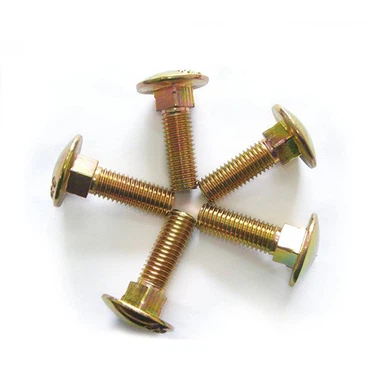
Bolts are fundamental components of modern manufacturing, widely used in commercial and industrial products ranging from airliners to gardening tools. Although their function may seem straightforward, bolts possess relatively complex mechanical properties and design features to achieve reliable connections.

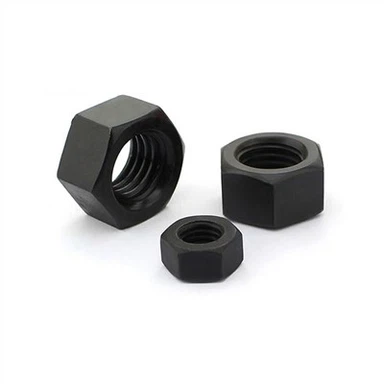
The practical performance of a bolt depends not only on its fit within the mounting hole but also on a set of specific specifications. Bolt type, physical dimensions, thread density, material grade and tightening requirements are all critical factors for effective bolt assembly. Likewise, the matched combination of nuts and bolts has a significant impact on component assembly and overall product performance. An excessively long bolt may cause mechanical interference, while a bolt with insufficient tensile strength can lead to equipment damage. Therefore, understanding how bolts perform their function can make the difference between a successful project and a failed one.
Bolt Threads
Threads are one of the key features of a bolt. They operate based on the basic principle of an inclined‑plane wrapped helically around the fastener shank. This helix converts rotational force into axial linear motion. Turning the bolt drives the mating nut to travel along the inclined helical surface. The greater the applied tightening torque, the higher the axial force pushing the nut forward, which stretches the bolt shank and generates clamping force that compresses joined components. Threads with finer pitch can improve joint capacity. For high‑strength bolts, thread rolling performed after heat treatment further enhances thread strength and fatigue resistance.
Mechanical Forces
Tightening a bolt engages several types of mechanical forces that keep the assembled joint secure. The primary forces generated during bolt installation are described below:
Clamping Force: A compressive force exerted by the bolt on the joint to hold two or more components tightly together.
Preload: Produced when threads engage and the bolt shank stretches during tightening. Preload keeps the thread mated and locked in position.
Shear Force: Transverse load acting perpendicular to the bolt axis. Shear force may exist independently or superimposed with tensile load.
Tensile Force: Load applied along the longitudinal axis of the bolt, acting over its length rather than its cross‑section.
Clamping force holds components together and is determined jointly by preload and the stiffness of connected parts. Joint separation and bolt failure occur when external tensile load fully offsets the preload. Generally, higher preload yields higher clamping force and a more reliable bolted joint. Under ideal assembly conditions, properly tightened joints should minimize direct shear loading. Detailed calculation formulas can be found in professional fastener design references.
Manufacturing for Mechanical Performance
The American Society for Testing and Materials (ASTM) establishes numerous standards governing bolt dimensions, raw materials and post‑treatment processes. Bolts are available in various nominal lengths and multiple head configurations including hexagon, oval, flat and socket‑head styles. The overall mechanical performance of a bolt can be evaluated by its elongation at fracture, while yield strength defines the stress threshold at which plastic deformation occurs. Tensile strength is always higher than yield strength. In service, operating loads on bolts must remain below the yield strength. Bolts with a large gap between tensile strength and yield strength are regarded as ductile; they undergo considerable plastic elongation before final fracture.
Many types of bolts are available, such as T‑bolts. They can be manufactured from a wide range of materials, among which steel is the predominant choice for most high‑strength applications. Steel bolts are graded according to tensile strength and yield strength expressed in Newtons per square millimeter (N/mm²). For example, a class 5.8 steel bolt features a nominal tensile strength of approximately 500 N/mm² and a nominal yield strength of approximately 400 N/mm². Other common bolt materials including corrosion‑resistant stainless steel, alloy steel and composite materials follow the same grading system.