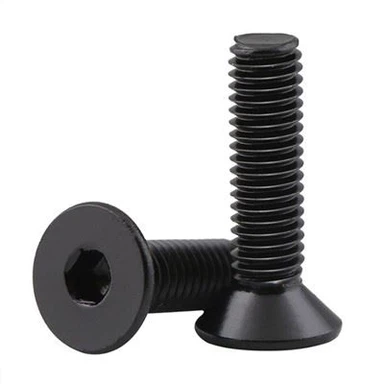

Application Fields Of Bolts
Oct 14, 2026
A bolt is a common fastener used to fasten multiple components together. It is generally made of metal with external threads and is normally used together with a nut. Bolts have a wide range of applications and are extensively adopted in many industries such as furniture, mechanical equipment, building steel structures and automobile manufacturing.
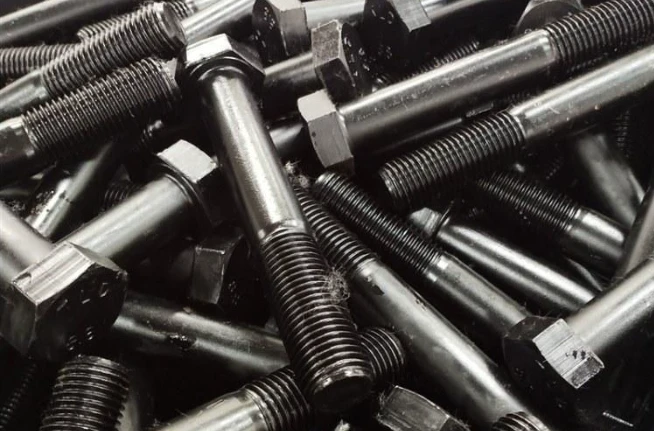
The basic structure of a bolt consists of a head, a shank and external threads. Bolt heads are commonly hexagonal, and round heads and other types are also available for clamping and tightening with tools. The shank is the main cylindrical body of the bolt, and external threads are machined on part of the shank. The spiral thread profile meshes with the internal thread of the nut to form a reliable fastened joint.
Bolts are mostly made of metal materials, mainly carbon steel, stainless steel, alloy steel and so on. Different materials deliver distinct properties including strength grade, corrosion resistance and high-temperature resistance. Suitable materials can be selected according to actual working conditions.
Bolt specifications mainly cover nominal diameter, nominal length and thread form. The letter "M" denotes metric threads for nominal diameter, with common sizes such as M6, M8 and M10. Nominal length refers to the effective length of the shank, usually measured in millimeters. Threads are classified into coarse thread and fine thread. Coarse threads are used for general connections, while fine threads are suitable for scenarios requiring high locking precision and superior anti-loosening performance.
The installation procedure for conventional bolted joints generally includes drilling, assembly and tightening. First, drill through-holes on the components to be connected with hole sizes matching the bolt specification. Then pass the bolt through the through-holes of the components, fitted with washers and nuts. Finally, tighten the nut with tools to the specified torque to complete the fastening.
One major advantage of bolts is that they are detachable and reusable. When equipment maintenance or part replacement is needed, the joint can be disassembled simply by loosening the nut. This detachability makes bolts the preferred choice for most connection scenarios.
In addition, with proper selection and matching anti-loosening measures, bolted joints feature good seismic and anti-loosening performance. The preload generated by thread engagement reduces the risk of loosening caused by vibration and alternating external loads.
In summary, as a fundamental fastener, bolts are widely used across all industries. Featuring simple structure, convenient assembly and reusability, bolts serve as critical connecting parts and play an irreplaceable role in furniture, mechanical equipment, construction, automobiles and other fields.