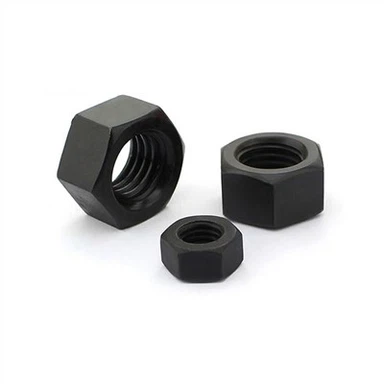

Hexagonal Flange Bolt Analysis
Dec 02, 2025
Hexagonal flange bolts are widely used fasteners, commonly found in mechanical equipment, the automotive industry, construction engineering, and various other sectors. Their core function is to secure two or more components through the cooperation of bolts and nuts, ensuring the stability and safety of assembled structures.
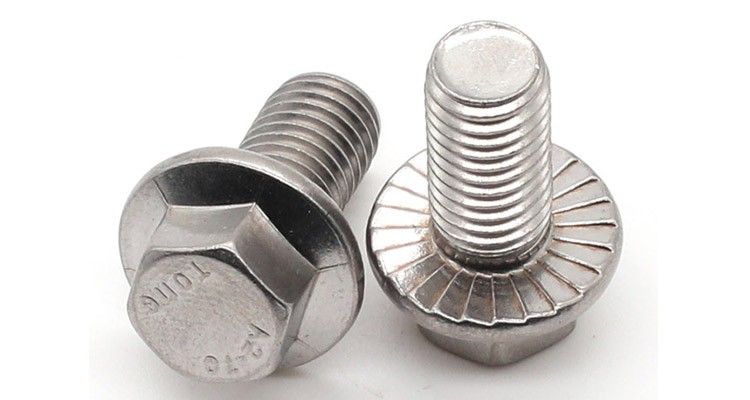
A hexagonal flange bolt consists of a shank, a hexagonal head, and an integrated flange face (no additional washer is required). It gets its name from the hexagonal design of the head-not the shank. This structure facilitates wrench gripping and rotation, significantly improving assembly efficiency. The external threads on the shank precisely match the internal threads of the mating nut; rotating the nut applies axial preload to achieve tight fixation of components. The flange face under the head integrates the function of a washer, which can increase the stress-bearing area, distribute pressure, and enhance anti-loosening and anti-slip effects.
Hexagonal flange bolts have prominent advantages: First, they are compatible with different materials and strength grades, such as carbon steel (Grade 4.8, Grade 8.8), alloy steel (Grade 10.9), and stainless steel (304, 316), which can meet tensile and shear requirements from ordinary load to high-pressure working conditions. Some products treated with surface technologies like Dacromet and electrogalvanizing also have good corrosion resistance. Second, the structural design of the flange face enables uniform distribution of preload on the connected surface, reducing local stress concentration, lowering the risk of loosening under long-term vibration conditions, and improving connection reliability.
Installing hexagonal flange bolts must follow standardized procedures: First, select the appropriate specification (e.g., common specifications from M6 to M30) and strength grade according to the load requirements and connection thickness of the working condition to avoid load-bearing failure caused by improper selection. Second, clean oil stains, rust, and burrs on the bolt threads, flange face, and connected surface to ensure tight fitting. Third, use a torque wrench to tighten the bolt according to the designed torque value; for connection nodes with multiple bolts, follow a symmetrical and cross tightening sequence to ensure uniform force distribution among all bolts.
In addition to standard types, hexagonal flange bolts have various special types to adapt to different scenarios: High-strength hexagonal flange bolts (Grade 10.9, Grade 12.9) are often used in parts bearing heavy loads such as automobile chassis and heavy machinery; stainless steel hexagonal flange bolts (304, 316 materials) have excellent corrosion resistance, suitable for humid, high salt spray, and other corrosive environments; serrated flange bolts have anti-slip serrations processed on the flange face, with stronger anti-loosening performance, suitable for equipment with frequent vibrations.
Their application scenarios cover multiple fields: In the automotive industry, they are used to connect engine blocks, transmission casings, wheel hubs, and chassis suspension components; in the mechanical equipment field, they are used to fix reducer casings, motor end covers, conveyor racks, etc., ensuring stable operation of equipment; in the construction engineering field, they are used for steel structure beam-column joints, precast concrete component connections, curtain wall support structure fixation, etc.; in addition, they are widely used in assembly scenarios such as agricultural machinery and rail transit components.
Although hexagonal flange bolts have strong adaptability, common problems should be avoided during use: Over-tightening can easily lead to bolt tensile deformation, thread stripping, or flange face cracking, while insufficient tightening may cause connection loosening due to insufficient preload, and even structural failure. Therefore, for bolts exposed to outdoor or corrosive environments for a long time, it is necessary to regularly check the thread condition and flange face fitting degree. If rust or loosening is found, timely maintenance or replacement should be carried out.
In summary, with the structural advantages of an integrated flange face, performance characteristics suitable for multiple working conditions, and convenient installation methods, hexagonal flange bolts have become core fasteners in assembly across various industries. Through reasonable selection, standardized installation, and regular maintenance, their role in stable connection can be fully exerted, providing reliable guarantees for the safe operation of various engineering projects.