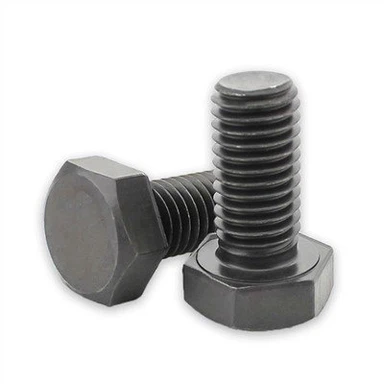

Differences Between Internal And External Thread Nuts And Performance Introduction Of Lock Nuts
Jul 31, 2026
1. Core Differences Between Internal Thread Nuts and External Thread Nuts
1. Internal Thread Nut: Threads are machined on the inner hole wall of the nut. It fastens and locks by matching with externally threaded bolts and screws, and is the mainstream structure of standard conventional nuts.
2. External Thread Nut: Threads are machined on the outer cylindrical surface of the nut. With an overall external thread structure, it needs to be assembled and locked with internally threaded substrates, internal thread sleeves or other matching internally threaded parts.
Thread pitch refers to the axial distance between corresponding points of two adjacent thread crests, serving as a core parameter for matching thread assembly accuracy.
2. Basic Principle and Application of Screws
Based on the physical principles of inclined circular rotational motion and friction force, screws achieve gradual fastening and locking of components, and are a general term for various fasteners. As indispensable basic parts in industrial production and daily life, screws are widely applied in all fields: micro screws are used in precision electronics, clocks and optical instruments; standard ordinary screws are applied in household appliances, furniture and musical instruments; large bolts and nuts are adopted in engineering construction and bridge infrastructure; and screws of various specifications are comprehensively used in automobiles, rail transit and aerospace equipment.
Screws are core basic components of the industrial system. Industrial production is inseparable from screw fastening structures, and screws are also one of the most classic and widely used inventions in human production and life.
3. Functions and Principles of Self-Locking Lock Nuts
Ordinary standard nuts are prone to loosening, thread backing off and falling off under equipment vibration, alternating loads and vibrating working conditions. To solve the failure of thread loosening, self-locking nuts (lock nuts) with anti-loosening and anti-vibration functions are widely used in special working scenarios. Self-locking nuts and lock nuts refer to the same type of fasteners. All nuts with self-locking and anti-loosening functions can be collectively called lock nuts, and their tightening and loosening torques comply with national standards and mechanical design specifications.
Lock nuts realize self-locking and anti-loosening mainly through the friction force on thread contact surfaces, belonging to effective torque-type anti-loosening fasteners. Mainstream structures on the market include nylon insert type, neck closing type and metal anti-loosening structure type, which are suitable for various working conditions with vibration, impact and alternating loads.
4. Core Advantages of Anti-Loosening Lock Nuts
1. Excellent Anti-Vibration and Anti-Loosening Performance
After the lock nut is tightened, the crests of the bolt threads closely fit and clamp the 30° wedge-shaped inclined surface of the nut. The normal force generated by thread matching forms a 60° included angle with the bolt axis, rather than the 30° angle of ordinary standard nuts. This structure produces significantly higher positive compression force, effectively resists equipment vibration and impact, and delivers far better anti-loosening and anti-vibration performance than ordinary nuts.
2. Outstanding Wear and Shear Resistance
The 30° wedge-shaped inclined surface structure at the thread root of the lock nut evenly distributes the locking compression force to all thread turns and avoids local stress concentration. Uniform stress on each thread effectively reduces thread wear, extrusion deformation and shear failure, greatly improving the stability and service life of threaded connections.
3. Good Reusability
Verified by numerous working condition tests, anti-loosening lock nuts can be tightened, disassembled and reassembled repeatedly without obvious attenuation of locking torque and anti-loosening performance. They can maintain stable locking effect for long-term service with excellent comprehensive performance.