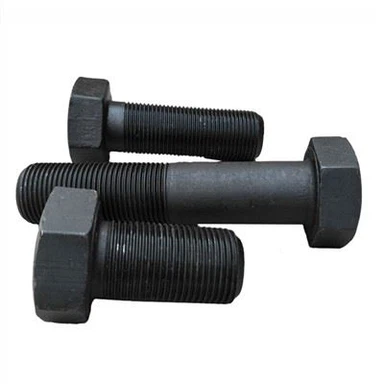

Detailed Explanation Of Stud Bolts
May 12, 2026
A stud bolt is a commonly used mechanical connecting component, consisting of a bolt shank and matching nuts (correction: the original statement "two nuts and one bolt shank" is incorrect; the core of a stud bolt is the bolt shank, and the nuts are matching parts, not included with the bolt itself). Both ends of this type of bolt are processed with threads, and the middle part is a smooth shank (smooth section), which can be used to connect parts with large hole distances that cannot be directly connected by ordinary bolts.
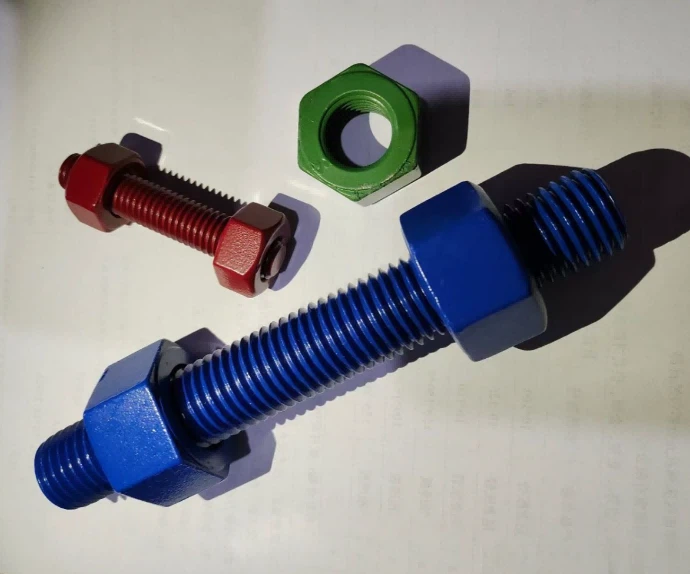
I. Features
1. Diverse Materials: Stud bolts can be manufactured using various materials, such as carbon steel, stainless steel, and copper alloys, to meet the requirements of different service environments (such as corrosive, high-temperature, and low-temperature conditions) and load-bearing needs.
2. Complete Specifications: Stud bolts come in a variety of specifications, covering thread diameter, smooth shank length, thread length, etc., which can meet the connection needs of different sizes and strength levels.
3. Convenient Installation: Since both ends of the stud bolt are threaded, installation only requires passing the bolt through the reserved holes of the parts to be connected and screwing nuts on both ends. Compared with ordinary bolts, this connection method is more convenient to operate and allows for adjustment of part positions.
II. Main Uses
Stud bolts are widely used in various fields such as mechanical manufacturing, power equipment, electronic equipment, construction engineering, bridge construction, automobile manufacturing, and furniture processing. Their core function is to firmly fix two or more parts to form an integrated structure, realizing the function of connection and fixation, and ensuring the stability of equipment or structures.
III. Supplementary Knowledge
1. Manufacturing of Stud Bolts: The manufacturing process of stud bolts mainly includes material selection, casting/forging, heat treatment, and machining. First, select the appropriate material according to the use requirements; second, produce the bolt blank (basic shape) through casting or forging processes; then, adjust the hardness and toughness of the bolt through heat treatment processes (such as quenching and tempering) to improve its mechanical properties; finally, process the threads at both ends and the smooth shank through machining (turning, rolling, etc.) to complete the finished product.
2. Selection of Stud Bolts: When selecting stud bolts, in addition to considering specifications (diameter, length), materials, and surface treatment methods, it is also necessary to focus on their strength grade. The strength grade indicates the maximum tensile load that the bolt can bear, usually expressed by two digits (such as grade 8.8, grade 10.9). The larger the number, the higher the strength grade and the stronger the load-bearing capacity of the bolt.
3. Installation of Stud Bolts: During installation, ensure that the bolt is accurately matched with the hole diameter of the connecting parts, and the length of the bolt is appropriate (excessively long bolts may cause waste and affect assembly, while excessively short bolts cannot achieve effective fastening); apply uniform force during tightening to avoid thread damage or part deformation caused by over-tightening. If conditions permit, it is recommended to use a torque wrench or torque gun to ensure that the tightening torque meets the design requirements and guarantee the reliability of the connection.
4. Inspection and Maintenance of Stud Bolts: During use, regularly check the tightening status of the stud bolts and re-tighten them in a timely manner if they are loose; regularly clean the surface of the bolts to remove dust, oil stains, and corrosion, avoid thread rust, and extend the service life of the bolts. For stud bolts used in harsh environments such as corrosion and high temperature, increase the inspection frequency and replace them in a timely manner if necessary.
In summary, stud bolts are connecting components with simple structure and reliable performance. Correct selection, installation, and maintenance can effectively ensure the safe and stable operation of mechanical equipment and structures.