
Anti-Loosening Methods For Nuts And Common Fasteners
Nov 03, 2026
Fasteners are indispensable components in mechanical connections and play a critical role in ensuring stable and safe equipment operation. However, during equipment operation, fasteners often loosen or even come loose under vibration, impact, deformation and other factors, resulting in connection failure and potential safety hazards for equipment. To address this issue, a variety of anti-loosening solutions for fasteners have been developed in the industry.

I. Common Anti-Loosening Methods for Nuts
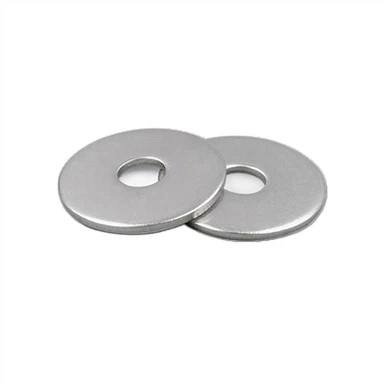
Install plain washers A washer is a flat metal ring. Its main function is to protect the surface of the connected part from scratches by the nut, distribute the compressive force exerted by the nut on the connected workpiece and assist in anti-loosening.
Combined use of plain washer and spring washer Spring washers are widely used in load-bearing and non-load-bearing structures of general mechanical equipment. They feature low cost and easy installation, suitable for positions requiring frequent disassembly and assembly. Nevertheless, the anti-loosening capacity of spring washers is limited.
Self-locking nuts Self-locking nuts are mainly used for anti-loosening and anti-vibration applications in special working conditions. They achieve self-locking relying on friction force. Classified by structure, they include nylon insert type, all-metal prevailing torque type and nuts with metal anti-loosening components, all belonging to prevailing torque type lock nuts.
Thread locker Apply thread locker onto the bolt threads and then tighten the nut to achieve the anti-loosening effect.
Double nut locking (right-hand and left-hand thread combination) Locking is realized by tightening a right-hand nut against a left-hand nut, which is a relatively reliable solution.
Drilling on bolt and nut for pin fixing Pins are commonly used for positioning in machinery. They can also be used for connection and overload shear protection in safety devices. This method delivers excellent locking performance yet causes damage to the thread structure.
II. General Anti-Loosening Methods for Fasteners
There are three main categories of anti-loosening methods: friction locking, mechanical locking and permanent locking. Friction locking and mechanical locking are detachable locking methods, while permanent locking is non-detachable.
Common permanent locking processes include spot welding, riveting and bonding. Fasteners treated this way generally cannot be disassembled and reused. Friction locking mainly relies on washers, self-locking nuts, double nuts and other structures. Mechanical locking uses split pins, lock washers, wire locking and so on. Mechanical locking offers higher reliability and is preferred for critical connections.
1. Friction Locking
(1) Spring washer locking After tightening, the spring washer is flattened. Its rebound elasticity maintains continuous clamping force and friction between the thread pairs to prevent loosening.
(2) Jam nut locking Two nuts are tightened against each other to generate additional tension on the bolt shank and extra friction on the thread contact surfaces. This method requires an extra nut and has mediocre reliability, so it is rarely adopted nowadays.
(3) Self-locking nut locking The elastic force of the deformed top portion clamps the engaged threads for stable and reliable anti-loosening performance.
(4) Elastic insert nut locking A nylon or fiber elastic ring is embedded at the thread engagement section to increase thread friction. The elastic ring also provides sealing to prevent liquid leakage.
2. Mechanical Locking
(1) Castle nut and split pin locking Pass the split pin through the hole at the bolt end and the slots of the castle nut; pin holes can also be drilled on-site to complete locking.
(2) Round nut and lock washer locking After the nut is tightened, bend one outer tab of the lock washer into the slot of the round nut for locking.
(3) Lock washer locking Double lock washers can be adopted when two bolts need paired locking.
(4) Wire locking A group of screws are connected in series with steel wire to form a mutually restrained locking structure. The threading direction of the steel wire must be correct; otherwise, the anti-loosening function will fail.
3. Permanent Locking
(1) Punch staking locking After the nut is tightened, punch the end of the thread to deform the thread profile and lock it permanently.
(2) Adhesive locking Apply thread locker on the mating thread surfaces. It provides good anti-loosening performance after curing.
In summary, there is a wide range of anti-loosening methods for fasteners. Appropriate solutions can be selected according to equipment types and working conditions. Friction locking and mechanical locking are commonly used detachable locking measures, while permanent locking is suitable for fasteners that require permanent fixation without subsequent disassembly. Selecting a proper anti-loosening method lays an important foundation for stable equipment operation.