
Detailed Description Of Steel Structure Bolt Connections
Jul 16, 2026
Steel structure bolts differ significantly from ordinary mechanical bolts in connection forms, force-bearing mechanisms and construction processes. According to stress grades, service conditions and design requirements, connections in steel structure engineering are mainly divided into two categories: ordinary bolt connections and high-strength bolt connections. Each connection type varies greatly in precision requirements, hole diameter standards, force-bearing principles and applicable scenarios.

1. Ordinary Bolt Connections
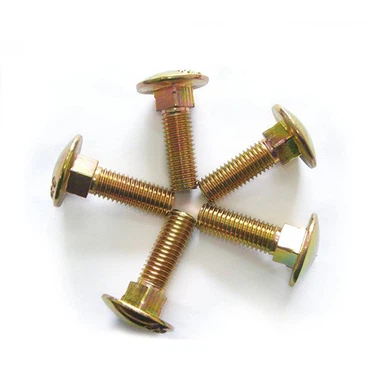
Ordinary bolts are classified into three precision grades A, B and C based on manufacturing accuracy. Grades A and B are refined bolts, while Grade C is a rough bolt. Unless otherwise specified, Grade C rough bolts are adopted by default for conventional connections in building steel structures. In terms of shape and structure, ordinary bolts include hexagon head bolts, double-ended bolts, countersunk head bolts and other types.
Grade C rough bolts feature low machining accuracy and large wall clearance. They are mainly used for pre-assembly of steel structure workshops, pre-tightening of riveted components, temporary positioning and fixing before the formal installation of high-strength bolts, and temporary fixation before node welding. When used as fixed bolts, they shall be fully tightened after component alignment, with reliable anti-loosening measures equipped to prevent loosening and offset during construction.
1.1 Refined Bolts (Grade A/B)
Refined bolts possess high machining accuracy, small screw tolerance and minimal assembly clearance, achieving a tight fit between the screw rod and bolt hole. They have strict requirements for hole making precision and screw rod machining accuracy and shall be seated by gentle tapping instead of violent knocking during installation. Refined bolts are suitable for precision structural connections requiring frequent disassembly and assembly or incapable of riveting. They are mostly applied in mechanical equipment assembly and rarely used in building steel structures.
2. High-Strength Bolt Connections
According to mechanical design modes, high-strength bolts for steel structures are divided into friction-type and bearing-type. The two types are identical in material, specification and mechanical properties, differing only in design slip control criteria and failure judgment mechanisms. In terms of structural forms, they are classified into large hexagon high-strength bolts and torshear type high-strength bolts.
2.1 Friction-Type High-Strength Bolt Connection
Friction-type high-strength bolts compact connecting plates through bolt pre-tension force and transfer external loads by static friction generated on the contact surface of steel plates. No slip is allowed at the connection joint, and the bolts do not bear shear force. Any slip on the plate surface is judged as connection failure. To improve the friction coefficient, the contact surface of steel components can be treated by sand blasting and shot blasting to form a uniform rusted surface, which enhances slip resistance and optimizes bolt arrangement. The assembly hole diameter of friction-type high-strength bolts is 1.5mm to 2.0mm larger than the nominal bolt diameter.
2.2 Bearing-Type High-Strength Bolt Connection
Bearing-type high-strength bolts transfer loads relying on plate surface friction under normal working conditions. When the load exceeds the friction bearing capacity, minor joint slip is permitted, and the stress is jointly borne and transferred by the shear resistance of bolt rods and the bearing pressure of plate hole walls. Its failure modes are consistent with those of ordinary bolts, namely bolt shear failure or steel plate bearing crushing failure. The assembly hole diameter of bearing-type high-strength bolts is 1.0mm to 1.5mm larger than the nominal bolt diameter. CNC drilling machines and drill jigs are prioritized for precise hole drilling to ensure hole position accuracy.
Core differences between the two types of high-strength bolts: Friction-type bolts adopt a no-slip design criterion with higher safety margin and stability, suitable for structures under vibration load, dynamic load and major load-bearing conditions; bearing-type bolts allow limited slip and feature higher bearing capacity, applicable for static load structures.
2.3 Large Hexagon High-Strength Bolt Assembly
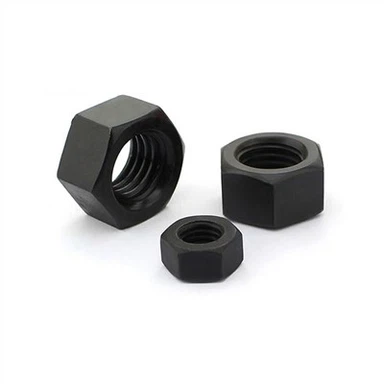
A complete large hexagon high-strength bolt assembly consists of one high-strength bolt, one nut and two washers.
Before formal construction, rough bolts are used for temporary fixing and precise alignment of components. After calibration, the rough bolts in the bolt group are replaced with high-strength bolts sequentially from the center to both sides, followed by initial tightening, repeated tightening and final tightening. One washer shall be installed on each side of the bolt rod during assembly.
Construction torque standards: The initial tightening torque is 50% of the final tightening torque; the repeated tightening torque is equal to the final tightening torque, which eliminates assembly gaps and uniformizes bolt pre-tension force. The calculation formula for final tightening torque: Tc=K×Pc×d. Where: Tc = final tightening torque (N·m); K = torque coefficient; Pc = construction pre-tension force (kN); d = nominal bolt diameter (mm). Torque wrenches must be calibrated before each use to guarantee construction accuracy.
2.4 Torshear Type High-Strength Bolt Assembly
A complete torshear type high-strength bolt assembly is composed of one torshear bolt, one nut and one washer, with only one washer installed on the nut side instead of double-sided washers.
The calculation formula for initial tightening torque: Tc=0.065×Pc×d. Where: Tc = initial tightening torque (N·m); Pc = construction pre-tension force (kN); d = nominal bolt diameter (mm). A special torshear wrench is adopted for final tightening, which is completed once the plum blossom tail at the bolt end is twisted off. Torshear bolts feature high construction quality controllability, with quality supervision focused on whole-process inspection and process control.