
Advantages And Disadvantages Of Hexagon Head Bolts And Socket Head Cap Screws, Why Do Mechanical Equipment Always Prefer Socket Head Cap Screws?
Apr 17, 2026
The normal operation of mechanical equipment is inseparable from the support of fasteners. However, observing the design drawings of many equipment, it is found that almost all designs prefer socket head cap screws first, regardless of whether a countersunk hole is needed or not.
Many people will wonder why many mechanical equipment choose socket head cap screws instead of hexagon head bolts? What advantages does it have? Today, we will discuss the advantages and disadvantages of hexagon head bolts and socket head cap screws, as well as the reasons why mechanical equipment prefer socket head cap screws.

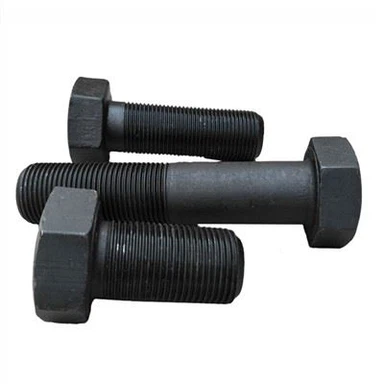
The threads of hexagon head bolts are generally fine-pitch ordinary threads; hexagon head bolts with fine-pitch ordinary threads have good self-locking performance, and are mainly used for thin-walled parts or occasions subject to impact, vibration or alternating loads.
Usually, hexagon head bolts are made with partial threads. Full-thread hexagon head bolts are mainly used for hexagon head bolts with short nominal length and scenarios requiring longer threads. Hexagon head bolts with holes are used for occasions where the bolts need to be locked; hexagon head bolts with reamed holes can accurately fix the relative position of the connected parts and can bear the shear force and extrusion force generated by transverse forces.
Advantages of hexagon head bolts: Large preload contact area, which can apply large preload, often used in large-scale equipment; lower price than socket head cap screws.
Disadvantages of hexagon head bolts: Occupy a large installation space and cannot be used in countersunk hole scenarios.
II. Hex Socket Head Cap Screws

Socket head cap screws are widely used in the mechanical field, mainly with the advantages of easy tightening, disassembly and not easy to slip. Socket wrenches are usually designed with a 90° bend, one end long and the other short; when using the short end to tighten the screw, holding the long end can save effort and fasten the screw more firmly. The long end is divided into round head (similar to a hexagonal cylindrical sphere) and flat head. The round head can be easily inserted obliquely for disassembling and installing some parts where it is inconvenient to apply the wrench directly.
It should be noted that the manufacturing cost of hexagon head bolts is much lower than that of socket head cap screws. Its advantage is also that the bolt head (the force-bearing position of the wrench) is thinner than that of socket head cap screws, and some scenarios cannot be replaced by socket head cap screws. In addition, for mechanical equipment with low cost, low force strength requirements and low precision requirements, the proportion of hexagon head bolts used is much higher than that of socket head cap screws.
Advantages of socket head cap screws: Occupy small installation space, can be countersunk, and are often used in small equipment and scenarios requiring surface flatness.
Disadvantages of socket head cap screws: Small preload contact area, cannot apply excessive preload; relatively high price; after exceeding a certain length, it cannot be made into full threads.
III. Core Reasons Why Mechanical Equipment Prefer Socket Head Cap Screws
1. Larger load-bearing capacity: Socket head cap screws have six force-bearing surfaces. Compared with slotted screws and cross screws with only two force-bearing surfaces, they can bear more tightening force and are not easy to slip or be damaged.
Note: The material of socket head cap screws is usually stainless steel, carbon steel and alloy steel, which is basically the same as that of other types of screws; the higher the performance grade, the greater the strength. When selecting screws, it is necessary to strictly select products with appropriate performance grades according to the use requirements. Screws of different grades have different prices.
2. Countersunk processing available: The nut of the socket head cap screw can be completely sunk into the workpiece, which can keep the surface of the workpiece flat and beautiful, and avoid collision and interference caused by the exposed nut, especially suitable for equipment requiring surface precision.
3. Convenient installation and commissioning: Compared with hexagon head bolts, socket head cap screws are suitable for more assembly scenarios, especially narrow and hidden parts, and are more flexible and convenient to operate during assembly, maintenance and commissioning.
4. Better anti-theft performance: A special socket wrench must be used to disassemble the socket head cap screw, while daily common tools (such as adjustable wrenches, screwdrivers, open-end wrenches, etc.) cannot disassemble it, which can prevent non-professionals from disassembling the equipment at will to a certain extent and improve the safety of the equipment.