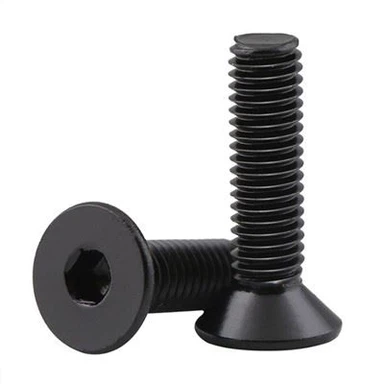

Super Corrosion-Resistant Stainless Steel Bolts
Oct 11, 2025
Do you know what makes stainless steel bolts used in the petroleum and chemical industries special? Never assume that these bolts are the same as the 304 or 316 stainless steel bolts we encounter in daily life- the performance gap between them is significant. Stainless steel bolts used in the petroleum and chemical sectors are of the super corrosion-resistant type, with a material grade of 904L rather than 304 or 316. One can already tell from the material grade that its performance positioning differs from that of conventional stainless steel bolts.
We usually refer to such bolts as "904L Super Austenitic Stainless Steel Bolts". Their nickel content is much higher than that of conventional 304 or 316 stainless steel bolts, while their carbon content is extremely low. Previously, this material relied heavily on imports; it not only boasts excellent corrosion resistance but also comes with a relatively high cost, aligning with the industry principle of "you get what you pay for in terms of performance". Since its application scenarios are concentrated in fields with extremely high corrosion resistance requirements (such as petroleum and chemical industries) rather than being widely used, many practitioners in the stainless steel bolt industry have little exposure to it, and some have even never heard of this type of super corrosion-resistant stainless steel bolt.
At a temperature of approximately 70°C, 904L super stainless steel bolts exhibit excellent corrosion resistance to most concentrations of sulfuric acid and some corrosive solutions (not completely unaffected by all solutions; specific compatibility depends on the medium). For petroleum transport vehicles we see on roads, the key connection points of their oil tanks are often secured using such super corrosion-resistant stainless steel bolts. The carbon content of 904L super stainless steel bolts is lower than that of conventional stainless steel bolts. They can undergo standard solution annealing heat treatment (a common heat treatment process for austenitic stainless steels) to stabilize performance without significant performance degradation from the heat treatment. Meanwhile, due to the low carbon content, copper is intentionally added to the material, which gives it good ductility-making it easy to manufacture various non-standard parts. It can also undergo passivation treatment to improve surface finish. Additionally, 904L material is compatible with various welding methods; it can be formed via cold heading processes and also undergo machining operations on lathes. Therefore, it has become the preferred bolt-type component in the petroleum and chemical industries.

According to the standard composition requirements for 904L material (e.g., per ASTM A240), its nickel content typically ranges from 23% to 28% (around 25% on average), carbon content is ≤ 0.02%, and copper content is significantly higher than that of conventional 304 or 316 stainless steel bolts. These compositional characteristics are the core reasons for its super corrosion-resistant performance.