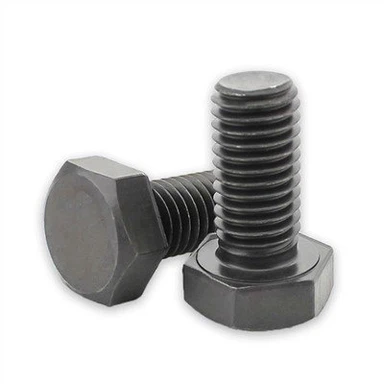

Passivation Of Stainless Steel Bolts
Oct 29, 2025
After the production of stainless steel bolts, many are directly cleaned thoroughly, packaged, and shipped. But do they require additional passivation treatment? In fact, although stainless steel bolts themselves have good rust resistance, additional passivation treatment is still necessary.
We know that the rust resistance of carbon steel bolts relies on surface electroplating or other coating treatments. Essentially, the bolt is completely wrapped with a layer of rust-proof material to isolate it from air. However, due to the material properties of stainless steel bolts (which contain elements such as chromium and nickel), they can naturally form an oxide film on their surface and be used directly exposed to air. Nevertheless, in harsh environments such as high salt spray and high humidity, this natural oxide film may still be damaged, causing the bolts to rust. Therefore, to further improve the rust resistance of stainless steel bolts, passivation treatment can be used to enhance the surface protection effect.
Principle and Advantages of Stainless Steel Bolt Passivation
Passivation treatment refers to immersing stainless steel bolts in a passivation solution to form a denser and more stable oxide film (passivation film) on their surface through chemical reactions. Standard passivation solutions are mostly sold in barrels and are available from chemical plants and stainless steel bolt manufacturers. They are suitable for most stainless steel materials in the 200 series, 300 series (e.g., 304, 316), and 400 series.
The core advantages of passivation treatment include:
Significantly improved oxidation resistance: Conventional unpassivated stainless steel bolts (e.g., 304) usually have a salt spray test duration of approximately 48 hours. After standard passivation, the salt spray test duration can be extended to over 72 hours (specific duration varies slightly depending on the material and passivation process), showing a noticeable improvement in rust resistance.
Enhanced surface luster: If the surface of a stainless steel bolt lacks luster and cannot be improved by conventional cleaning, passivation treatment can improve the surface finish to a certain extent, making the appearance brighter.
Low cost and easy operation: Passivation treatment has low material costs, a simple process, and reliable safety, making it suitable for mass production.
Specific Process of Stainless Steel Bolt Passivation
Preliminary Cleaning: First, perform a preliminary cleaning of the stainless steel bolts to remove impurities such as oil, dust, and processing debris from the surface, avoiding impact on the passivation effect.
Passivation Immersion: Place the cleaned bolts into a container filled with passivation solution and soak them at room temperature for approximately 15 minutes (the specific time can be adjusted according to the concentration of the passivation solution and the bolt material).

Heating Enhancement (Optional): If using a heated passivation process, heat the container to approximately 60°C (no additional power supply is required; ordinary heating methods are sufficient) and maintain this temperature for about 15 minutes to promote the full progress of the passivation reaction. This step can be omitted for room-temperature passivation.

Subsequent Rinsing: After passivation, rinse the bolts with a diluted sodium hydroxide solution (not "sodium hydride"-sodium hydride is highly corrosive and cannot be used for cleaning) or clean water to neutralize the residual passivation solution and prevent corrosion on the bolt surface.
Drying and Packaging: Dry the rinsed bolts by baking or air-drying, then proceed with subsequent packaging.
It should be noted that if the color of the passivation solution turns red during the passivation process, it usually indicates that the passivation reaction has proceeded fully. When comparing unpassivated and passivated bolts, it is obvious that the passivated bolts have a much brighter surface (e.g., the bolt on the left is unpassivated, while the one on the right is passivated, showing a significant difference in surface luster).