
Misconceptions in Bolt Connections
Sep 23, 2025
Though bolts are small, they are crucial for safety. Jinrui has reminded readers of this point many times in previous articles. When installing and using bolts, everything-from material performance requirements to technical specification design standards-requires extensive R&D and testing before bolts can be installed on equipment. Even if all technical conditions are met, a mistake in the final step of installation will render all previous efforts useless. Let's take a look at the common misconceptions that easily arise during bolt connection.

We know that bolts are divided into coarse-thread and fine-thread types. While fine-thread bolts are not commonly used in daily scenarios, the inclusion of fine-thread specifications in standards is definitely based on specific performance needs (such as better anti-loosening, improved sealing, or adaptation to thin-walled structures). Fine-thread bolts are indeed hard to find in stock on the market, so some enterprises, when installing equipment, replace them with coarse-thread bolts due to procurement difficulties-even though the design clearly requires fine-thread bolts. This practice is utterly unacceptable. Although fine-thread bolts and coarse-thread bolts of the same nominal diameter share the same thread diameter, their anti-loosening performance, sealing performance, and force-bearing characteristics differ greatly, so they can never be used interchangeably.
During equipment maintenance, when replacing bolts, after removing the original bolt, if the new bolt (of the same specification as the original) is difficult to insert due to practical operational reasons (such as impurities in the bolt hole or slight deformation of the connected parts), some people, to save trouble, either disassemble other parts of the equipment or even replace the bolt with a smaller-sized one. This practice is also unacceptable: bolts of different specifications have different designed torque and load-bearing capacities. Randomly using smaller-sized bolts will lead to insufficient load-bearing capacity of the bolts, which are prone to fracture in the later stage and may cause equipment accidents. Therefore, even if it is necessary to disassemble and reassemble the entire equipment, it is essential to replace the bolt with one that has exactly the same specification as the original.
Some equipment operates in a dynamic state for a long time. To prevent bolts and nuts from loosening, some people replace the original nut with a thicker one, believing that a thicker nut provides better anti-loosening effect. In fact, this is a major misconception: the number of effective thread engagement turns for a nut is limited (usually 3-5 turns). Beyond this range, the extra threads cannot effectively transmit loads; they only waste materials and take up installation space, which is instead detrimental to connection reliability.
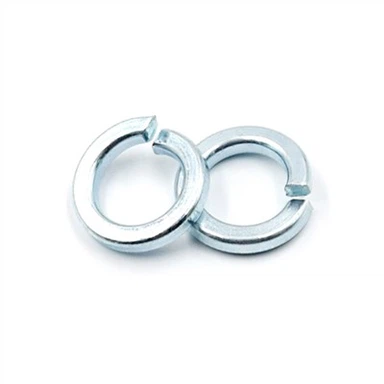
In some cases, after inserting the bolt, people find that the exposed thread is too long, so they add multiple ordinary flat washers for "aesthetics". This is also a big misconception: ordinary flat washers mainly function to increase the contact area and protect the surface of the connected parts. Stacking too many washers will disperse the preload, which instead reduces the anti-loosening effect. If enhanced anti-loosening is needed, double-nut locking can be adopted (installed in accordance with specifications: the thinner nut is placed below, and the thicker one above; during tightening, a reverse preload is generated between the two nuts), whose anti-loosening effect is better than simply stacking ordinary flat washers. What's worse, some people replace standard washers with oversized ordinary flat washers, thinking that this can increase the contact area and improve the anti-loosening effect. This idea is also wrong: oversized ordinary flat washers can only expand the contact range; if anti-loosening is required, their effect is worse than that of standard lock washers (such as elastic washers and serrated lock washers) that meet design requirements. Specific selections must strictly follow design specifications.
Bolt Connection Standards
When matching bolts with nuts, many people believe that "the tighter the better", and sometimes even tighten the bolt to a torque close to its torque limit. Over time, the bolt will suffer fatigue damage due to excessive preload and eventually break. Therefore, "the tighter the better" is not true during installation; a torque wrench must be used to control the preload. This not only ensures that the preload meets the design requirements but also avoids over-tightening. Using a torque wrench can also prevent "false locking": if there are stains or iron filings on the threads of the nut or bolt, the impurities will cause resistance during tightening, creating the illusion that the bolt "cannot be tightened further". If people mistakenly believe that the bolt is fully tightened at this point, the bolt and nut are actually not properly pressed together, and the equipment is prone to loosening when in operation.
When it comes to torque wrenches, many people think that imported products are definitely better than domestic ones. Most imported torque wrenches are from well-known international brands; they indeed have reliable quality, stable performance, long service life, and are lightweight and easy to operate. However, their disadvantages are high prices and potentially slow after-sales response due to regional restrictions.
For domestic torque wrenches, some low-to-mid-end products are slightly heavier due to material and process limitations, and their performance stability is somewhat inferior to that of high-end imported products, requiring regular parameter calibration. However, they have the advantages of being affordable and having convenient after-sales services-problems can be addressed quickly if they arise. It is worth noting that in recent years, high-quality domestic torque wrenches have approached imported products in terms of performance stability and can meet the needs of most industrial scenarios.
In summary, the choice between imported and domestic torque wrenches should be based on actual needs (such as precision requirements, frequency of use, and budget): if high-frequency, high-precision operations are required, imported products can be chosen; if it is for regular working conditions, high-quality domestic torque wrenches are a cost-effective option.