
Hydrogen Embrittlement Of High-Strength Bolts
Jan 08, 2026
What is hydrogen embrittlement? Which types of bolts are prone to hydrogen embrittlement? How to prevent hydrogen embrittlement? Below we will elaborate on the hydrogen embrittlement phenomenon of bolts.
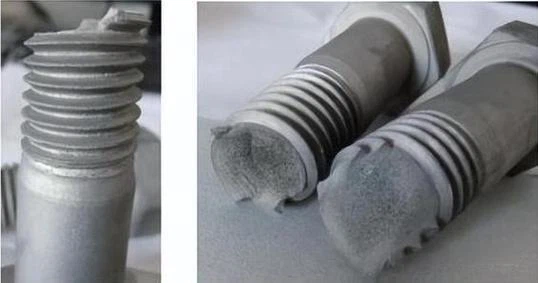
With the current production technology and basic material technical level, bolts produced through conventional processes are not prone to brittle fracture on their own. However, hydrogen embrittlement mostly occurs after bolts undergo surface treatments such as electrogalvanizing or nickel plating, or when hydrogen is introduced during the heat treatment process. Therefore, this topic focuses on how to prevent hydrogen embrittlement after bolts are subjected to surface treatment and heat treatment.
Hydrogen embrittlement refers to a phenomenon where metal materials experience a decrease in toughness due to excessive internal hydrogen content under the combined action of hydrogen and stress, which then leads to sudden brittle fracture of the bolt head, threads and other parts. This type of fracture is sudden and unpredictable, making it a serious quality and safety hazard. The occurrence of hydrogen embrittlement is mostly related to improper operations during surface electroplating, pickling, or quenching and other external stress treatment processes, which cause hydrogen to penetrate into the metal matrix.
So, which types of bolts are prone to hydrogen embrittlement after surface treatment? Undoubtedly, it is high-strength bolts. High-strength bolts generally refer to those with a strength grade of 8.8 or above, while grades 10.9 and 12.9 are classified as ultra-high-strength bolts. Due to the high-strength characteristics of the material itself, these bolts are extremely sensitive to hydrogen. If hydrogen is introduced during surface treatment and not removed in a timely manner, hydrogen embrittlement is highly likely to occur. High-strength bolts are widely used in the automotive industry, and the working conditions of bolts in automobiles are relatively severe-either they operate under long-term high-load conditions or are exposed to open-air environments. For high-strength bolts that have undergone surface treatment, once the environmental conditions change, the risk of hydrogen embrittlement fracture will further increase.
Then, how should we prevent hydrogen embrittlement? The optimal method is to avoid applying hydrogen-introducing surface treatments such as galvanizing to bolts, provided that the design permits it. Of course, this is only an idealized suggestion, which is difficult to implement in most working conditions. Therefore, other effective measures need to be adopted. If hydrogen embrittlement is caused by the surface treatment of high-strength bolts, it is necessary to investigate whether there are issues such as excessively long pickling time or improper electroplating process parameters in the surface treatment process, so as to reduce hydrogen penetration from the source. In addition, after the completion of surface treatment, a hydrogen removal annealing process must be added. Place the plated high strength bolts in a constant temperature furnace and hold them at a temperature of 190–230°C for 2–4 hours. Heating promotes the escape of hydrogen from the metal matrix, which is the core method to eliminate hydrogen embrittlement.
If hydrogen embrittlement is caused by the heat treatment process, it is necessary to adjust the heat treatment process parameters. However, it should be clarified that the core cause of hydrogen embrittlement induced by heat treatment is not excessively high temperature, but the introduction of excessive hydrogen through processes such as pickling and quenching media during heat treatment. Therefore, it is necessary to optimize the pickling process and select low-hydrogen quenching media to fundamentally reduce hydrogen penetration.
After the bolts have completed all necessary processes, hydrogen embrittlement testing is crucial. Hydrogen embrittlement fracture is sudden, and the detection method of hitting the bolt head with a metal hammer is unscientific and prone to misjudgment. The standardized testing method is the delayed fracture test. Extract a certain proportion of samples, apply a specified tensile load and hold it for a period of time. If the samples do not fracture, it is determined that the hydrogen embrittlement risk of this batch of bolts is controllable and they can be put into use.