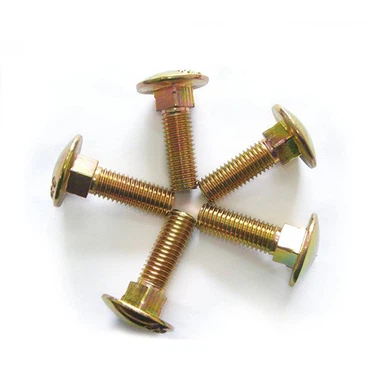

Hex Socket Head Cap Screws Manufacturing Process
Jun 18, 2026
Hex socket head cap screws are high-strength fasteners manufactured primarily by cold forming. Their final mechanical performance and service reliability are not determined by a single process, but by a complete systematic control chain including raw material selection, cold forming, inner hex precision shaping, thread rolling, heat treatment, and surface protection.
In actual industrial working conditions, these fasteners sustain high preload stress, cyclic fatigue loads, vibration, and corrosive environments. Therefore, their manufacturing relies on strict process standardization, stable parameter control, and batch consistency management.
From an engineering perspective, the production of hex socket head cap screws is an integrated system of metal plastic forming, heat treatment strengthening, and surface protection engineering. Every procedure directly determines structural stability, fatigue life, and long-term operational safety.
Raw Material Selection & Quality Control
The performance of hex socket head cap screws starts with the base steel material. Different strength grades correspond to dedicated material systems, which is the fundamental guarantee for qualified finished products.
Standard material matching rules:
- Grade 8.8: Medium carbon steel (35K, 45K) with excellent cold-forming performance
- Grade 10.9 / 12.9: Alloy structural steel (40Cr, SCM435 chromium-molybdenum steel) with high hardenability and fatigue resistance
In material inspection, priority is given to process adaptability and heat treatment stability rather than mere tensile strength.
Key control indicators include:
- Chemical composition stability: Carbon content determines base hardness; alloy elements ensure overall hardenability during quenching.
- Inclusion and impurity control: Non-metallic inclusions act as fatigue crack sources, the main cause of sudden bolt fracture.
- Uniform grain structure: Refined and homogeneous grains effectively prevent cracking during cold heading deformation.
- Wire rod surface quality: No scratches, rust, or peeling defects to ensure stable lubrication and consistent metal flow.
For high-strength fasteners, material batch consistency is more critical than nominal strength, since most failures originate from local material defects rather than overall strength insufficiency.

Wire Rod Pre-Treatment
Before cold forming, steel wire requires systematic surface pretreatment to eliminate surface defects and establish a stable lubrication layer. This procedure is essential to reduce forming friction, avoid cracking, and extend mold service life.
Standard pretreatment process flow:
1. Pickling: Remove surface oxide scale and rust to achieve pure metal surface.
2. Phosphating: Form a porous phosphate adsorption layer on the steel surface.
3. Saponification lubrication: Attach calcium soap lubricating coating to reduce friction coefficient during cold forming.
4. Drying and curing: Stabilize the lubrication layer to prevent peeling during high-pressure cold heading.
- Key process controls: coating uniformity, lubricant adhesion, and consistent surface roughness. Unstable pretreatment will directly cause folding, cracking, and abnormal mold wear during cold forming.
Cold Heading & Blank Forming
Cold heading is the core primary forming process for hex socket head cap screws. Multi-station cold heading machines realize precise metal volume redistribution at room temperature through controlled plastic flow, forming complete bolt blanks with continuous metal fiber structure.
Standard cold heading procedure:
1. Fixed-length shearing: Ensure consistent blank volume for batch uniformity.
2. Preliminary pre-forming: Distribute metal flow evenly to avoid local stress concentration.
3. Multi-stage upsetting: Gradually form cylindrical head outline and transition fillet structure.
4. Shank straightening and shaping: Control concentricity and surface smoothness.
Cold heading rearranges metal grains along the force flow direction and forms uninterrupted fiber lines, which fundamentally improves the bolt's fatigue resistance and structural toughness.
- Key control parameters: forming load curve, mold concentricity, cold forming speed, and instantaneous temperature rise. Stable cold heading quality lays the foundation for subsequent high-grade heat treatment.
Precision Inner Hexagon Forming
The inner hexagonal drive cavity is the core functional structure of socket head cap screws, directly determining torque transmission efficiency, assembly accuracy, and anti-slip performance. High-precision closed cold extrusion is adopted for inner hex shaping to ensure geometric tolerance consistency.
Critical technical control points:
- Flat-to-flat dimension tolerance: Guarantees precise matching with hex tools to prevent slipping.
- Cavity depth consistency: Ensures full contact stress area during torque fastening.
- Complete corner structure: Avoids sharp stress concentration and corner chipping.
- Inner wall smoothness: Reduces tool wear and improves repeated assembly stability.
For high-end precision and dynamic vibration scenarios, inner hex forming quality is more critical than external dimensions, as most torque failure and slippage problems occur inside the drive cavity.
Thread Rolling (Cold Extrusion Thread Forming)
All high-quality hex socket head cap screws adopt cold thread rolling instead of cutting threading. Thread rolling extrudes metal to form thread profiles without breaking the original metal fiber continuity.
The fiber structure continuously wraps along the thread tooth profile, forming uniform surface compressive stress, which greatly improves fatigue resistance and anti-loosening performance under cyclic vibration loads.
Key rolling process controls:
- Matching rolling pressure to avoid excessive work hardening and micro-cracks.
- Strict pitch and thread angle precision control for high-precision fitting.
- Complete thread tooth profile without missing or deflected teeth.
- Uniform surface residual compressive stress to enhance fatigue life.
Heat Treatment (Hardening & Tempering)
Heat treatment is the decisive process for bolt strength grading, achieving a scientific balance between high hardness, tensile strength, and structural toughness. The process consists of quenching and precise tempering.
Quenching Process
After high-temperature austenitization, rapid cooling transforms the metal structure into dense martensite, significantly improving hardness and tensile strength. Control focuses on uniform heating, reasonable holding time, and stable cooling medium to avoid uneven microstructure and grain coarsening.
Tempering Process
Medium-temperature tempering eliminates internal quenching stress, reduces brittleness, and supplements material toughness to prevent brittle fracture under dynamic loads. Strict tempering temperature window control ensures batch hardness consistency.
Different strength grades (8.8, 10.9, 12.9) are realized through standardized heat treatment parameters. Grade 12.9 requires the strictest temperature and time tolerance control.
Post-Heat-Treatment Straightening & Finishing
Minor deformation and dimensional deviation may occur after high-temperature heat treatment. Precision straightening and finishing are performed to guarantee batch consistency:
- Shank straightness correction
- Head concentricity calibration
- Thread dimension re-inspection and fine trimming
- Surface oxide layer cleaning and polishing
This stage focuses on batch consistency rather than individual part performance, ensuring uniform assembly performance of all finished products.
Surface Treatment & Anti-Corrosion Engineering
Different surface treatment processes are selected according to application environments to improve corrosion resistance, appearance, and service life. For high-strength bolts, hydrogen embrittlement risk control is a mandatory indicator.
Common industrial surface treatment systems:
- Zinc electroplating: General anti-corrosion for indoor and ordinary atmospheric environments.
- Black oxide finishing: Light anti-corrosion with neat appearance for precision mechanical assembly.
- Zinc-nickel alloy plating: High corrosion resistance for industrial harsh environments.
- Dacrom coating: Super salt spray resistance for outdoor, coastal, and long-term exposed equipment.
- Key professional note: Electroplating processes may produce hydrogen embrittlement. All fasteners of Grade 10.9 and above must undergo strict dehydrogenation treatment. Black oxide and Dacrom processes produce no hydrogen embrittlement risk.
- Core control indicators: coating uniformity, adhesion strength, and salt spray test stability.
Final Inspection & Complete Quality Control System
Finished product quality inspection covers dimensional accuracy, mechanical performance, and environmental reliability to ensure full compliance with industrial standards:
- Dimensional & geometric tolerance inspection: Key dimension sampling or full inspection to guarantee assembly interchangeability.
- Hardness & tensile strength testing: Verify strength grade compliance.
- Torque & preload performance testing: Validate actual assembly locking stability.
- Salt spray & corrosion resistance testing: Evaluate environmental adaptability.
- Surface defect & crack detection: Eliminate hidden structural failure risks.
Formal industrial batch production adopts complete batch traceability systems, enabling accurate backtracking of any abnormal quality problem to specific process parameters and production shifts.
Conclusion
The manufacturing of hex socket head cap screws is a highly coupled multi-process engineering system. Every link from raw material matching, cold forming precision control, heat treatment strengthening, thread cold extrusion, to surface protection jointly determines the final mechanical performance and service reliability.
Essentially, high-quality bolt manufacturing is not simply metal shaping, but systematic engineering control of structural fatigue resistance, preload stability, and environmental adaptability.
In engineering procurement and structural design, only manufacturers with complete process control systems and stable batch quality capabilities can guarantee long-term stable operation of fasteners under high load, high vibration, and complex corrosive environments.
If you require customized manufacturing solutions or stable bulk supply of high-strength hex socket head cap screws, Jinrui provides professional technical support and full-grade engineering fastener solutions to match your project standards.