
Hex Bolt Encyclopedia: The Core Guardian Of Robust Connections
Jun 10, 2025
1. What is a Hex Bolt?
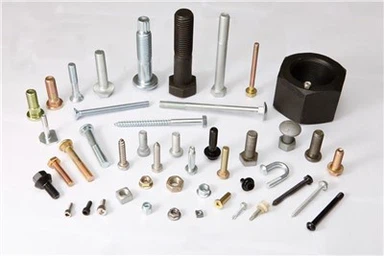
A hex bolt, also known as a hex head bolt or external hex bolt, is a standard fastener featuring a head shaped like a regular hexagonal prism (a regular hexagon). It is one of the most prevalent and classic bolt types in mechanical and engineering fields, primarily used in conjunction with a nut or by screwing the threaded end into a tapped hole to securely join two or more components. Its name directly derives from its head shape, which is specifically designed for tightening and loosening using corresponding wrenches (like open-end wrenches, box wrenches, or sockets).

2. Characteristics of Hex Bolts
Efficient Torque Transmission: The six flat sides provide stable contact points, enabling efficient, secure transfer of high torque for reliable installation without slipping.
Excellent Tensile and Shear Strength: Robust design, especially when used with a nut, allows it to withstand high tensile and shear forces.
Good Spatial Adaptability:The exposed head facilitates operation in various scenarios where space permits (compared to countersunk internal hex heads which require more clearance).
High Versatility, Readily Available Tools:As a standardized fastener, specifications are extensive, and the corresponding wrenches are among the most common basic tools.
High Load-Bearing Capacity:The larger head (especially types with a washer face) disperses loads, reducing pressure on the surfaces of the connected parts.
Convenient Assembly and Disassembly: Standard wrenches are sufficient for operation.
3. How Hex Bolts Work
They operate based on friction locking generated by preload and the shear resistance of the bolt shank:
Applying Torque:The bolt passes through clearance holes in the parts to be joined, a nut is threaded onto the other end (or it's screwed into a tapped hole), and a wrench is used on the hex head to apply rotational force (torque).
Generating Preload:Rotation converts the rotational force (torque) into significant axial tension force (stretching the bolt) via the inclined plane principle of the threads.
Clamping Components: The bolt's preload translates into compressive force (clamping force) between the connected parts through its head and the nut (or threaded mating surface).
Forming a Secure Connection:
Friction Locking:The substantial clamping force creates immense static friction between the joining surfaces, resisting slippage induced by working loads.
Mechanical Interlock (for partial thread bolts):The unthreaded shank of a partially threaded bolt fits tightly in the connecting hole, directly bearing shear forces.
Bolt Shear Resistance: The bolt shank (especially the unthreaded portion) itself also bears shear loads.
4. Common Types of Hex Bolts
By Thread:
①Full Thread Bolt:Threads run the entire length of the shank, allowing nut positioning anywhere or load distribution over the full length.
②Partial Thread Bolt: Features a smooth, unthreaded shank on one portion and a threaded section on the other. The shank allows precise positioning, bears shear forces, and improves fatigue strength; this is the most common type.
By Strength Grade:Designations like Grade 4.8, 8.8, 10.9, 12.9 (GB/T - China) or A307B, A325, A490 (ASTM - USA). Higher numbers indicate greater strength (tensile strength, yield strength).
By Material:
①Carbon Steel:Most common, cost-effective, often surface treated (e.g., zinc plated, hot-dip galvanized, black oxide coated) for corrosion resistance.
②Alloy Steel: Used for high-strength bolts (Grade 8.8 and above).
③Stainless Steel: E.g., A2-304 (general corrosion resistance), A4-316 (high corrosion resistance), for corrosive environments.
④Others:Brass, copper, titanium alloy, etc. (specialized applications).
By Head Detail:
①Standard Hex Head: Most common.
②Hex Bolt with Washer Face: Underside of the head has an enlarged, thicker flat surface (washer face) for increased load-bearing capacity.
③Small Hex Head: Slightly smaller head size, used in space-limited areas.
④By Surface Finish: Zinc plating, hot-dip galvanizing, black oxide/phosphate coating, Dacromet, stainless steel plain finish, etc., to meet different corrosion protection and aesthetic requirements.
⑤By Standard: Primarily GB (China), ISO (International), DIN (Germany), ANSI (USA), etc., with slight variations in dimensions and tolerances.
5. Application Areas of Hex Bolts (Four Examples)
Building Construction:Steel Structure Connections - Core structural elements. Used for joining primary and secondary steel beams and columns in bridges, factories, and high-rises, withstanding immense tensile and shear forces. High-strength bolts (e.g., Grade 8.8, 10.9) with corrosion protection like hot-dip galvanizing are standard.
Automotive Manufacturing:Engine and Chassis Critical Connections - Securing engine blocks, transmissions, suspension systems, subframes, and wheel hubs. These connections require bolts capable of enduring extreme shock, vibration, and high temperatures, necessitating material strength ≥ Grade 8.8 with corrosion protection coatings such as Dacromet.
Machinery & Equipment:Assembly of Industrial Machinery - Essential for fixing housings, bases, bearing housings, and flanged connections in machine tools, gearboxes, pumps, valves, and transmission systems. Bolt selection varies based on application-specific load requirements, emphasizing reliability and maintenance accessibility.
Furniture Manufacturing:Load-Bearing Joints & Fixtures - Applied in assembling wooden/panel furniture structures (e.g., table leg-to-top joints, bed frame reinforcement), mounting fixtures (towel racks, shelves), and securing appliances (washing machines). Typically uses Grade 4.8 partially threaded bolts with washers or flanges, balancing corrosion resistance (zinc plating/black oxide) with aesthetics.
6. How to Choose the Right Hex Bolt?
Selection requires systematic evaluation of these key parameters:
Load Analysis:
①Force Type Dominance: Tension loading requires high-strength bolts; shear loading benefits from partial thread bolts; vibration environments demand additional locking mechanisms.
②Load Quantification: Calculate expected loads (with safety factors) to determine required strength grade (e.g., 8.8, 10.9) and nominal diameter.
Operating Environment:
①Corrosion Exposure: Indoor non-corrosive environments suit zinc-plated carbon steel; outdoor/humid locations require hot-dip galvanizing; chemical/coastal zones mandate stainless steel (A2-304 or A4-316).
②Temperature Range: Applications exceeding 260°C need heat-resistant alloy steel bolts.
Substrate Compatibility:
①Galvanic Corrosion Mitigation: Use insulating washers or stainless steel fasteners when joining dissimilar metals (e.g., steel-aluminum interfaces).
②Regulatory Compliance: Food/medical applications require FDA-compliant materials like 316 stainless steel.
Spatial Constraints:
①Vertical clearance limitations necessitate small hex head bolts.
②Restricted tool access areas may require internal hex drive alternatives.
③Flush surface applications require countersunk head designs.
Bolt Specifications:
①Thread Configuration: Partial thread bolts optimize shear resistance; full thread bolts allow adjustable clamping.
②Dimensional Requirements: Maintain minimum thread engagement length (≥1× nominal diameter) and 2-3 thread protrusions beyond nuts. Select diameter matching hole specifications.
③Head Geometry: Washer face types distribute load to prevent surface damage.
Standardization:
Verify compliance with project-mandated standards (GB/T, ISO, DIN, ASTM) to ensure dimensional interoperability.
Economic Factors:
Balance cost and availability against performance requirements, prioritizing strength specifications for critical joints.
Summary: Hex bolts remain fundamental to modern engineering through their optimized torque transmission, structural integrity, and installation efficiency. Mastery of their classification principles, operational mechanics, and selection methodology enables reliable implementation across construction, automotive, industrial, and consumer domains. Precision in hex bolt specification guarantees enduring structural stability and operational safety.