

Four Common Problems With High-strength Bolts
Mar 07, 2024
With the continuous improvement of social development, it is necessary to continuously improve high-strength bolts. However, there are still some problems with high-strength bolts in China. Based on experience, Xiaorui will share with you the four common problems with high-strength bolts.
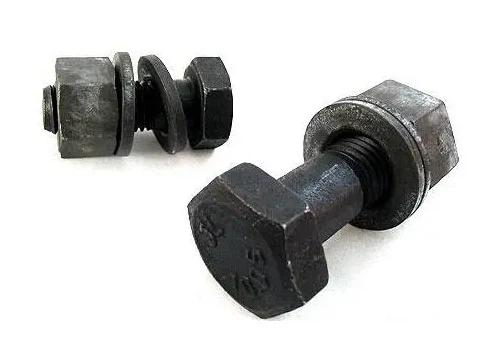
1. Ensure load, wedge load is not qualified. Ensuring load and wedge load are key items for assessing the mechanical performance of products under tensile load, Class A, Especially important for high-strength hexagonal nut fasteners. The guarantee load is an assessment of the product's ability to resist plastic deformation under the specified tensile load. If this indicator does not meet the requirements, plastic deformation may occur due to the action of preload and working load, thereby reducing the preload and causing the connection to loosen. Wedge load test is an assessment of the tensile strength and head rod bonding strength of bolt products. If this indicator is not qualified, it may cause fracture or U-turn under large working loads, especially impact loads or when the support surface is subjected to eccentric loads, resulting in connection failure and even safety accidents.
2. Unqualified hardness. Hardness is also an important indicator for evaluating the mechanical performance of fasteners. The materials used for products of different performance levels are different, and the mechanical performance level is an important basis for selecting fasteners. During installation and use, the working load and installation torque should be determined according to the performance level. For specific materials, hardness should be controlled at a reasonable level. High hardness may reduce the fatigue resistance of the product, Some companies control the hardness of screw products at a high level in order to improve their strength, resulting in some products exceeding the standard.
3. The decarburization layer exceeds the standard. The decarburization layer is also an A-class project. Due to decarburization, the surface hardness and strength of gasket parts are greatly reduced, which seriously affects the surface contact strength and fatigue life of fasteners, especially the damage to the threaded part is more prominent. The main reasons for decarburization are decarburization of raw materials, decarburization during material modification, and decarburization during product heat treatment.
4. Size out of tolerance. Some general components have high interchangeability requirements, and dimensional deviations will directly affect their interchangeability, even affecting connection strength, anti loosening performance, or service life. The main reasons for dimensional nonconformities are: firstly, improper process control, controlling some dimensions to the lower limit in order to save materials, not adjusting equipment in a timely manner during the production process, and using molds that exceed the tolerance; secondly, inadequate inspection, lax process inspection and factory inspection, resulting in some unqualified batches passing the standards; The third issue is that measuring tools cannot be regularly calibrated, and even gauges that exceed the wear limit may be used.
Choose different types of bolts based on actual usage needs, and high-strength bolts are made of high-strength materials. The screws, nuts, and washers of high-strength bolts are all made of high-strength steel. High strength bolts apply pre tension and transmit external forces through friction. Ordinary bolt connections rely on the shear resistance of the bolt rod and the pressure bearing capacity of the hole wall to transfer shear force. When tightening the nut, the pre tension generated is very small, and its impact can be ignored. In addition to its high material strength, high-strength bolts also apply a large pre tension to the bolt, causing squeezing pressure between the connecting components, resulting in a large frictional force perpendicular to the screw direction. Moreover, the pre tension, anti slip coefficient, and steel type all directly affect the bearing capacity of high-strength bolts.


