
Comparison Of National Standards For High-Strength Bolts in Different Countries
Sep 22, 2026
Chinese high-strength fasteners comply with the national standard GB/T 3632-2018 General Technical Conditions for Steel Bars for Fasteners, Bolts, Screws and Studs. This standard regulates the classification, dimensions, materials, mechanical properties and technical requirements of raw steel bars for high-strength bolts, serving as the fundamental basis for the manufacturing of high-strength bolts in China. The mechanical properties, grade classification and testing requirements for finished high-strength bolts are mainly specified in the GB/T 3098.2 series standards.
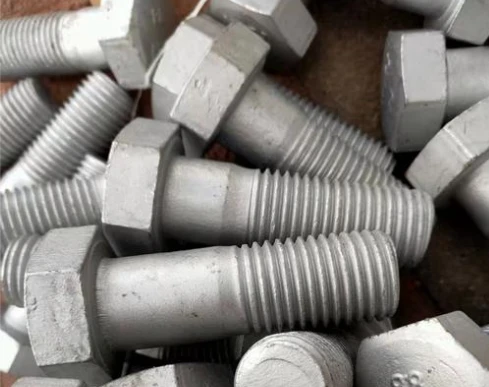
In accordance with national specifications, commonly used high-strength mechanical bolts are classified into two strength grades: Grade 10.9 and Grade 12.9. Grade 10.9 bolts feature a minimum tensile strength of 1040 MPa and a minimum yield strength of 900 MPa; Grade 12.9 bolts have a minimum tensile strength of 1220 MPa and a minimum yield strength of 1080 MPa. With excellent mechanical performance and high load-bearing capacity, these high-strength bolts are widely applied in load-bearing scenarios requiring high connection strength and structural safety, including bridge engineering, high-rise buildings, steel structure supports, automobile manufacturing and heavy mechanical equipment.
The national standard system defines the applicable dimensional range, raw material requirements, heat treatment specifications and complete mechanical performance indicators for high-strength bolts, covering key parameters such as tensile resistance, yield strength, elongation after fracture, hardness and impact toughness. High-strength bolts are predominantly made of medium-carbon alloy steel and quenched and tempered alloy steel. Integral quenching and tempering heat treatment ensures stable high strength and superior toughness, meeting structural load-bearing and anti-fatigue requirements. Bolt dimensions and strength grades shall be selected according to actual load conditions, assembly space and thread specifications.
Strict compliance with national standards in the design, production, selection and installation of high-strength bolts effectively guarantees fastening accuracy, load stability and structural safety. In engineering applications, qualified bolts shall be selected based on project working conditions, load characteristics and relevant specifications to ensure overall structural stability and long-term reliability.
In addition to China's national standard system, ISO international standards and American ASTM standards represent the two most widely adopted global standard systems for high-strength bolts in industrial and foreign trade projects.
Within the ISO standard system, the core specifications for high-strength bolts are ISO 898-1 and ISO 898-2. ISO 898-1 stipulates the mechanical performance grades, tensile strength, yield strength, elongation, hardness and other technical indicators for carbon steel and alloy steel bolts, screws and studs. ISO 898-2 standardizes the dimensional tolerances, geometric accuracy, assembly dimensions and appearance deviation requirements of threaded fasteners, jointly forming the universal international technical criteria for high-strength bolts.
In the American ASTM standard system, ASTM A325 and ASTM A490 are the mainstream standards for structural high-strength bolts applied in architectural and engineering structural connections. ASTM A325 covers carbon steel structural bolts with moderate overall strength and cost-effective performance. ASTM A490 specifies high-strength alloy steel structural bolts with higher strength, toughness and fatigue resistance, suitable for heavy-load, long-span and high-stress steel structure applications. Both standards strictly define the chemical composition, heat treatment process, mechanical properties, dimensional tolerances and inspection specifications for high-strength bolts.
Standard systems vary across countries, regions and engineering projects. Domestic projects adopt Chinese national standards, while export projects, overseas engineering and European and American equipment must comply with corresponding ISO or ASTM standards. Bolt selection shall strictly follow local industrial specifications, equipment standards and design requirements.
A comprehensive standard system for high-strength bolts is essential for ensuring fastening quality, improving structural safety factors and preventing structural loosening and failure. The production, selection, installation and acceptance of high-strength bolts must be implemented in strict accordance with relevant specifications to secure the firmness, stability and long-term durability of structural connections.