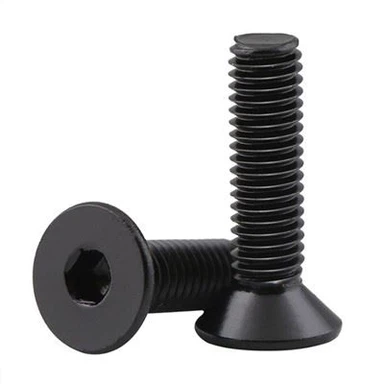

Cause Analysis Of Hydrogen Embrittlement Fracture Of Alloy Steel Bolts
Jun 10, 2026
Hydrogen embrittlement is a typical brittle failure mode of high-strength steel. Free hydrogen atoms penetrating into the steel matrix accumulate at internal defects, grain boundaries and stress concentration regions, causing a sharp increase in local internal stress. When the hydrogen-induced concentrated stress exceeds the local strength limit of the steel, irreversible microcracks initiate inside the material. After bolt forming and service, under the coupling effect of internal residual stress and external working stress, these microcracks continue to propagate and eventually lead to sudden brittle fracture.
Hydrogen embrittlement is irreversible. It can only be prevented through process and working condition control rather than eliminated by post-treatment. Therefore, a clear understanding of the inducing factors of hydrogen embrittlement fracture is essential to fundamentally avoid such failures. The main causes of hydrogen embrittlement in alloy steel bolts include hydrogen penetration during pickling, residual hydrogen during smelting, hydrogen absorption from service environments, and hydrogen-induced delayed brittle fracture.

1. Hydrogen Penetration During Pickling Processes
Pre-treatment procedures including pickling, phosphating, saponification and electroplating are the major sources of hydrogen intrusion during bolt manufacturing. Among these processes, pickling and phosphating present the most significant hydrogen evolution and hydrogen penetration behavior. During phosphating treatment, the acidic medium forms numerous micro galvanic cells between iron and carbon structures in the steel. A dense phosphate film forms on the workpiece surface at the anode, while severe hydrogen evolution reactions occur at the cathode, generating a large number of active hydrogen atoms.
Newly generated hydrogen atoms feature small volume and high activity, enabling them to easily penetrate the steel surface and remain inside the matrix. Process hydrogen penetration during manufacturing is the primary cause of hydrogen embrittlement fracture in alloy steel bolts.
2. Incomplete Hydrogen Removal During Smelting

During the smelting of alloy steel, trace hydrogen is introduced by raw materials, furnace gas and cooling media. Restricted by smelting temperature, furnace environment, degassing processes and process control, hydrogen atoms in molten steel cannot be completely removed, leaving a certain amount of residual hydrogen in the steel matrix.
Residual hydrogen reduces the bonding strength of steel grain boundaries and increases structural brittleness. During subsequent heat treatment, cold heading and service loading, it accelerates the initiation and propagation of microcracks and significantly increases the risk of hydrogen embrittlement fracture.
3. Hydrogen Absorption from External Service Environments
When bolts serve in long-term humid, rainy or corrosive environments, electrochemical reactions occur on the bolt surface triggered by moisture and corrosive media. These reactions continuously generate active hydrogen atoms that penetrate into the bolt matrix.
In rainy, high-humidity and heavy salt fog environments, bolts absorb hydrogen at a faster rate with higher hydrogen accumulation, resulting in a much higher probability of hydrogen embrittlement fracture compared with dry working conditions.
4. Hydrogen-Induced Delayed Brittle Fracture
This is the core failure mode of hydrogen embrittlement. Free residual hydrogen inside the bolt matrix continuously accumulates at stress concentration zones under the combined action of residual preload stress and alternating operational load. Hydrogen enrichment greatly reduces the fracture toughness of the material and promotes the slow propagation of inherent microcracks, eventually causing delayed brittle fracture without obvious pre-failure symptoms. It is a typical low-stress sudden failure mode.
Hydrogen Embrittlement Prevention Measures
Hydrogen embrittlement of bolts relies mainly on prevention. In actual production and application, low-hydrogen-sensitivity raw materials shall be selected according to bolt strength grades and service conditions. Key processes such as heat treatment, pickling, phosphating and electroplating should be optimized, accompanied by strict dehydrogenation treatment and full-process quality control. Comprehensive prevention measures covering raw material selection, manufacturing, surface treatment, assembly and operation can effectively eliminate hydrogen embrittlement risks.