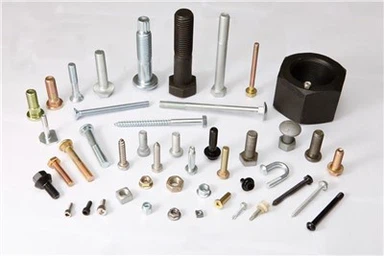

International Fastener Standard System
May 10, 2023
There are two independent standard systems for fasteners in the world, the metric standard and the imperial standard; the metric standard system is a metric unit of measurement, mainly based on the international ISO standard, the European Community EN standard, the German DIN standard and the Chinese GB standard; It can be further divided into two categories, namely the UNC/UNF imperial standard in the United States and the BSW/BSF imperial standard in the United Kingdom. The different standard systems of fasteners are essentially caused by two different measurement systems, that is, the second type of fastener standard systems.

Classification of the two major fastener standard systems
The two major standard systems for fasteners currently in the world cannot be interchanged, especially the type, size and technical conditions of fasteners cannot be completely unified. The requirements are also different and not interchangeable.
And because the American fastener product type size, thread and quality assurance standards are issued in the name of ANSI American National Standard and ASME American Society of Engineers, and the basic technical standards related to fastener materials, mechanical properties, surface treatment, surface defects, etc. All of them are issued in the name of ASTM American Society for Testing and Materials, SAE American Society of Mechanical Engineers and IFI American Industrial Fastener Association, which is the only one in the international fastener standard system.

ISO International Organization for Standardization and EN European Standards seek to harmonize and harmonize the consistency of metric fastener standards through standards wherever possible. At present, the products and basic standard system of metric fasteners have been equivalent or identical to most national standards. The product standards have covered bolts, screws, studs, nuts, rivets, pins, pads, self-tapping screws, wood Screws, retaining rings, welding studs, steel structure high-strength fasteners and other varieties have a complete set of basic technical standards in series.
The metric units of various countries generally directly quote the ISO standard, or directly convert it into their own standard without any change or slight modification. The main representative countries include DIN, NF, JIS, UNI, BSM, SIS, GB and other fastener products and basic technical standards are basically consistent with ISO standards.
Germany is the representative of metric fastener standards. ISO international fastener standards are mainly formulated and issued on the basis of German standards. Germany is relatively active in implementing and implementing ISO standards. The new product standards issued by DIN have been compared with ISO standards. , EN standards are synchronized, and the basic standards of DIN fasteners have basically implemented ISO standards. But it is also worth noting that the old DIN product standards that have been canceled in Germany (such as DIN 931, 933, 934, 985, etc. have not been unified with ISO standards), and the old DIN product standards are still relatively popular in international trade.
my country's fastener "adoption of ISO standard" is the most active and one of the representative countries with the most remarkable results. Our country adopts the two basic principles of the ISO standard level. The basic standard for adopting ISO fasteners is IDT (or idt) - equivalent adoption (including the "equivalent adoption" standard issued in the early 1980s); and the ISO fasteners adopted Product standards, according to regulations, should belong to MOD—modified adoption (or original eqv—equivalent adoption).
Since 1978, it has started the work of "adopting international standards" to formulate and revise my country's fastener standards. It took 5 years to complete the work of fully adopting ISO fastener product standards in stages, so that my country's fastener standards reached the international advanced standard level in the 1980s. my country's fourth comprehensive revision of national standards for fasteners involves a wide range of standards and a large number. Once a new ISO standard is issued, it will be equivalent to the revision of the Chinese standard as much as possible in a timely manner; the conversion rate of international standards for fasteners is over 98% (nearly 50% of which are the latest international standards released in 1999 and later) , It has laid a good foundation for the development of my country's fastener standards to keep pace with international standards, and has reached the international advanced standard level in the early 21st century, creating favorable conditions for the export of fastener products to earn foreign exchange.